
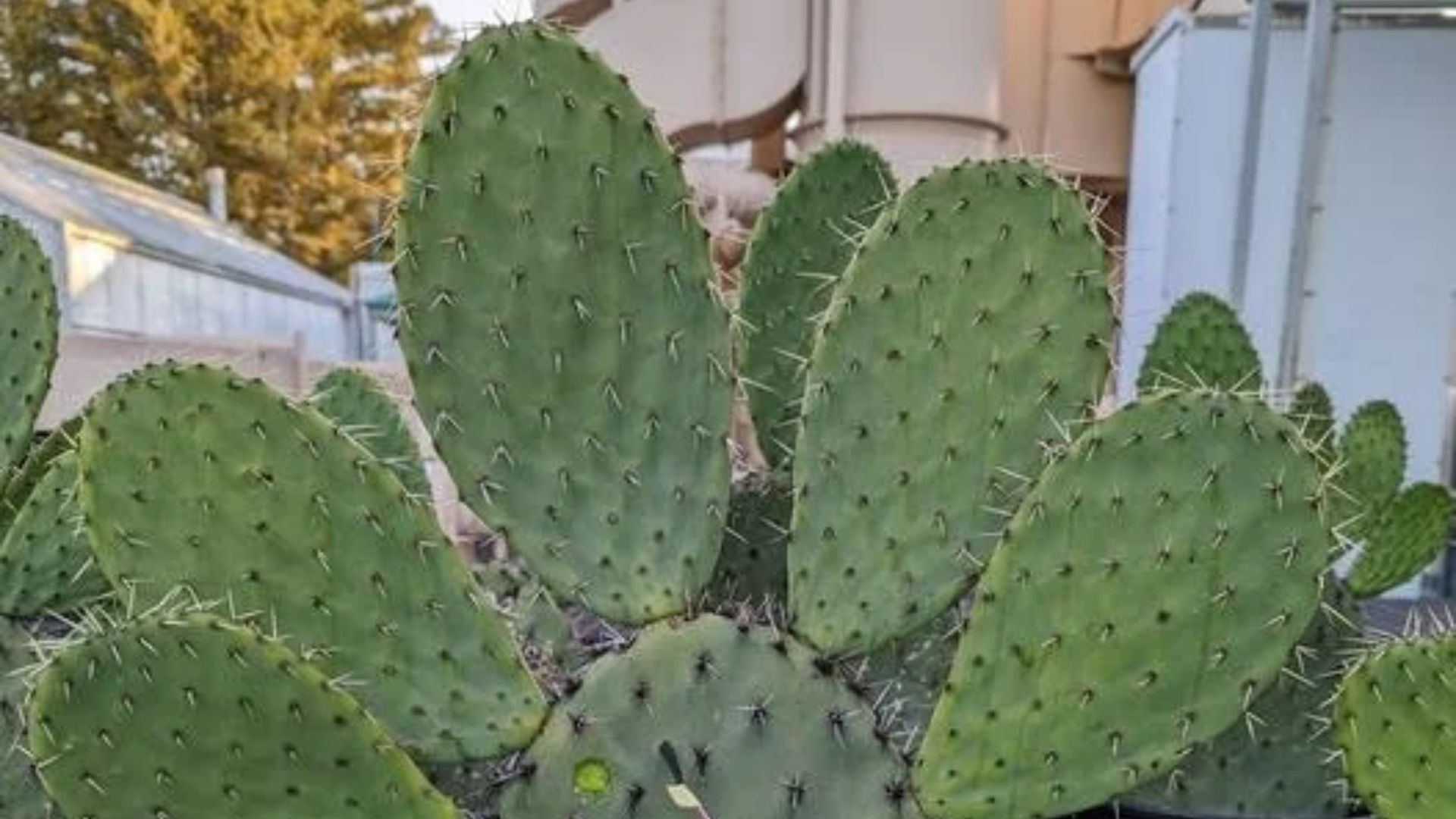
Researchers at the University of California, Santa Cruz, have turned ordinary prickly pear cacti into “living solar panels.” The technique harvests small bursts of electricity directly from the plants’ stems, offering a playful yet practical way for monitor crops as climate change intensifies. “The undergraduate students told me they liked this project so much because it felt whimsical, and like a light-hearted approach to something that is so serious,” said Charlie Chesney, an Environmental Studies Ph.D. alumna who led the project. “It was a fun way to explore climate solutions that put creativity first.” Spiky power The study taps into a survival trick that desert flora have perfected over millennia. Most plants open tiny pores during the heat of the day to absorb carbon dioxide, losing precious moisture in the process. Desert succulents take the night shift. Using a process called crassulacean acid metabolism (CAM), prickly pears pull in carbon dioxide after dark and convert it into malic acid. When morning light strikes one side of a thick, opaque cactus pad, photosynthesis kicks in and breaks down that stored acid — only within the outer two millimeters facing the sun. The shaded side remains acidic. That sharp difference in acidity creates a pH concentration gradient across the stem, generating a tiny electrical charge that wired electrodes can capture. “I’ve been obsessed with the plant since forever, it seems,” said Environmental Studies Professor Michael Loik, who has studied cactus physiology for roughly four decades and spearheaded the project with Chesney. Years of testing across greenhouses, labs, and the UCSC Farm proved that a single cactus pad can generate up to half a volt. Linking eight stems together pushed that output to 4.5 volts, which is more than a standard AA battery. Seven undergraduate researchers from engineering, science, and social science backgrounds co-authored the paper, bringing an interdisciplinary spark to the lab. Cactus-powered farm sensors But these are not meant for powering household appliances. The spiky generators could keep low-power agricultural sensors running in remote fields. Farmers could plant prickly pears alongside other crops to monitor soil and climate conditions without running miles of cable or constantly swapping batteries. The voltage itself also doubles as a vital sign. Commercial growers cultivate prickly pears for their edible pads (nopales) and sweet fruits (tunas), and fluctuations in electrical output directly mirror how well the plant is photosynthesizing. A cactus wired to a base station could act as a self-powered sentinel, alerting farmers to crop stress in real time. Field experiments demonstrated the resilience of these cactus batteries, showing that voltage increases with summer sunlight before dipping under extreme glare as the plants shield themselves from sunburn. Moderate light levels proved ideal for peak power output. Even after 15 months without water, the cacti survived, and some drought-stressed stems actually generated higher voltage than well-watered ones. Undergraduate researcher Erin Langness also found that adding nitrogen fertilizer boosted malic acid reserves, stretching power generation later into the afternoon. The team is now working to amplify those biological signals further, exploring whether other CAM crops like agave and pineapple can join the grid. The study was published in the journal Plants, People, Planet. Get the latest in engineering, tech, space & science - delivered daily to your inbox.Mrigakshi is a science journalist who enjoys writing about space exploration, biology, and technological innovations. Her work has been featured in well-known publications including Nature India, Supercluster, The Weather Channel and Astronomy magazine. If you have pitches in mind, please do not hesitate to email her.
Scientists harvest electricity from cacti to power low-energy farm sensors
Full Article
Original Source
Read the full article at Interestingengineering →KhanList aggregates and links to publicly available news content. We do not host full articles from third-party sources. Always verify important information with original sources.