
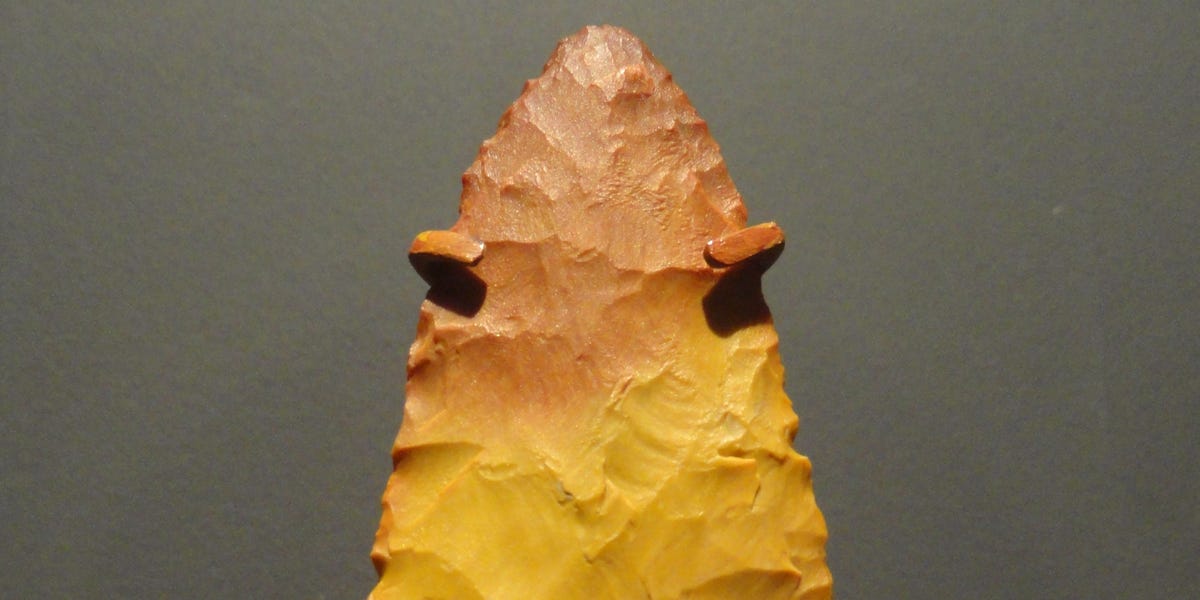
3 min readHere’s what you’ll learn when you read this story:Archaeologists found Clovis-era remains and artifacts in the Montana mountains, which defies our previous notion of North America’s environment at that time.Evidence shows that the Clovis people lived in the high country near Yellowstone before anyone thought possible.The discovery of a child’s remains decades ago, and the uncovering of new artifacts, reframes the history of human habitation of North America.The first hint that the history of humans in North America wasn’t what we thought came in 1968. Now, though, those clues keep arriving in droves, evidence that the Clovis people likely lived in the Greater Yellowstone high country 13,000 years ago during a time when experts thought the land was covered in glacial ice.Those experts may be proven wrong by artifacts emerging from 9,000 feet up in the Beartooth Mountains. Combined with the discovery of remains of a Clovis-era child over 50 years ago, the newest research coming from Montana is prompting questions about what we thought we knew about the earliest human inhabitants of what’s now the United States. Experts are determined to find the answers.Archaeologist Scott Dersam said the sediment they found in the area shouldn’t have been there at all. “I wouldn’t say it’s impossible,” he told Nick Mott in a lengthy report for Mountain Journal, “but in standard paleoecology in the surrounding ecosystem, all the glaciology experts, this is just not something that should exist given the ecosystem we believe we had.”These are now possibly the highest and oldest-known human habitation sites in North America. “We could have the oldest Clovis sites in North America here, and it happens to be in a place that shouldn’t exist in an ecosystem that shouldn’t exist,” Dersam said. “It’s more than a monkey wrench to the current paradigm. It’s a full kick to the chest.”The questions actually started in 1968, when construction workers unexpectedly dug up the so-called “Clovis Child” at what’s now known as the Anzick Site in Park County, which is north of Yellowstone National Park near Bozeman, Montana.The oldest-known Clovis burial site in North America included the remains of a young child, an antler, and roughly 100 stone artifacts. Extensive testing from Texas A&M’s Center for the Study of the First Americans, in conjunction with colleagues from the University of Oxford and Stafford Research of Colorado, concluded the remains and artifacts were “confidently shown to be the same age and date between 12,725 and 12,900 years ago,” Michael Waters, Texas A&M researcher, said in a statement.The Clovis people represent the first widespread prehistoric culture in North America, appearing around 13,000 years ago. Experts believe the Clovis people originated south of the large ice sheets that covered Canada at the time, and were the direct descendants of the earliest people who arrived in the New World around 15,000 years ago.The Clovis people are known for stone spear tips with grooved bases, dubbed the Clovis point. These artifacts pepper the ground across the United States, but now Dersam’s team has also found them in the Beartooth Mountains, which previously seemed unimaginable.Dersam said the donation of artifacts from a former game warden collected from the 1950s through 1970s really opened his eyes to the high-elevation site. “Only after he gave the totality of his collection did we realize it’s the largest and most dense high-elevation lithic collection anywhere in North America,” Dersam said.In 2022, a massive rain and snow event sparked flooding and reconfigured the sediment layers high in the Beartooths, surfacing a bounty of artifacts. “Things just absolutely exploded,” he said.Known for hunting mammoths on the plains, the Clovis people likely took to the alpine area of Montana well, which was previously purported to have been covered by the Pinedale Glacier.“This is the first time we don’t have just one or two Clovis points,” Dersam said. “We have full sites. Everything but the kitchen sink.” It all points to an unknown history of Montana’s ancient ecosystem, upending our belief that it was covered with ice, and indicating instead that it was teeming with mammoths, bison, and, evidently, an entire ancient culture.Tim Newcomb is a journalist based in the Pacific Northwest. He covers stadiums, sneakers, gear, infrastructure, and more for a variety of publications, including Popular Mechanics. His favorite interviews have included sit-downs with Roger Federer in Switzerland, Kobe Bryant in Los Angeles, and Tinker Hatfield in Portland.
Scientists Found Ancient Americans Living Where No Humans Should Have Been
Full Article
Original Source
Read the full article at Popularmechanics →KhanList aggregates and links to publicly available news content. We do not host full articles from third-party sources. Always verify important information with original sources.