
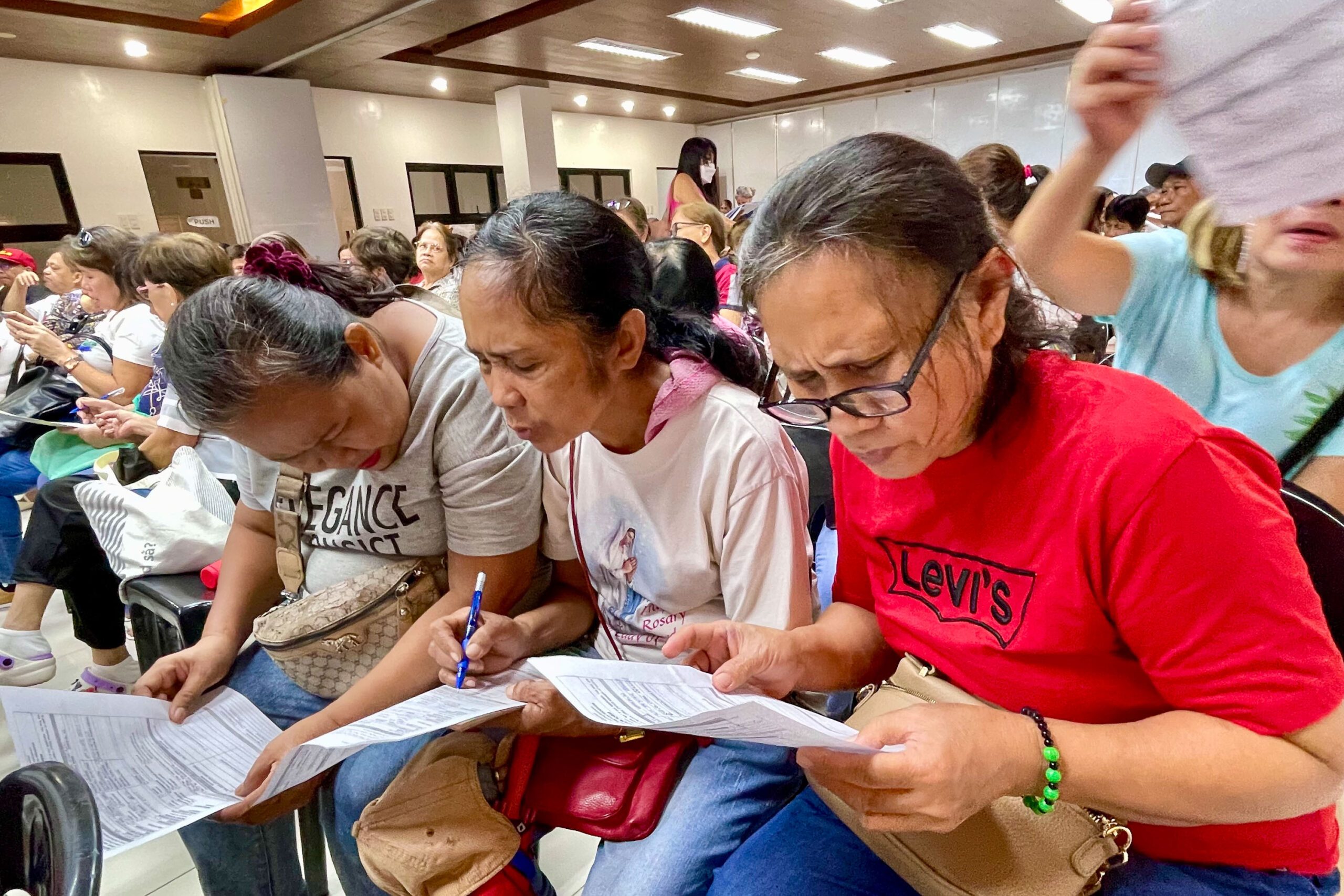
EMPLOYEES. A number of senior citizens participate in a pre-screening and orientation on March 18, 2026, at the Department of Manpower Development and Placement (DMDP) office in Cebu City for employment opportunities available to those aged 60 to 65 who are still willing and able to work. Jacqueline Hernandez/Rappler In the case, the SC finds Colegio de San Juan de Letran in Laguna guilty of illegal dismissal The Supreme Court ruled that employers cannot force employees to retire early without their consent, affirming that the mandatory retirement age is 65. In the case of Rodolfo Ondevilla, the Court found Colegio de San Juan de Letran guilty of illegal dismissal as there was no mutual agreement for his early retirement. The ruling awarded Ondevilla full back wages, separation pay, and retirement benefits, emphasizing that his retirement was involuntary and treated as illegal dismissal. This is AI-generated. Read the article for full context. Report any errors. MANILA, Philippines – The Supreme Court (SC) has ruled that employers cannot force their employees to retire early without an agreement. In a decision penned by Associate Justice Ramon Paul Hernando, and was made public on Tuesday, October 27, the SC 1st Division said employees cannot be made to retire from their position before the mandatory retirement age of 65 without their clear and voluntary consent. Hernando, in the case, partly granted the petition of Rodolfo Ondevilla and found Colegio de San Juan de Letran (CSJL) in Laguna guilty of illegal dismissal. Ondevilla asserted in his SC petition that he never agreed to retire before 65. The SC accepted his position. Hernando explained that under the country’s Labor Code, the retirement age is set by an existing agreement or employment contract. If there’s no agreement or contract, then the mandatory retirement age of 65 will be applied, along with the minimum age for optional retirement of 60. The ruling explained that optional retirement is based on a voluntary agreement between the employer and employee, and the latter must freely agree to it without pressure or coercion. But the SC said in the Ondevilla case that the early retirement happened despite the lack of a mutual agreement between the parties. Based on the decision, the SC said CSJL never made any proposal for a retirement plan to the petitioner that he could accept or reject, adding that there was no indication that the school was willing to discuss Ondevilla’s retirement. The High Court added Ondevilla’s objection to his supposed early retirement, along with his illegal dismissal complaint, showed that he had no intention of availing himself of optional retirement before reaching the age of 65. “Because his retirement was involuntary, the SC treated it as an illegal dismissal. Ondevilla was therefore entitled to full back wages and separation pay instead of reinstatement,” said the ruling. The SC also awarded him retirement benefits covering his employment from June 16, 2004, until August 29, 2024, when he reached the mandatory retirement age of 65. It directed the arbitration branch to compute the total amount due to him. Case’s background Ondevilla started working for CSJL as a comptroller in 2004, and later worked as assistant vice president for finance. He was renewed for work several times. When the school had a management reorganization in 2018, he was reassigned as controller. Although he objected to this and said it was a demotion, he continued working with the same salary and employee benefits. CJSL considered Ondevilla’s appointment expired on August 29, 2019, when he turned 60. The petitioner then filed a complaint for illegal dismissal. He secured victories from the Labor Arbiter, and then from the National Labor Relations Commission. The case reached the Court of Appeals (CA). It found that Ondevilla had been illegally dismissed, but ruled that a letter he sent to the school showed that he had agreed to retire on July 31, 2020. When he filed the petition with the SC, Ondevilla challenged the CA’s findings and argued that he never agreed to retire early. – Rappler.com How does this make you feel? Loading
SC: Employees cannot be forced to retire before age 65 without consent
Full Article
Original Source
Read the full article at Rappler →KhanList aggregates and links to publicly available news content. We do not host full articles from third-party sources. Always verify important information with original sources.