
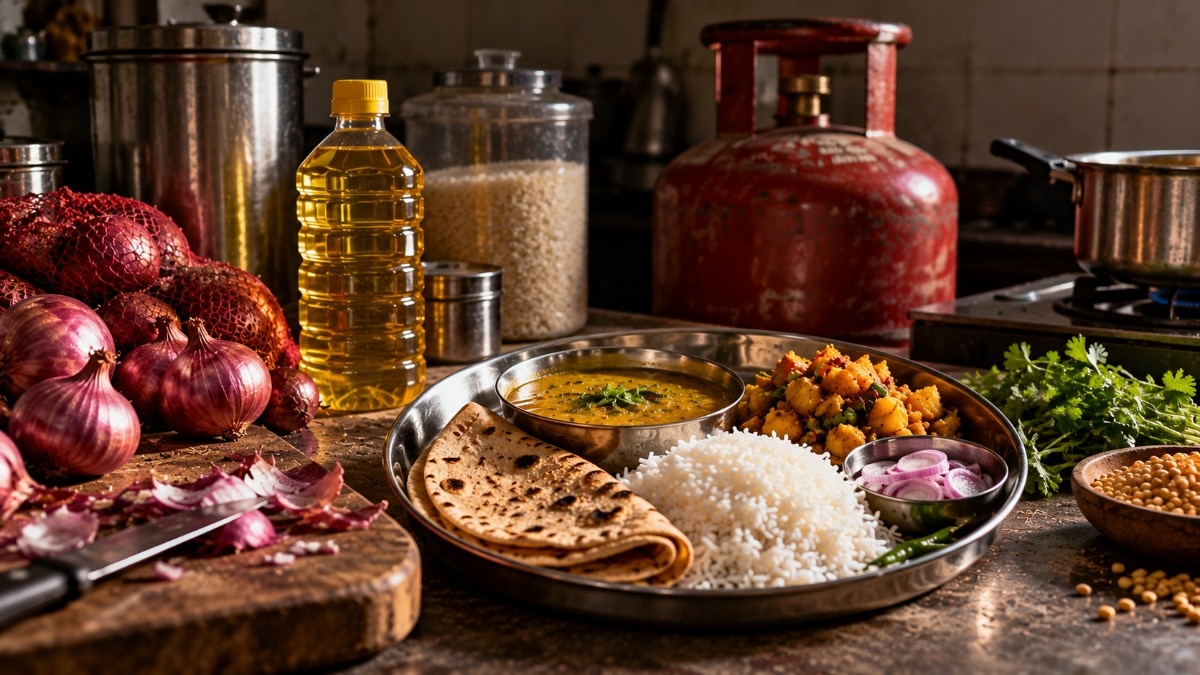
The cost of putting a meal on the table is rising as domestic supply constraints, erratic weather and global uncertainty push up food and cooking costs. From onions and rice to vegetable oil and cooking gas, several essentials have become more expensive, adding to the pressure on household budgets.In September, the estimated cost of preparing a vegetarian thali at home rose 10% from a year earlier to Rs 30.80, up from Rs 28.10. A non-vegetarian thali cost Rs 59.50, 6% more than it did a year ago, according to CRISIL Intelligence’s monthly Roti Rice Rate indicator.The cost of a vegetarian thali rose 4% between August and September, while that of a non-vegetarian meal increased 3%.The increase was broad-based, significant and across categories. Onion prices surged 89% year-on-year to Rs 53 per kg, while vegetable oil prices rose 12% and rice became 8% more expensive. LPG prices were 10% higher than a year earlier. The rise in food costs is also reflected in India’s broader inflation numbers. Retail inflation climbed to 5.54% in September from 4.83% in August, while food inflation rose to 7.74% from 5.97%, according to government data. Rural households faced steeper food inflation at 8.06%, compared with 7.18% in urban areas.When several staples and cooking costs rise together, households have fewer opportunities to offset the increase by switching to cheaper alternatives. The pressure extends beyond the price of an individual vegetable to the overall cost of preparing everyday meals.WHAT'S DRIVING THE PRICE RISE? Onions were among the biggest contributors to the increase in the cost of a home-cooked thali. Prices rose sharply as supplies tightened following a decline in rabi onion production and weather-related delays to the next crop.CRISIL estimated that rabi onion production fell by 5–6%. Rainfall in June was around 40% below the long-period average, delaying kharif onion transplanting and the arrival of fresh produce in markets. Seasonal demand added to the pressure.The near-term outlook, however, offers some prospect of relief. CRISIL expects onion prices to moderate towards the end of October as kharif arrivals improve. Festive demand could keep prices under pressure before supplies pick up.Rice has also become more expensive. Prices rose 8% year-on-year, with CRISIL pointing to an estimated 5–6% decline in paddy production amid lower acreage and weaker yields.A rise in the price of a staple such as rice can feed directly into the cost of everyday meals because it is difficult for households to eliminate it from their diets.BEYOND DOMESTIC ISSUESThe pressure is not limited to domestic crop supplies. Global uncertainty and disruptions to supply chains are adding to the cost of food and cooking.Vegetable oil prices rose 12% year-on-year, with CRISIL linking elevated prices to geopolitical uncertainty and concerns that an El Nino weather pattern could affect palm oil production. India depends on imports to meet a substantial share of its edible oil demand, leaving domestic prices exposed to movements in international markets.Cooking gas has also become more expensive. LPG prices were up 10% from a year earlier, adding to the cost of preparing meals even before the food itself reaches the kitchen.The Reserve Bank of India’s October Bulletin flagged renewed geopolitical tensions in West Asia and supply-chain disruptions as factors amplifying global inflationary pressures. It also noted continued increases in rice and wheat prices, a sequential rise in pulses and broad-based increases in edible oil prices, led by mustard and palm oil.These pressures can travel through several channels. Disruptions to global trade can affect the cost and availability of imported commodities, while higher energy and transport costs can raise the expense of moving food from farms to markets.The eventual impact on retail prices depends on domestic production, inventories, imports and the extent to which higher costs are passed on to consumers.INFLATION BITES HOUSEHOLD BUDGETSThe September inflation data show how quickly food-price pressures have intensified. Retail inflation rose to 5.54% from 4.83% in August, while food inflation accelerated to 7.74% from 5.97%.The burden was heavier in rural India, where food inflation stood at 8.06%, against 7.18% in urban areas. The difference matters because food accounts for a substantial share of household spending, particularly for lower-income families. A sharp rise in the prices of staples and vegetables can therefore leave less room in the budget for other essentials.Households’ perceptions of inflation have also moved higher. In its September survey of 5,987 respondents across 19 cities, the RBI found that median current inflation perceptions rose to 8.4% from 7.8%. Expectations for inflation over the next three months increased to 9.9% from 9.2%, while one-year expectations rose to 10% from 9.4%.These figures reflect what households believe inflation to be and where they expect it to go, rather than the official rate of price increases. But the rise in expectations suggests that consumers are feeling the pressure and anticipate that it may not ease quickly.STRONG ECONOMY, BUT WHY ARE FOOD PRICES HIGH?India’s broader economic indicators have remained resilient, with the RBI Bulletin pointing to strength in high-frequency indicators of industrial activity and services. Yet a resilient economy does not necessarily translate into immediate relief from rising food prices.Food inflation is particularly difficult to manage because it can be driven by a combination of weather, crop yields, seasonal demand and global commodity movements. Monetary policy can influence overall demand and inflation expectations, but it cannot quickly restore a delayed harvest or increase the supply of onions in the market.And households across the country, particularly those in lower- and middle-income groups, are feeling the squeeze. Even when the increase in any one item appears manageable, several increases at once can make the monthly grocery bill harder to absorb.WILL INFLATION KEEP BITING?The near-term outlook will depend in part on whether fresh crop arrivals ease the pressure on vegetable prices. CRISIL expects onion prices to moderate towards the end of October as kharif supplies improve, although festive demand could delay the relief.Rice production, edible oil prices and the trajectory of global energy and supply-chain disruptions will also matter.A moderation in vegetable prices could bring some relief, but it may not be enough to reverse the broader rise in the cost of preparing meals if other essentials remain expensive.- Ends
War, weather and the rising cost of your everyday thali
Full Article
Original Source
Read the full article at Indiatoday →KhanList aggregates and links to publicly available news content. We do not host full articles from third-party sources. Always verify important information with original sources.