
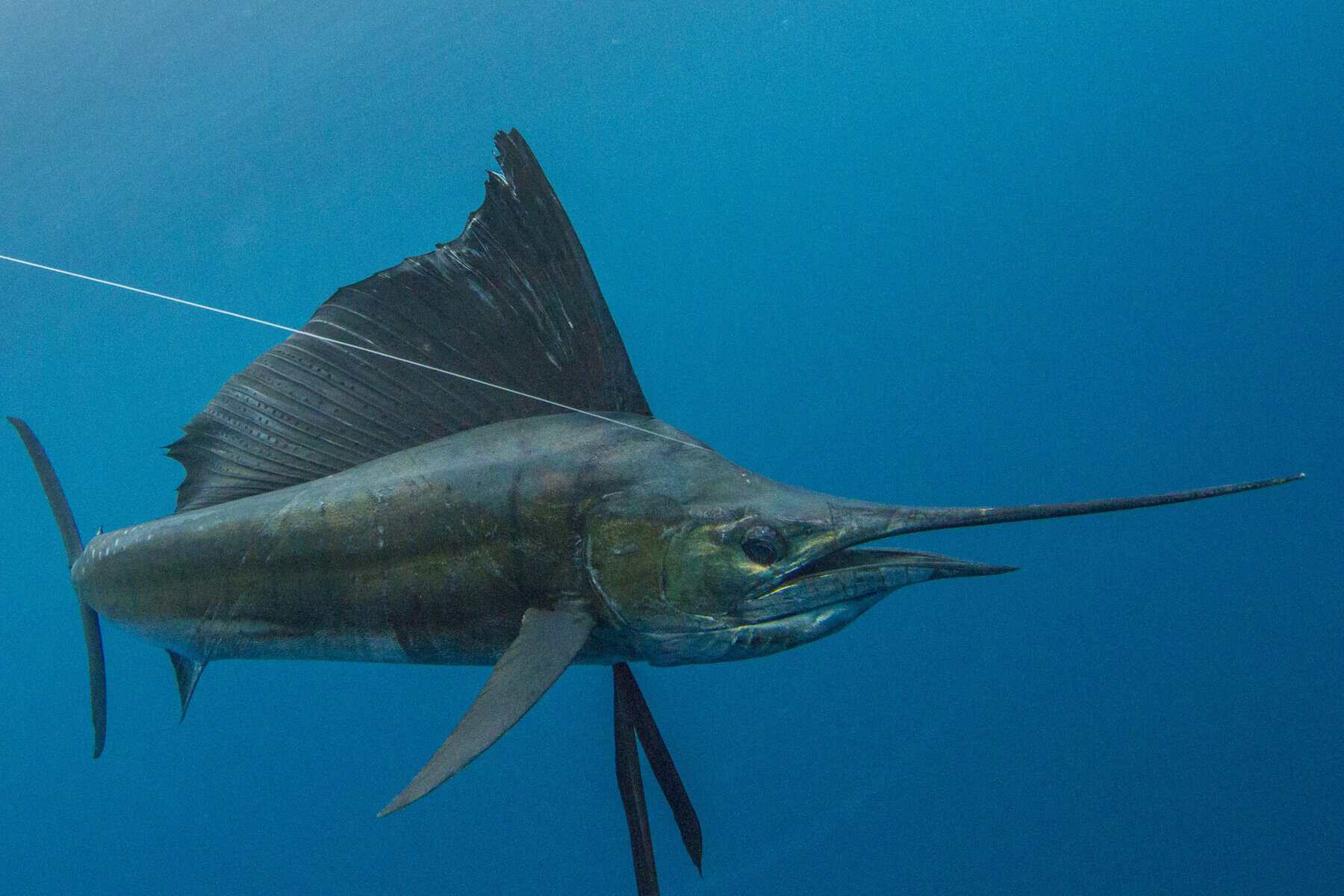
Satellite tracking research is providing new insight into how marlin and sailfish move through the Pacific Ocean and recover after being caught and released, findings that could help shape the future of Costa Rica’s multimillion-dollar sport fishing industry. The research was among the highlights of the third annual La Alfombra Azul conference, organized by the Costa Rican Federation of Tourist Fishing (FECOP) on November 6. Nearly 200 participants attended the event, which brought together scientists, conservation organizations, government officials, tourism operators, and representatives of coastal communities. Researchers from the Guy Harvey Foundation presented results from an ongoing research program in the Eastern Tropical Pacific that uses satellite tags and specialized sensors to monitor billfish populations. So far, scientists have tagged 106 fish, including 46 black marlin, 30 blue marlin, and 30 sailfish. The tracking data has revealed differences in how the species move through the ocean, with blue marlin generally covering greater distances while black marlin tend to remain closer to shore. The research has also provided information about what happens to these fish after anglers release them. Using sensors that monitor movement, scientists recorded average post-release recovery times of 8.9 hours for blue marlin and 4.9 hours for sailfish. The findings could help researchers better understand how catch-and-release fishing affects these species and identify practices that reduce stress on fish. The research program, supported by fishing captains and crews who assist with tagging and monitoring, has contributed to 13 scientific publications. For Costa Rica, where sport fishing brings in international visitors and supports jobs in coastal communities, the findings have implications beyond scientific research. Marlin and sailfish frequently travel across international waters, making their conservation a regional challenge that requires cooperation among countries. The conference also addressed a more controversial issue facing Costa Rica’s sport fishing industry: the use of fish aggregating devices, commonly known as FADs or plantados. These floating structures attract fish and can make fishing more productive. However, their use has raised concerns about fishing pressure, environmental impacts, and conflicts between different fishing interests. Costa Rica currently restricts the use of these devices under measures involving the Constitutional Chamber, the Ministry of Public Works and Transport, and the Costa Rican Institute of Fisheries and Aquaculture (INCOPESCA). Neighboring Panama, meanwhile, is evaluating their use in recreational fishing through a three-year pilot program. A technical study presented at the conference examined whether Costa Rica could develop a regulatory approach that distinguishes recreational fishing from other fishing activities while addressing conservation concerns. The study, prepared by regulatory specialist Hannia Vega, explored market conditions and the potential use of satellite-based vessel monitoring systems to improve oversight. According to FECOP, 60% of the expert interviews conducted for the study raised concerns about fishing pressure and conflicts among users, while 50% identified possible benefits, including opportunities to extend the fishing season. Dr. Bruce Pohlot, conservation director of the International Game Fish Association, said Costa Rica offers an unusual opportunity to study how marlin and other billfish interact with fish aggregating devices. Such research could help determine whether their use can be managed sustainably and what effects they may have on marine ecosystems. Panamanian fisheries official Alexis Peña also outlined regulatory measures introduced in his country during 2026 to improve the management of marlin and sailfish and encourage catch-and-release practices. The discussions come as Costa Rica’s sport fishing industry works to strengthen its economic position while responding to growing conservation challenges. A FECOP economic study based on 2019 data estimated that recreational and sport fishing generated approximately $500 million in revenue. The industry supports hotels, restaurants, transportation companies, marinas, fishing guides, captains, and crews, particularly in coastal destinations along the Pacific and Caribbean. Catch-and-release fishing has become an important part of the industry’s conservation efforts. At Marina Pez Vela in Quepos, records from 45 fishing tournaments held between 2013 and 2026 show that more than 93% of recorded fish were released. FECOP is also promoting a new strategic roadmap for Costa Rica’s recreational and sport fishing industry, developed with funding from the U.S. Embassy and contributions from 110 participants. The plan identifies fragmented industry representation, pressure on marine species, and gaps in regulation and technical capacity as major obstacles. It proposes five strategies aimed at improving cooperation and establishing common priorities. “Sport fishing needs to participate actively in decisions that affect its future,” said Damián Martínez Fernández, FECOP’s director of conservation and public policy. He said the organization wants to turn longstanding industry concerns into concrete proposals supported by scientific evidence and the experiences of fishing communities. Beyond the scientific and regulatory discussions, the conference highlighted community initiatives from the Osa Peninsula, Paquera, Parrita, the Gulf of Papagayo, and Barra del Colorado. These included programs involving youth training, community tourism, women’s participation in maritime activities, and the conservation of tarpon, an important species for recreational fishing on Costa Rica’s Caribbean coast. For FECOP, the goal is to ensure that an industry dependent on healthy marine ecosystems has a stronger voice in the policies governing their protection. The satellite research offers one example of how scientific findings could help bridge the gap between economic interests and conservation, particularly as Costa Rica considers how to manage fishing practices in the years ahead.
Satellite Tracking Reveals New Findings on Marlin and Sailfish in Costa Rica
Full Article
Original Source
Read the full article at Ticotimes →KhanList aggregates and links to publicly available news content. We do not host full articles from third-party sources. Always verify important information with original sources.