
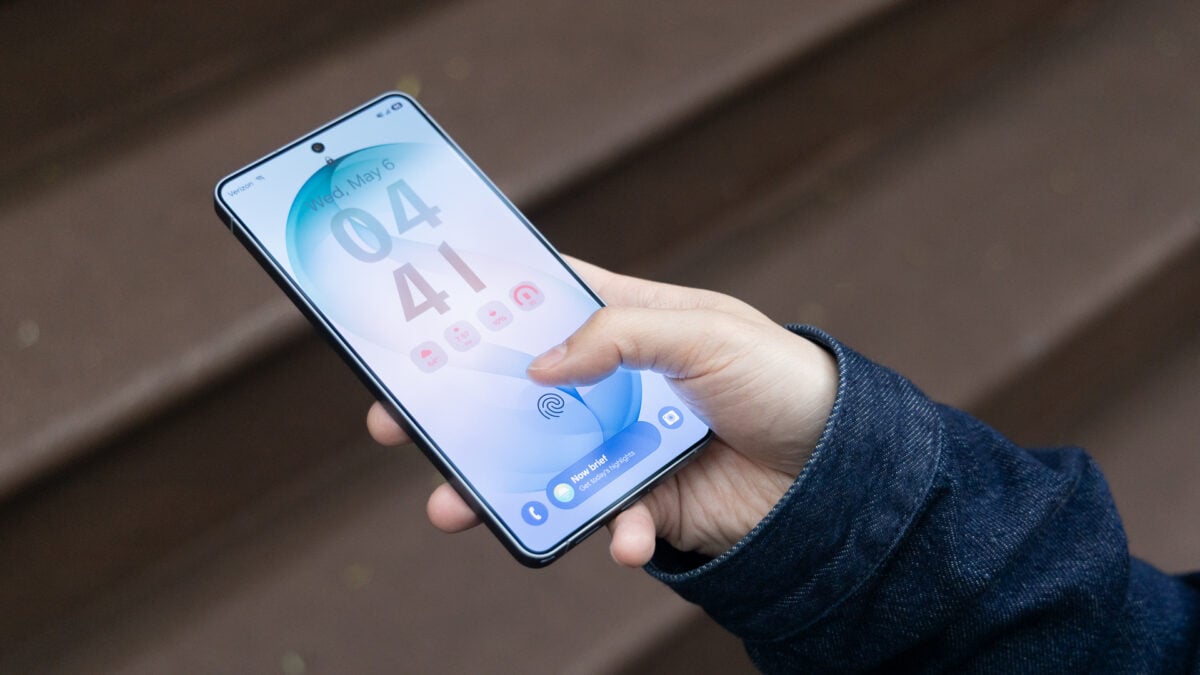
The Samsung Galaxy S26 Ultra certainly has its flaws. But battery life is generally not understood to be among them. That thing does not die; reviewers up and down have emerged from very heavy days of use with their units still alive and kicking. Nevertheless, it appears that Samsung is attempting to make all of its phones even more immortal. Per a new report from Galaxy Club (via Android Authority), the Samsung Galaxy A38, which we expect to see early next year, will match the record for the largest battery capacity ever seen in Samsung’s midrange (and resoundingly popular) A-Series. That battery, if this leak is to be believed, would have a rated capacity of 5,882mAh; Galaxy Club expects Samsung to advertise a typical capacity of 6,000mAh. I’m not the best at math, so someone correct me if I’m wrong, but I believe that would be larger than the 5,000mAh cell that the Galaxy S Ultra line has famously sported since time immemorial (and that the A3x family has favored for the past six years). This is the A37, whose successor might have a chonky battery. © Samsung Well, well, well. That’s interesting! The price differential here, after all, is substantial. The regular starting price of the S26 Ultra is a not-particularly-affordable-for-most-people $1,400. The A3x family has become more expensive over time—the 2020 Galaxy A31, which was the first of this line to get the 5,000mAh treatment, started around $250; this year’s A37 was $449; and Galaxy Club expects the A38 to break $500. In any case, while the RAMPocalypse is likely hitting this midrange line as hard as it’s hitting anything else, we’re still looking at a phone that’s up to 50% of the price of Samsung’s flagship, with potentially 20% more battery capacity. This phone happens to arrive in the middle of a battery-capacity arms race that shows no signs of slowing down. Several key competitors have already blown well past the 6,000mAh mark (and I’m old enough to remember when that was “monster battery” territory). This year’s OnePlus 16, for example, is already rocking a 9,000mAh pack. Realme’s P4 Power is (mostly as a flex, I have to imagine) pushing 10,001mAh. This is in no small part due to the rise of silicon-carbon technology, which enables greater battery capacity in a smaller space and which Samsung itself is touting around in this year’s Galaxy Z foldables. GalaxyClub doesn’t think the A38 will be graced with a silicon-carbon cell, but that doesn’t mean Samsung isn’t feeling at least some degree of pressure to keep up with China’s big players. Shiny, shiny silicon-carbon. © Adriano Contreras / Gizmodo The real question here, of course, is why the A3x family is suddenly leapfrogging the Ultra’s battery capacity after hovering at the 5,000 mark since 2020. We’ve had no official word out of Seoul on this, of course, so we can only speculate. But the amount of battery a phone can cram into its chassis depends on a whole bunch of factors, including internal space, component layout, thermals, engineering priorities, and so on. We may just be looking at a bigger or more accommodating product that can fit or accommodate a larger battery. But I’m choosing to believe my own much more fun theory, which is that Samsung is totally all-in on the East Asian battery craze, and that we might therefore see a Galaxy S27 Ultra next year that’s pretty much just a battery with a pen. It will last 5,000 years on a single charge. Human civilization will fall, the remnants of our societies will crumble into dust, but your Galaxy S27 will still be chugging along, trying to get the insects to use Bixby. Again, I can’t emphasize enough how not confident I am that this milliampere-hour-measure contest is going to make a big difference in the life of the average user, since the 5,000mAh S26 Ultra needs charging once in a blue moon already. But I can’t pretend it’s not fun to watch.
Samsung’s Next Midrange Phone May Have a Bigger Battery Than the S26 Ultra
Full Article
Original Source
Read the full article at Gizmodo →KhanList aggregates and links to publicly available news content. We do not host full articles from third-party sources. Always verify important information with original sources.