
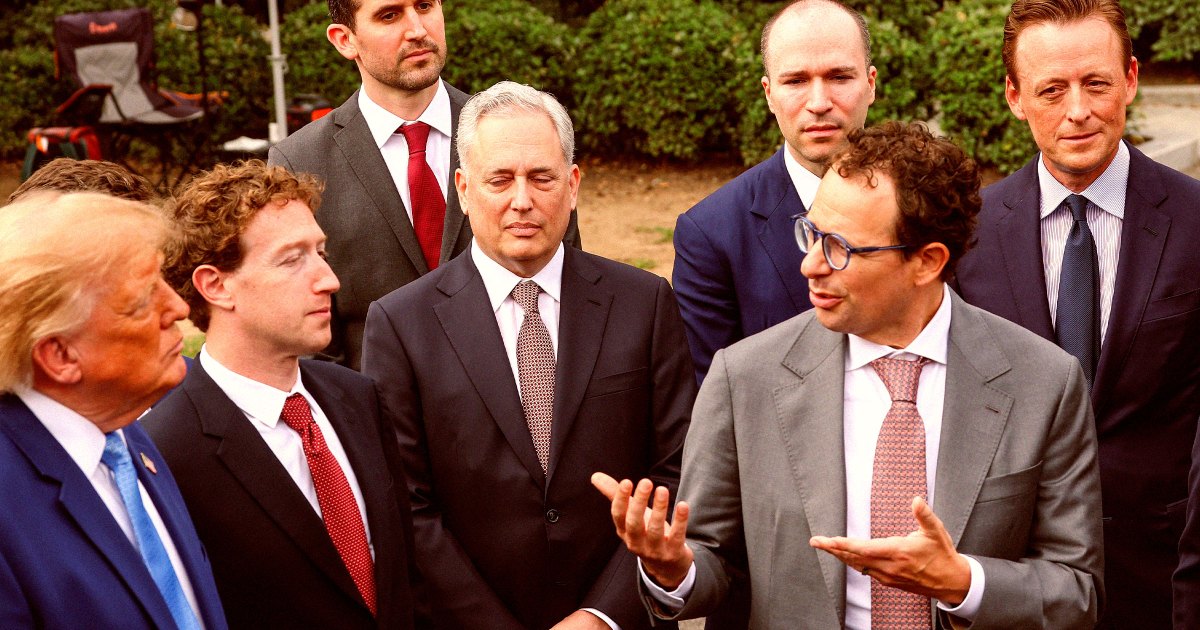
Tech companies threw their lot in with Donald Trump, and now, following a blue tsunami, they’re poised to pay the price. If it wasn’t already clear before the first vote was cast, it’s now undeniable that these midterm elections were in no small part a referendum on Big Tech. A preponderance of Democratic candidates for congress, the senate, and state governorship supported some form of data center moratorium. Across ten states, Ballotpedia showed, over 40 ballot measures were put forth related to regulating data centers. A full 56 percent of Americans considered AI and data centers a crucial or major factor in their votes, according to NBC News exit polls. Many of the Democratic challengers, including senator-elect Sherrod Brown in Ohio, flipped seats while raging against data center construction. “What we just witnessed was an AI earthquake,” Brad Carson, co-founder of Americans for Responsible Innovation, told Axios. “Voters just sent a clear message that they want rules for AI and data centers.” Greg Casar, a Texas Democratic congressman who just secured reelection, echoed this analogy, calling the election an “early tremor of a much bigger AI earthquake upending American politics.” One of the biggest setbacks to the tech industry is Gina Hinojosa’s victory in the Texas governor race, defeating Republican incumbent Greg Abott. Texas is where many AI companies are banking building their data center empires, holding an overwhelming 27 percent of the entire country’s planned data center capacity, according to widely-cited Wells Fargo data. Many tech figures have spent the past few years relocating operations there, including former trillionaire Elon Musk. “The entire AI industry made this giant levered bet on the idea that they’d be able to build [data centers] in Texas,” Sam Koppelman at Hunterbrook Media, an investigative journalism outlet, told Politico. “This election totally changed that.” Analysts at SemiAnalysis ahead of the election feared the worst, believing Hinojosa would come down hard on the industry: “she would impose a moratorium until legislation is passed that gives communities a voice, protects household utility bills, and ends the tax incentives for data centers,” the firm wrote, per Bloomberg reporting. Along with Texas, Democratic governor candidates prevailing in George and Michigan now means that the hammer could be brought down on 45 percent of planned US data center capacity. Musk encapsulated the palpable sense of dread over this new reality in a post-elections tweet: “Data centers in space looking pretty appealing right now.” Dan Ives, a partner at the bank Yorkville Ives & Co, was more direct. “There is no way to sugarcoat that Democrats taking control especially over the Senate will create some major hurdles for AI and tech legislation in the Beltway over the next 2 years,” he said in a note, quoted by CNBC. Beyond the issue of data centers themselves, Republican candidates lost because they reeked of big tech money. Elon Musk poured $474 million into the midterms, including $224 million in Texas alone. OpenAI president Greg Brockman, and Silicon Valley VC heavyweights Marc Andreessen and Ben Horowitz, splurged on a super PAC for pro-AI candidates, most of them Republicans. And yet, a Guardrails Action survey before the election found that three quarters of likely voters in Iowa, Michigan, and Ohio — where blue candidates for the senate and governorship all prevailed — said that they would be less apt to vote for a candidate if they found out they had accepted a donation from an AI Super PAC. Also leaving a lasting impression on voters is how Big Tech has constantly appeased president Trump and complied with even his most arbitrary whims. Trump demanded that the term “artificial intelligence” be rebranded as “Super Intelligence,” and AI companies, with a straight face, started using it in their communications. Google renamed the Gulf of Mexico and Lake Ontario after Trump said so. Let’s not forget that Mark Zuckerberg was caught on camera admitting to Trump that he made up an AI spending number just to please him. They fawned over him at his inauguration, and were all smiles when they joined him in the White House to sign a non-binding agreement to regulate themselves. Might have to rethink how that one looks after this midterm season. More on: Sam Altman Makes Weird Tweet After Bruising Midterm Results
The Tech Industry Went All in on Trump, and Now They’re in Serious Danger Now That Americans Have Turned on Him
Full Article
Original Source
Read the full article at Futurism →KhanList aggregates and links to publicly available news content. We do not host full articles from third-party sources. Always verify important information with original sources.