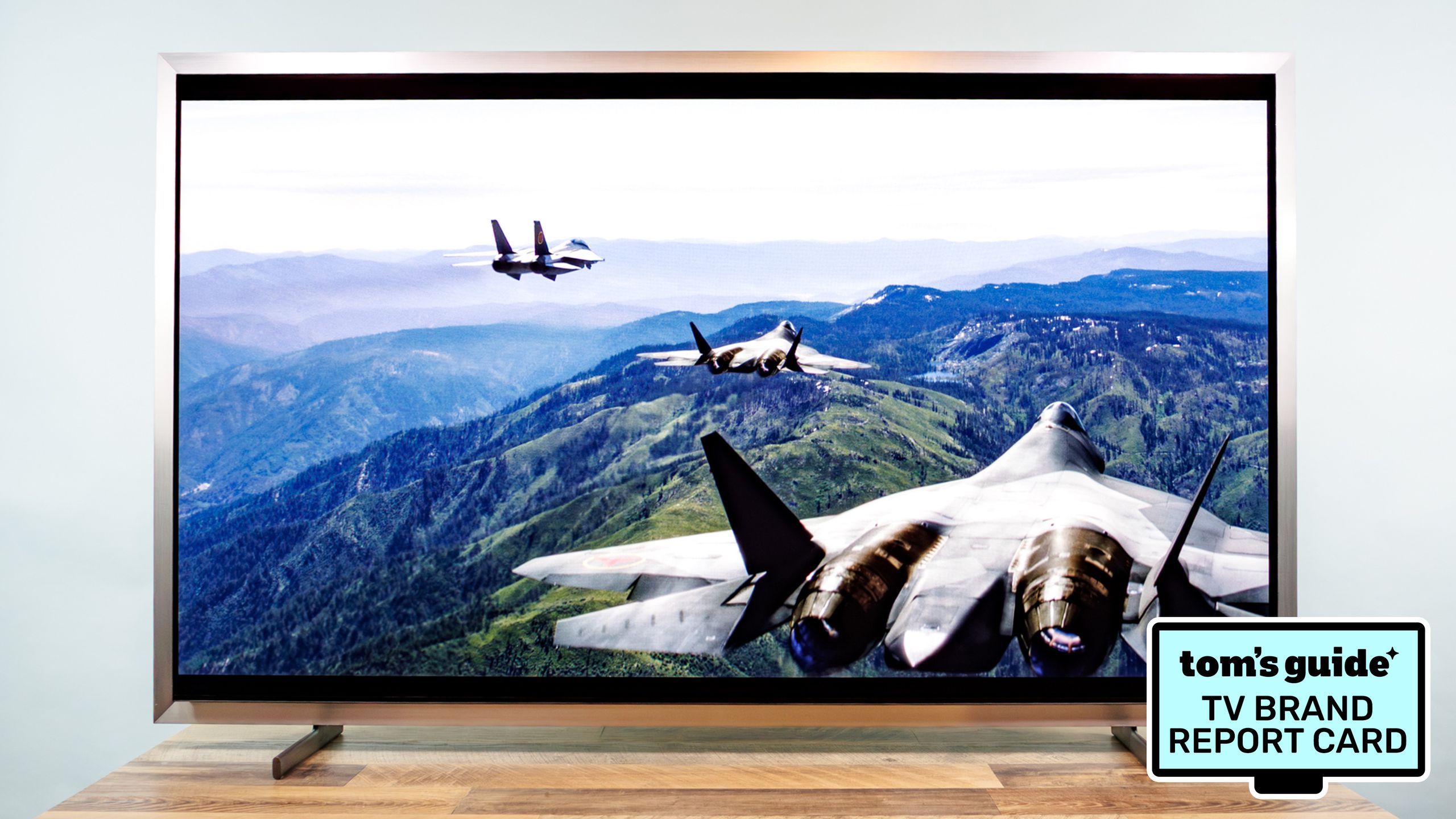
(Image credit: Tom's Guide) Plenty of TVs offer eye-popping picture quality, and even more are affordably priced. But your budget and a TV's performance should only part of the equation when shopping for a TV, because for the next several years, you won't just have a new screen, you'll have an entire brand's ethos at the center of your living room.To help you choose a brand to take home, we’re tapping years of TV-testing expertise and doling out report cards to major TV brands this week. We’ve already given grades to Hisense, LG, Sony, TCL and Vizio. Today, we’re taking a closer look at the Samsung TV experience in 2026.This year, like most big-time TV brands, Samsung is making a case for RGB LEDs with a pair of TVs that leverage the company's all-new Micro RGB technology. In addition, there are several new OLEDs and QLEDs rounding up the 2026 Samsung portfolio. (Image credit: Tom's Guide)PricingRelative to most sets, Samsung’s TVs aren’t priced as high as Sony’s. However, when comparing similar models, you can generally expect to pay slightly more for a new Samsung TV than one from Hisense and TCL — or roughly the same price for fewer features.This is especially true at the lower end of the spectrum. An entry-level Samsung QLED like the Samsung Q7F doesn’t offer Mini-LEDs and local dimming for improved contrast, but the TCL QM5K offers both of these features for about the same price.Fortunately, previous-year TVs tend to occupy shelves alongside the latest models, so there are usually ways to secure these features on a Samsung TV at a lower price.When comparing similar models, you can generally expect to pay slightly more for a new Samsung TV At the higher-end of the spectrum — among the brand’s OLED lineup, for instance — Samsung TVs are usually priced within a few hundred dollars of what you can expect to pay for a similar LG TV.Get instant access to breaking news, the hottest reviews, great deals and helpful tips.Consider this: As a mid-range OLED TV, the Samsung S90H is currently on sale for around $1,799. LG’s mid-range OLED TV, the C6, has been fluctuating between $1,799 and $1,999, too.The brand’s top-shelf TVs (like the S95H OLED and the R95H Micro RGB TV) are almost always among the priciest TVs on shelves, but nothing egregious relative to the competition. You can expect to pay about the same for LG flagships (like the G6 OLED) and significantly more for Sony’s flagship models (like the Bravia 9 II True RGB TV).Grade: B-Design (Image credit: Tom's Guide)Samsung does two things better than any other TV-maker: It engineers sleek, premium-looking TVs at the lowest end of the price spectrum, and it delivers fresh, innovative design features at the higher end.Samsung understands that, because budget-friendly QLEDs don’t leverage complicated, multi-layered display components, their hardware is capable of fitting into a slimmer, lighter chassis. At this price point, the picture may not blow you away, but the elegant-looking design will certainly be appreciated.It's worth noting, too, that, thanks to The Frame, Samsung is primarily responsible for the rapid expansion of the so-called lifestyle TV — models that emphasize design above all else.It engineers sleek, premium-looking TVs at the lowest end of the price spectrum, and it delivers fresh, innovative design features at the higher end.If you’re shopping higher up in Samsung’s lineup, you’re bound to encounter several thoughtfully considered (albeit divisive) design flourishes: the detachable One Connect Box (which can expand your TV’s HDMI selection from four to eight ports), the eye-catching metallic frame of the S95H OLED and the brand’s iconic matte-style, Glare-Free display.Elements like the metal frame and the matte-style screen won’t appeal to every viewer. But they’re bold design decisions that attract a wide swath of shoppers and, when you fold in the brand’s ability to properly zhuzh up budget-friendly models, I’m comfortable calling Samsung the brand to beat when it comes to design.Grade: A-Features (Image credit: Tom's Guide)Let’s address the elephant in the room: Samsung TVs don’t support Dolby Vision, one of the most popular HDR formats across streaming services, Xbox titles and UHD Blu-rays. Even if you splash out on the best Samsung TV money can buy, you won’t be getting Dolby Vision support. Them’s the breaks, kid.Samsung’s steadfast dismissal of Dolby’s proprietary HDR format (and the associated licensing fees) is a sore spot among dedicated home theater enthusiasts and all-around A/V aficionados. For most folks, though, Dolby Vision’s absence will hardly be felt.On Samsung TVs, HDR content mastered for Dolby Vision falls back to standard HDR10. In these scenarios, the picture isn’t quite as dialed-in to the creator’s intent as it would be with Dolby Vision processing the details, but if you’re buying an excellent Samsung TV, chances are good that it’ll look impressive nonetheless.Once you bust through Samsung’s entry-level range ... you’ll find more features than you will on any other brand not named LG.When it comes to more affordable Samsung TVs, you can reasonably expect a shorter list of gaming-related features than some of the more value-forward sets from TCL and Hisense. Just as Samsung’s lowest-level TVs often lack display-related features like Mini-LEDs and local dimming, so too do they often arrive with zero HDMI 2.1 inputs and no added gaming enhancements.But once you bust through Samsung’s entry-level range and move up to some of the mid-range and upper-mid-range options, you’ll find more features than you will on any other brand not named LG.OLEDs like the S85H, S90H and S95H come with a full slate of HDMI 2.1 inputs and support 4K gaming at 120Hz — the highest 4K spec for current-gen consoles. Variable Refresh Rate (VRR), FreeSync and G-Sync compatibility are almost always represented, too.Grade: BPerformance (Image credit: Tom's Guide)After over a decade of reviewing Samsung TVs that are big, small, affordable and expensive, here’s how I’d summarize their performance tendencies: Budget-friendly Samsung TVs typically make up for limited hardware with excellent picture processing, while mid-range and high-end Samsung TVs are usually among the best-looking TVs in their class.At lower price points, I find it easier to recommend models from TCL and Hisense, since these competing sets tend to offer more bang for the buck when it comes to sheer brightness and contrast control. Their processing may not be as adept as a rival Samsung TV, but at least you can hang your hat on a punchy picture.At higher price points, Samsung tends to deliver better all-round performance than competing TVs from TCL and Hisense. A big reason for this is hardware availability. Samsung offers a full lineup of OLED TVs while TCL and Hisense don’t. For my money, I’d almost always choose an entry-level Samsung OLED over a similarly priced Mini-LED TV from Hisense or TCL.Samsung offers some of the most impressive picture processing on the marketOnce you reach the highest echelons of Samsung TVs, you’re almost always dealing with some of the best TVs money can buy — whether OLED, Neo QLED or Micro RGB. Along with LG and Sony, Samsung offers some of the most impressive picture processing on the market, so finer details like skin tone accuracy, upscaling and light bloom-minimization are handled exceptionally well.The brand’s top-shelf Micro RGB TV — the R95H — is among the best examples of RGB LED technology available today. The S95H is one of just a few quantum dot-enhanced OLEDs you can buy, and easily one of the best OLED TVs ever made.Samsung could certainly afford to shore up its lower-end QLEDs to put them closer in line with the competition; I’d love to see Mini-LED backlighting with full-array local dimming become a standardized feature among those TVs above the Crystal UHD designation. But when it comes to the brand’s higher-end offerings, you can rely on Samsung to deliver exceptional performance.Grade: A-Smart TV platform (Image credit: Tom's Guide)The weakest aspect of an otherwise-excellent Samsung TV is its built-in software. The Tizen-based operating system has seen some significant improvements in recent years (namely when it comes to the navigational experience), but I simply don’t enjoy using Smart Hub — I tolerate it.I don’t appreciate how Samsung TV Plus — a free live TV service — automatically starts tunes in by default after the TV is turned on. I don’t appreciate how, from the home screen, accessing a menu of available inputs takes several more steps than it should. I don’t appreciate the chaotic amount of ads on the screen at any given time, and I definitely don’t have any use for the tangled thicket of AI-related features that continues to spread throughout the interface like an invasive weed offering no recognizable benefit.I simply don’t enjoy using Smart Hub — I tolerate itLG’s webOS isn’t much better, but Google TV is a breath of fresh air compared to Samsung’s streaming platform, and Roku is a downright dream. Some viewers will be able to hang with Smart Hub thanks to its decent app support, but people with higher standards will be better off plugging in a dedicated streaming device.Grade: C+Overall grade: BWhile some brands’ bread and butter are budget-friendly models that punch above their weight, a Samsung TV’s value tends to increase as you move up the lineup. In other words, I’m far more enthusiastic about the brand’s OLED, Micro RGB and Neo QLED TVs than I am about the brand’s more-affordable sets.If you’re aiming to spend less than $700 on a TV, I’m not as likely to recommend a Samsung as I am a TCL or Hisense TV, given the likelihood of those sets to include some key, competitive features. However, if you’re planning on shelling out on a mid-range or high-end model, there are plenty of Samsung TVs I can recommend with plenty of enthusiasm.In 2026, the Samsung TV that’s best suited for most people is the Samsung S85H. As the brand’s entry-level OLED, it carries a much friendlier price tag than the flagship-level S95H; you can buy the 65-inch S85H for just $1,497, while the 65-inch S95H will set you back over $3,000.Thanks to the benefits of OLED display technology, the S85H delivers better contrast than most LCD TVs in its price range (provided you don't intend on putting it in a sun-soaked room). It also comes with nearly all of the same features as the brand's higher-end sets.There's a lot to love in Samsung's 2026 TV lineup, but to fully appreciate what the brand excels at, you've got to be willing to spend at a higher level. Follow Tom's Guide on Google News and add us as a preferred source to get our up-to-date news, analysis, and reviews in your feeds. Michael Desjardin is a Senior Editor for TVs at Tom's Guide. He's been testing and tinkering with TVs professionally for over a decade, previously for Reviewed and USA Today. Michael graduated from Emerson College where he studied media production and screenwriting. He loves cooking, zoning out to ambient music, and getting way too invested in the Red Sox. He considers himself living proof that TV doesn't necessarily rot your brain.
Samsung TV report card 2026: 'You can rely on Samsung to deliver exceptional performance'
Full Article
Original Source
Read the full article at Tomsguide →KhanList aggregates and links to publicly available news content. We do not host full articles from third-party sources. Always verify important information with original sources.