
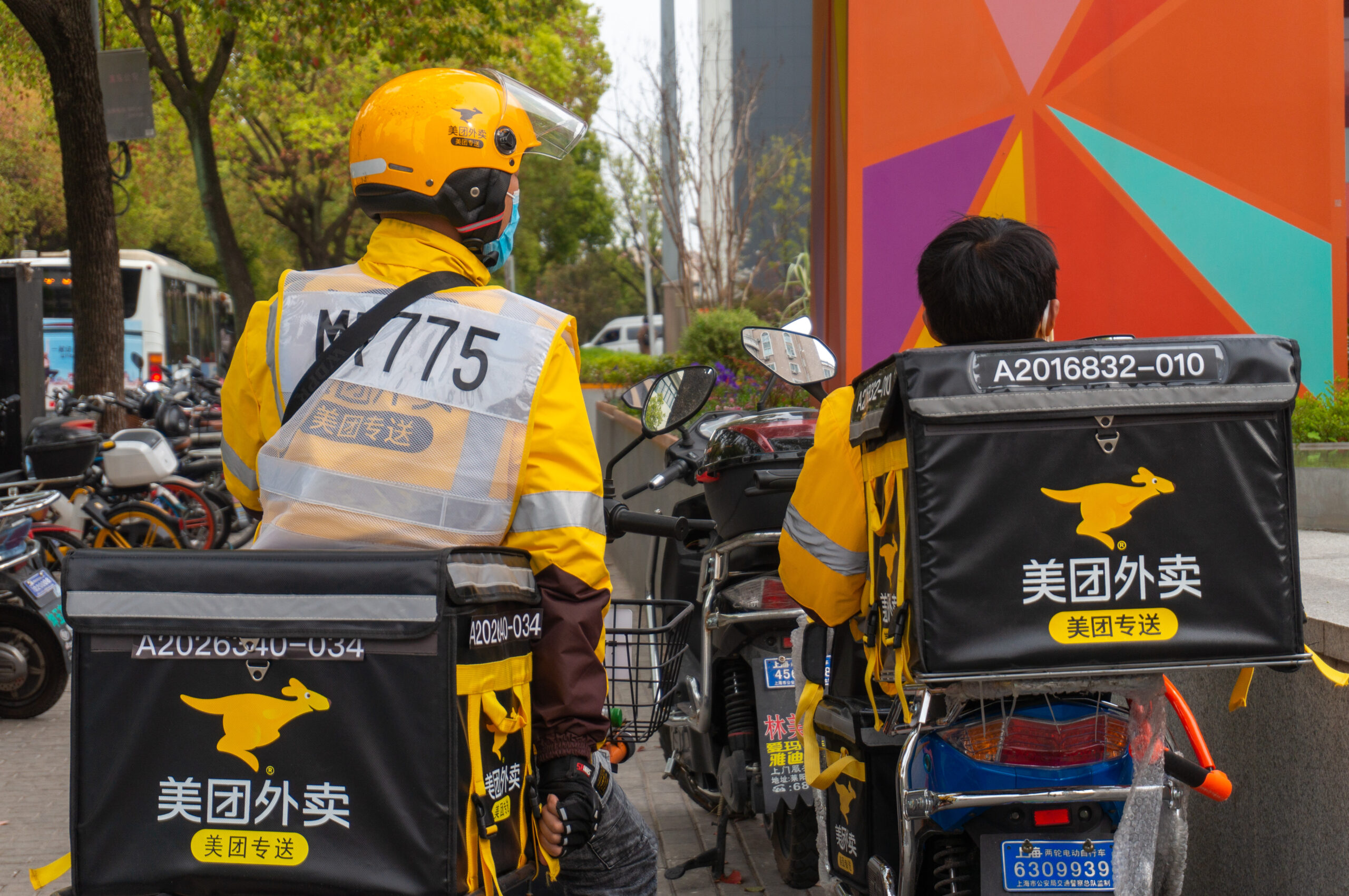
“New metric, same mess.” That was my headline on youth unemployment in China when I wrote here in February 2024. This was when—after a six-month hiatus—Beijing resumed publishing youth jobless data under a new method that excludes students. The restart figure was 14.9 percent. Fast forward two and a half years (and enough geoeconomic change for a lifetime) to this month’s release and my headline today is: “same metric, still a mess.” Youth unemployment, as measured among “urban” residents between sixteen and twenty-four years old, stands at roughly 18 percent, after hitting a twelve-month high of 18.9 percent in August 2026. Seasonally, rates peak in September; this is the worst September reading since official reporting began again. More troubling, even the good months are getting worse—annual lows (seen in June each year) have crept up from 13.2 percent in 2024 to 14.5 percent in 2025 to 14.9 percent in 2026. Among the overall population, the urban jobless rate is 5.2 percent, meaning the youth rate is now about three and a half times higher. This is not simply a new graduates problem: The rate for individuals between twenty-five and twenty-nine years old is 7.4 percent, with 12.7 million graduates set to enter a labor market constrained by weak demand. What appeared in 2024 to be primarily a domestic labor market challenge increasingly looks like a geoeconomic one. In terms of strategic competitiveness, Beijing’s ambitions in artificial intelligence (AI), electric vehicles, and biotechnology rely not only on industrial policy but on effectively harnessing human capital. Persistent youth unemployment suggests a worsening skills mismatch and weak labor market absorption. It is hard to see these ambitions coming to fruition when nearly one in five young urban workers is unemployed—the underutilization of its workforce is a heavy drag on its productivity. A country competing for the future while struggling to employ its present workforce is battling from behind. The mismatch also exposes a growing tension at the heart of China’s economic model: Scaling strategic industries and exports has not generated enough employment opportunities. Addressing the problem would likely involve fiscal interventions such as expanded wage and social insurance subsidies for hiring young workers or additional unemployment benefits targeting new labor market entrants that many cash-strapped local governments are increasingly unable to implement. This also complicates Beijing’s efforts to rebalance its growth toward domestic demand. Suppressed consumerism—owing in part to low levels of economic activity among its youth—means that economic growth leans on exports. Exports have continued to surge to 36 percent in September, contributing to a record trade surplus over $1.2 trillion, all while trade tensions with the EU and US remain hot. This could have reverberations in the Global South as well. I flagged in 2024 that a weaker China could ripple into youth labor markets in Africa and Latin America, where Chinese development finance, investment, and trade underpin job creation. That dynamic looks different today as Chinese development finance to Southeast Asia is falling (a 23 percent drop in 2024), the Belt and Road Initiative has leveled off, and China’s lending is flowing toward higher-income economies instead. Its most competitive export to the Global South may now be technology—cheap open-weight AI models like DeepSeek or Qwen, not jobs-rich infrastructure projects, thus offering a different type of economic attraction and influence. For developers and users in low-resource environments, these models lower barriers by supporting local language, reduce compute requirements, and avoid per-use fees and limit reliance on foreign API. Ultimately, China may represent the world’s clearest global demographic paradox. It is aging too quickly to waste labor, yet it can’t generate enough jobs to productively engage its young. China’s workforce is shrinking, its age dependency is rising, and labor shortages loom across key industries, all while millions of young people remain idle or underemployed. Demography alone won’t make or break a dividend. The economic payoff depends on whether economies can get their young into productive work and keep older workers engaged, earning, and spending longer. The geoeconomics of youth unemployment in China may be less about the headline rate itself than how it influences policy choices at home and abroad—it will impact Beijing’s approach to innovation, industrial policy, global investment, and economic engagement. Whether Beijing responds through state hiring, industrial policy, or augmented support for private-sector job creation will have consequences extending beyond China’s labor market. How China decides to tackle this growing problem will serve as an indicator of the future of China’s economic model and its global posture. Nicole Goldin is a nonresident senior fellow at the Atlantic Council’s GeoEconomics Center. Previously, she served as lead economist at the World Bank and a senior advisor to the US State Department and the United States Agency for International Development. Image: Shanghai, China - Apr 2, 2020: Deliveryman from food delivery company Meituan Waimai (Waimai means take-out in Chinese) waiting for order beside a large shopping mall. They are wearing face masks because of the coronavirus pandemic
Same metric, still a mess: The geoeconomics of youth unemployment in China
Full Article
Original Source
Read the full article at Atlanticcouncil →KhanList aggregates and links to publicly available news content. We do not host full articles from third-party sources. Always verify important information with original sources.