
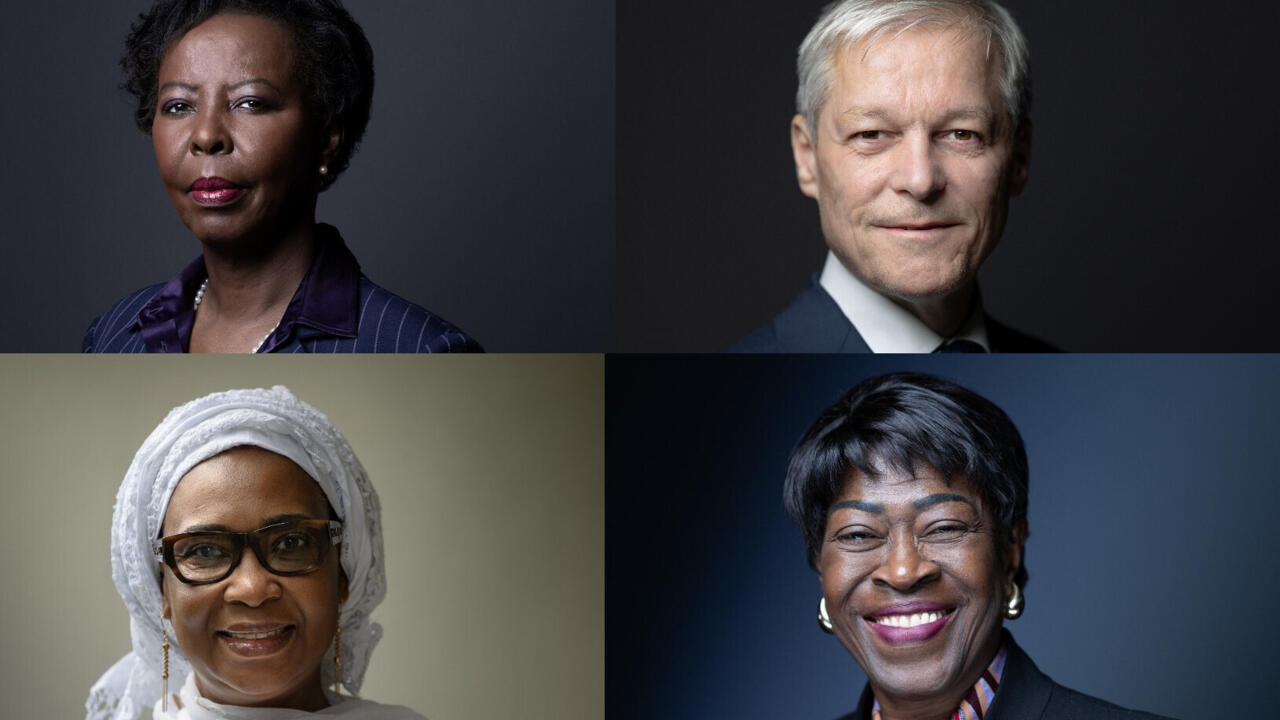
As the International Organisation of La Francophonie prepares to choose its leader for the next four years, the conflict between Democratic Republic of Congo and Rwanda, alongside criticism of incumbent Louise Mushikiwabo's record, is making for an unusually tense race. Cambodia's capital Phnom Penh is decked out in the colours of the French-speaking world as it prepares to welcome the 20th Francophonie summit on 15 and 16 November. Hun Sen Boulevard, named after the country's former prime minister and current president of the Senate, is awash with banners in French and Khmer proclaiming this year's theme: "Reinvest in peace for shared prosperity and lasting stability". The International Organisation of La Francophonie (OIF) brings together 53 French-speaking states to promote the French language, as well as cooperation, democracy and cultural exchange. However, rather than discussing the future of an organisation weakened by divisions in international co-operation and financial difficulties, the main topic among delegations is who will succeed Rwanda's Louise Mushikiwabo as head of the OIF for the next four years. And the way the secretary-general is chosen looks set to change. Rules adopted at the 2022 summit in Djerba, Tunisia retained consensus as the preferred method but opened the door to a vote if no agreement can be reached. In that case, the leaders of the 53 member states would elect the new chief by a simple majority. In a closely contested race, just 14 votes could be enough to win. Candidates in the running Incumbent Mushikiwabo is seeking a third term. The former Rwandan foreign minister is relying on her strong diplomatic network to secure support and is defending her record, which includes modernising the organisation and focusing on a handful of flagship programmes: digital technology, women's entrepreneurship and youth training. Her challenger from the Democratic Republic of Congo (DRC), Juliana Amato Lumumba, is calling for a “people-centred Francophonie”, focused on the dignity of the Global South. The DRC's former culture minister is also banking on her family name: she is the daughter of Patrice Lumumba, a founding figure of the DRC and an icon of pan-Africanism who was assasinated in 1961. Also in the running is Mauritania's Coumba Bâ, a doctor and former government minister who presents herself as a unifying candidate capable of offering an African compromise. Romania's Dacian Cioloș is the only male and only European candidate. A former prime minister and European commissioner for agriculture, he has campaigned for a Francophonie built around economic “opportunities”. Romania has been a full member of the OIF since 1993 despite not having a native French-speaking population, thanks to its historical cultural and linguistic ties with France. How a Nigerian town came to speak ‘street French’ DRC-Rwanda conflict However, the candidates' campaigns are being overshadowed by the conflict between Kinshasa and Kigali. Behind the scenes, the DRC, which accuses Rwanda of supporting M23 rebels, is working to prevent the Rwandan incumbent from being re-elected. It has reportedly threatened to leave the organisation if Mushikiwabo wins another term. Kinshasa has not made that threat publicly, but Congolese communications minister Patrick Muyaya told RFI this week: “If the choice made in Phnom Penh does not reflect the values we stand for, there will be consequences.” Several sources contacted by RFI say the DRC is threatening to act quickly and decisively. It could announce its withdrawal from the organisation as soon as the closed-door meeting in Phnom Penh ends on 16 November, or in the days that follow in Kinshasa. “The war between the two countries is not just a war of words,” Francis Kpatindé, a researcher and lecturer at Sciences Po Paris, told RFI. “If the DRC, the leading French-speaking country with 57 million speakers, withdraws from the organisation, that will be the end of the OIF.” Macron hosts francophone summit to boost influence in French-speaking world Questions over incumbent Mushikiwabo is facing criticism from elsewhere too. At the OIF headquarters in Paris, some have accused her of failing to act over Russia's invasion of Ukraine in 2022 and the withdrawal of Burkina Faso, Mali and Niger from the OIF in March 2025. In contrast, she is seen as particularly active on issues close to Kigali's interests – from support for Guinea's President Mamadi Doumbouya to the re-election of Central African Republic President Faustin-Archange Touadéra. This has fuelled suspicions that the organisation is being used to serve Rwanda's interests. “These missions are part of the OIF's mediation work,” a representative of the candidate's team said in her defence. But one official inside the organisation described the level of activism as “troubling”. Another criticism concerns Mushikiwabo's top-down management style. “Making the OIF serve Paul Kagame's interests requires a heavy-handed approach and bringing the organisation into line,” the same official said, adding that they had seen colleagues dismissed or moved into junior positions. OIF spokesperson Oria Vande Weghe dismissed the criticism, saying: “You can never please everyone in politics.” She pointed to “the reforms undertaken since 2018, starting with the introduction of a clear procedure for electing the secretary-general”. Mushikiwabo, she added, “will never apologise for bringing discipline and carrying out reforms”. French overtakes Arabic to become world's fourth most spoken language Romania's candidate The criticism of the incumbent, combined with tensions between Kigali and Kinshasa, could benefit Romania's Dacian Cioloș. The DRC has not ruled out supporting him if its own candidate is sidelined. “The only drawback for Dacian Cioloș is that he is not African,” one observer said. That could be a significant obstacle, given that Africa accounts for 26 of the OIF's 53 members and 65 percent of the world's French speakers. The OIF will choose its next secretary-general on 16 November during the summit's closing session. At the most recent European Council meeting, French President Emmanuel Macron held a meeting with the Romanian candidate. While this does not amount to official support from Paris, which has not announced its position, in the final stages of the campaign every move is being closely monitored. This article has been adapted from the original version in French by Nicolas Feldmann.
Rwanda-DRC tensions threaten to overshadow Francophonie election
Full Article
Original Source
Read the full article at Rfi →KhanList aggregates and links to publicly available news content. We do not host full articles from third-party sources. Always verify important information with original sources.