
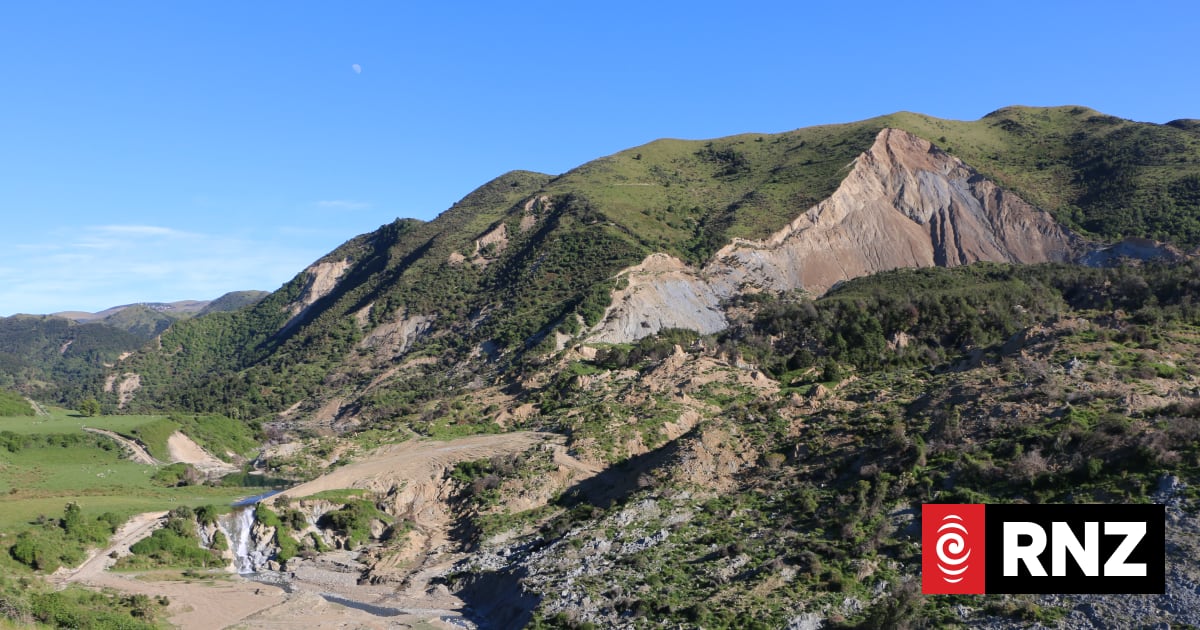
Ten years have passed since the devastating Kaikōura earthquake, an event that took the lives of two people, demolished homes and led to changes in the country's seismic modelling.Earth Sciences New Zealand volcanologist Graham Leonard told RNZ Saturday Mornings there was a lot to learn after the natural hazard struck."Global scientists learned a lot from this too. We realised that these large earthquakes can actually be across many faults at the same time."He explained that earthquakes were typically the result of stress built up for hundreds of years across a plane and across a region.Once the fault couldn't hold the stress, it began to unzip from a point that was the epicentre, then later transferred that stress onto other fault-lines."Our national seismic hazard model underwent a major revision and, globally, our understanding of the way earthquakes rupture and unzip changed with this event."Immediately after the earthquake Leonard said there were "geological detectives in the air", taking photographs and assessing the damage for clues."Those fault cuts are 10-12 metres long. The uplift at the coast was up to eight metres."Scientists also assessed satellite imagery and put drones in the air to utilise LiDar.Road damage Kaikōura to Waiau Valley (file image)RNZ / Rebekah Parsons-KingLeanard said, along with land damage, offshore impacts were also significant."There was a massive sediment movement in the steep offshore bathymetry that dropped debris flows and sediment into the canyon that flows north from there, the Kaikōura Canyon, and right up through beyond Hawke's Bay off of the eastern North Island, 600-700 kilometres."He said the earthquake took place on a steep coastal location, where many faults were part of the plate boundary action, bringing mountains out of the water."That means it's hard to get roads in and out, hard to have the connection of infrastructure. We saw tens of thousands of landslides in this event, really quite unprecedented."Leonard said scientists could see it was a widespread earthquake right away from the geonet shake reports, but there were some blank spots."There was a dark spot in the middle, where people either didn't have connectivity or they were really busy dealing with something else, and we got no reports in the central area."A damaged bridge on the road between Waiau and Mt Lyford following the earthquake in 2016. (file image)RNZ / Conan Young"Throughout that area, there were widespread landslips and earthquake-shaking damage, and people were isolated for a long time."The lessons learnt from the event were now part of the knowledge helping to prepare for future earthquakes, including a highly likely Alpine Fault quake.Also known as the AF8, scientists estimate a 75 percent chance of a magnitude 8 or higher earthquake will happen at the southern fault in the next 50 years.Leonard said, because the fault covered a larger location, the energy released was expected to be much more impactful, with far more landslides across the South Island."Directivity will be important. If it unzips again from south to north, that will send energy through to Wellington again."It will probably mostly be on land, but there is a chance of it rupturing offshore. In that case, more at the south end, so there's a chance of local tsunami."He said scientists were coming together with emergency management to plan for the event."That's everything from thinking about the changes in engineering, and perhaps the opportunity to engineer buildings that might be more rapidly post-earthquake fixable or even usable."Especially to be thinking about those pockets, that lack of connectivity, the way we might restore it or the ways we might manage using ports, and other aspects of connectivity and preparedness, resilience at location, if we don't have those connections."
What we've learnt 10 years on from Kaikōura earthquake
Full Article
Original Source
Read the full article at Rnz →KhanList aggregates and links to publicly available news content. We do not host full articles from third-party sources. Always verify important information with original sources.