
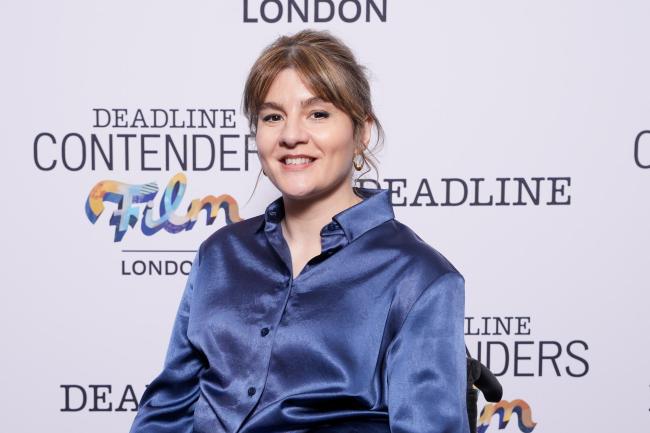
Ruth Madeley originally thought she’d become a screenwriter, attending Thornleigh Salesian College where she studied English and creative writing with an emphasis on scriptwriting. “I wanted to be a storyteller,” “Being Heumann” star Madeley told IndieWire. “It’s not that I didn’t want to be an actor, or I didn’t pursue it. I didn’t even think it was an option.” And it’s easy to understand why. Born with spina bifida and growing up as a wheelchair user, Madeley was aware that disabled actors, and roles written for them, weren’t exactly plentiful. “I never saw anyone who looked like me,” she said. “So to even know that that was potentially an option was madness to me.” When Madeley thinks back on some of the earliest disabled representation she saw in popular culture, her answer is similar to countless other disabled film and TV lovers: it was an abled actor playing a disabled part. “There’s a soap back at home where there was a wheelchair user, and I was like, ‘Oh, his wheelchair looks like mine.’ And then I found out the actor wasn’t a wheelchair user.” With that type of representation being the norm, it’s unsurprising that Madeley saw acting as something she was barred from. That is until 2009, when “Half Moon Investigations,” a children’s crime/comedy show, needed a wheelchair user for an episode. “I auditioned purely to be nosy and extend my network, and I got the role. I remember being terrified in the audition, thinking: ‘Why do people do this? This is awful,” she said in an interview with The Guardian earlier this year. That role kickstarted a film and television career that has flourished over the last decade. Now, Madeley is the star of “Being Heumann,” which details the life of disabled activist Judy Heumann and the 504 sit-ins in 1977. It’s a performance that could not only make history if she and the movie are Oscar-nominated, but also finally give young disabled girls someone who looks like them onscreen. Something Madeley didn’t have growing up. “As a disabled person, being aware that you might make history, that’s huge for me,” she said. “It’s huge for the community. That’s a really heavy and exciting thing to have.” ‘Being Heumann‘Apple But Madeley doesn’t want that history, or getting caught up in the discussion of representation, to overshadow the film’s content. “I’m not just a random wheelchair user they pulled off the street,” Madeley said. “This is my job, so talking about the actual craft is really exciting for me.” And that craft was multifaceted. Not only was Madeley portraying an actual person, a legend in the disabled community. She also had to do accent work, ASL work, and appear in nearly every frame of the movie. The accent was particularly important to get right, as Heumann’s Brooklyn upbringing was a huge part of her life, and indicative of her prickly personality. “I don’t find [accents] easy,” she said. “I have to work at them, and learn the science of it, and the tongue placement. All of those interesting fun things that I get to play with. She was such a proud Brooklyn woman, I wanted to be able to sound so specifically like her.” That specificity was imperative to Madeley in every aspect of playing Heumann. “Siân [Heder, director] and I spoke so much about movement, because we’ve been so starved of seeing disabled people on screen that you don’t always see how a disabled person moves through the world.” Both Heder and Madeley were intrigued by the juxtaposition of Heumann’s desire for movement with her paralysis forcing her to be still. “Siân and I both were fascinated by Judy’s speed and freedom when she was in her chair; she was never still,” said Madeley. “Versus when she’s out of her chair, and she is in such a different state of vulnerability.” The sequence in the trailer, where Judy is forced to wait for her in-home health attendant to show up so she can use the restroom, makes this painfully apparent. “Once she was in bed, she had all of these pillows, and she knew that she had to be comfortable when her attendant left because the second that attendant left she couldn’t move herself for the whole night.” It was seeing the authentic lived experience of a disabled person, activist aside, that was so compelling to Madeley. “The worst thing I can watch on screen is if something looks too easy,” said Madeley. Too often movies made after the passage of the Americans With Disabilities Act present a rose-colored view of accessibility, or at least do so by never discussing it. Here, the movie authentically details what being a wheelchair user, a blind person, or a deaf person was like in 1977. The landscape is riddled with different access barriers, both individually and societally. But Heder and the production team made a point of showing all of those, not just the stairs crafted to enter buildings, but putting the wheelchair-using cast in actual wheelchairs from the 1970s. “The 1970s chairs helped [with authenticity] because nothing is easy in those things for anyone,” said Madeley. “There were so many people on hand to help, which was so invaluable because even if the place was fully accessible, being in those chairs makes things so much harder. They weighed so much. Why did people keep them? That’s what I don’t get.” Because the wheelchairs were so unwieldy, the actors needed to get out of them to relax their bodies. It was also a chance for Madeley to realize her own limitations as a disabled person, and remember that no two disabled people have the same experience. “I recognize my privilege. I’m an ambulatory wheelchair user. I can stand up and stretch if I need to. There were other people that couldn’t… So that was a learning curve as well throughout the process of filming. People need to get out of these every few hours.” On the page, Heumann isn’t sanded down, and Madeley is happy with that. “I’m all for a messy queen!” Her Judy is impatient, stubborn, downright rude at times. But Madeley wanted to make sure that was placed alongside Heumann’s joy, warmth, humor, and vulnerability. Without that delicate balance, the character could have come off as too bitter, on one end of the spectrum, or too tragic. “That feeling of having to be easy, or grateful, or nice, so that people — all of those things that society expects of a disabled woman–I’m not those things all the time, and no one is,” she said. “I love the fact that I got to play somebody who didn’t have her edges rounded off. I love the fact that she was able to be prickly.” In the end, Madeley wants to keep showcasing flawed humans, not necessarily flawed disabled humans. “I’m just driven by character,” she said. Too often, disabled actors are only hired for disabled roles, and that’s something Madeley wants to subvert. “I don’t only have to play disabled. I can play the messy mom of two who’s got knocked up again, and who is completely inept.” Madeley continues to show that the different sides of disability will no doubt finally turn the tide on what disabled actors can do. It’s a far cry from the type of representation she, and many other disabled people, had growing up. “Being Heumann” opens from Apple TV in select theaters starting Friday, November 6. The film streams on Apple TV starting Friday, November 13.
Ruth Madeley Never Thought Acting Was an Option — Now, She’s Playing a Disability Rights Legend in ‘Being Heumann’
Full Article
Original Source
Read the full article at Indiewire →KhanList aggregates and links to publicly available news content. We do not host full articles from third-party sources. Always verify important information with original sources.