
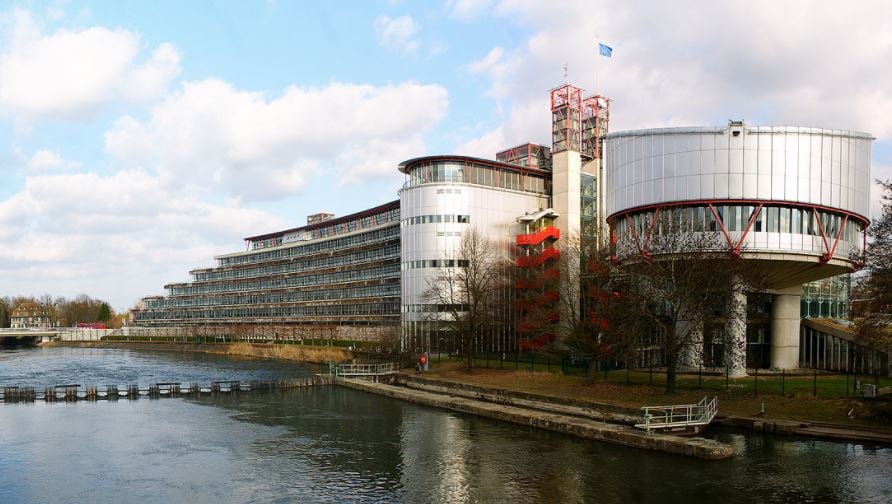
A former lawyer facing a lifetime ban kept skipping appeal hearings, and a Luxembourg court refused to let her attorney explain what was going on.(CN) — A lawyer’s empty chair should not automatically leave her defense without a voice, Europe’s human rights court said Tuesday.The European Court of Human Rights issued an advisory opinion requested by Luxembourg’s Constitutional Court over a former lawyer’s lifetime ban. Identified as F.C., she is challenging rules that barred counsel from defending her when she missed a disciplinary appeal hearing for medical reasons and prevented her from asking for the decision to be reopened.According to local reporting, F.C. is Farida Chorfi, a former adviser to a wealthy Belgian brewing heiress. In 2016, a Luxembourg appeals court convicted her of attempted fraud after she dictated a will naming herself as a beneficiary, leading her client to believe it would allow a foundation to be established in her name. A notary intervened, foiling the attempt.Chorfi had resigned from the Luxembourg Bar in May 2013. Disciplinary proceedings followed in 2021 over conduct while she was still a member, and a board disbarred her for life in July 2023, in her absence. Domestic records referred to offenses established by a criminal appeals court, although the advisory opinion did not detail the underlying misconduct.She appealed. After several postponements, twice at her request, she sought another delay in October 2024 on medical grounds, submitting a doctor’s certificate. The appeal board refused. Her counsel attended to explain her absence and present her defense but was barred from speaking on her behalf. The lifetime ban was upheld.Luxembourg’s rules required personal attendance: Counsel could assist someone who appeared but could not stand in for an absent client. Decisions delivered in their absence could not be reopened at their request. The disciplinary body nevertheless had to examine the evidence; absence alone did not establish misconduct.The European judges accepted that requiring attendance could help disciplinary bodies question lawyers directly, prevent delaying tactics and keep cases moving. But a missed hearing could not automatically be treated as surrendering the right to a defense.A disciplinary body had to hear counsel’s explanation and assess whether the client had clearly abandoned that right or intended to evade proceedings. Without either finding, it had to offer a genuine opportunity to defend the case, including by postponing the hearing or allowing representation despite the absence.The court explained that shutting counsel out could hamper the disciplinary body’s assessment. “It may additionally deprive the disciplinary body of information necessary to assess the implications of that absence and, more generally, to determine the disciplinary case in full knowledge of the facts,” the court said. Safeguards required particular care when someone’s career, reputation or livelihood is at stake.Lydie Lorang, a founding partner specializing in civil and criminal litigation at LR Avocats and counsel for F.C., welcomed the opinion, particularly the possibility of representation for a justified absence, as she maintained her client’s had been. “Before Court of Appeal I was even refused to say a single word,” she said, adding that the court had followed the defense’s argument.Lorang said Luxembourg would have to review disciplinary procedures for public employees, notaries, lawyers, bailiffs and doctors because similar provisions applied. That was her assessment; the court did not order such a review.Luxembourg Bar President Pierre Schleimer declined to comment because the case remains before national courts.Of 40 European Convention countries surveyed, 31 appeared to allow representation for absent lawyers. The court also cited a Council of Europe treaty recognizing representation in disciplinary proceedings, signed by Luxembourg but not yet in force when the opinion was adopted.The opinion is final and cannot be appealed, but it is nonbinding and did not overturn F.C.’s disbarment. Luxembourg’s Constitutional Court must now answer the constitutional question before the Court of Cassation resolves the underlying challenge. The lifetime ban’s fate remains with Luxembourg’s courts.Courthouse News reporter Eunseo Hong is based in the Netherlands.Subscribe to our free newslettersOur weekly newsletter Closing Arguments offers the latest about ongoing trials, major litigation and rulings in courthouses around the U.S. and the world, while the monthly Under the Lights dishes the legal dirt from Hollywood, sports, Big Tech and the arts.Additional Reads
Rights court rejects missed hearing as motive to silence lawyer’s defense
Full Article
Original Source
Read the full article at Courthousenews →KhanList aggregates and links to publicly available news content. We do not host full articles from third-party sources. Always verify important information with original sources.