
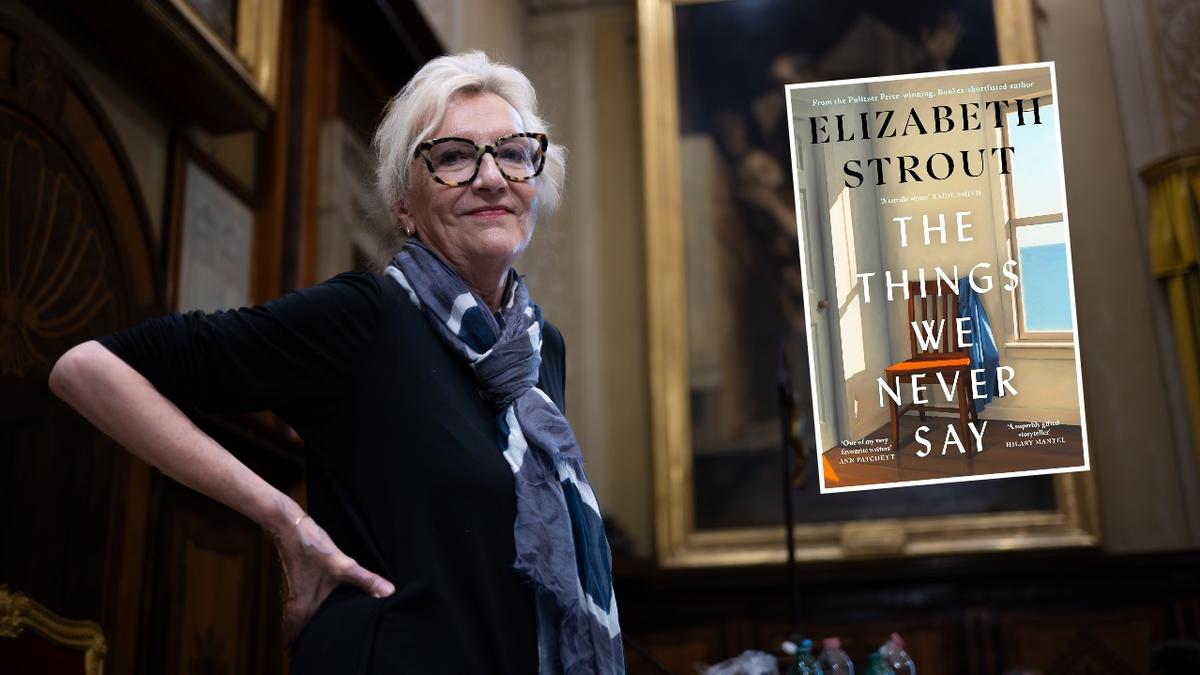
American author Elizabeth Strout, 70, is known for her Lucy Barton series of novels. | Photo Credit: Getty Images For all his belovedness, Arthur Dam, the protagonist of Elizabeth Strout’s new novel, The Things We Never Say, is not Lucy Barton — a recurring character in Strout books. There is no reason he should be, it is just a handicap of readers who look for the traits of a favourite character in every other protagonist of the writer.There is, however, the familiar underlying niceness that Strout characters just cannot seem to escape. The Booker-shortlisted author has managed to release another helplessly adorable middle-aged man into a world where the smallest details create lasting impressions and endearments float around like a much-needed decanter.Arthur, or Artie, is, of course, a high- school teacher — what else could he be with all that concern he harbours for the world? It fits that Artie is there to part with the history he knew of the world and open the door just a bit wider for his curious lot of 16-year-olds. He is in his late 50s and lives in Massachusetts with his wife of decades, Evie, a therapist. It also fits that Arthur is the kind of man who would have several dear friendships but comes home to share tiny details of his day with Evie.The lurking painWithin a few pages, Strout has moulded a man out of her prototype — kind, friendly, with an overwhelming concern for the future of his country. But everything cannot be rosy and in Strout’s words: “As many people do, Artie and Evie had suffered a tragedy.” A tragedy that has brought a distance between Artie and his son Rob. Strout does not let you gloss over the incident and head for what’s next. The tragedy has to set in, and with it, what each of the persons involved went through, has to be felt.On the surface, it may seem like a very private affair that needn’t interest you; after all, it is in the past and all the characters appear busy with their lives. But the writing makes it hard to ignore the heaviness in their midst. Even as Evie and Artie share their stories of the day-to-day like a happy old couple, the air is thick with a misery that has permanently changed some part of them.You can visualise every step of Artie’s descent into depression, and how well-hidden it is for a long, long time. You worry for this man, who is already shattered enough to be suicidal, when more troubling stories from the past reach him. Even as he goes on teaching, or sharing drinks with his friends, you picture him sagging and discoloured, weighed down by an uncontrollable gloom. He wonders, and you wonder with him, how Evie does not spot that something is wrong with him. In the novel, Strout often evokes the beauty of insignificant moments that hold great meaning. | Photo Credit: Getty Images/ iStock Beautiful relationships are formed with minimal exchanges. It can seem trivial when you read about a very ordinary moment that is made to appear important — a passing expression, a casual comment, a glance (“really looked at him”). Strout masters in subtleties. Artie’s exchanges with his students are precious, even if they are not overly enthusiastic. Strout throws such images at you now and again, until you are forced to take notice — Artie’s question to his student Rhonda; his sister with confectionery sugar; a phone call from his father. When they are repeated, they become relatable. You ransack your memories and find such seemingly insignificant moments that hold great meaning.Politics in the mixThe only grandeur comes via Artie’s thoughts for his son and the women in his life; there is no trimming of expression. You can’t help wishing that fathers and sons had between them what Artie and Rob do.There is also quite a bit about the 2024 American presidential elections and the doom the characters fear the country is headed for. The politics is blatantly presented, bold for a writer of today.Strout does not have you pacing through the pages as she does with her Lucy Barton books. There is some mystery, there is a lot of emotion, but you might need Artie’s patience to take everything in. Light as the book is, the pages ask for time, and the author, very understandingly, spoils you with ellipses and white spaces.The reviewer is a constant reader and an aspiring writer from Kerala. The Things We Never Say Elizabeth StroutViking₹1,099 Published - July 17, 2026 06:15 am IST
Review | Elizabeth Strout’s ‘The Things We Never Say’ is an elegy for the ordinary
Full Article
Original Source
Read the full article at Thehindu →KhanList aggregates and links to publicly available news content. We do not host full articles from third-party sources. Always verify important information with original sources.