
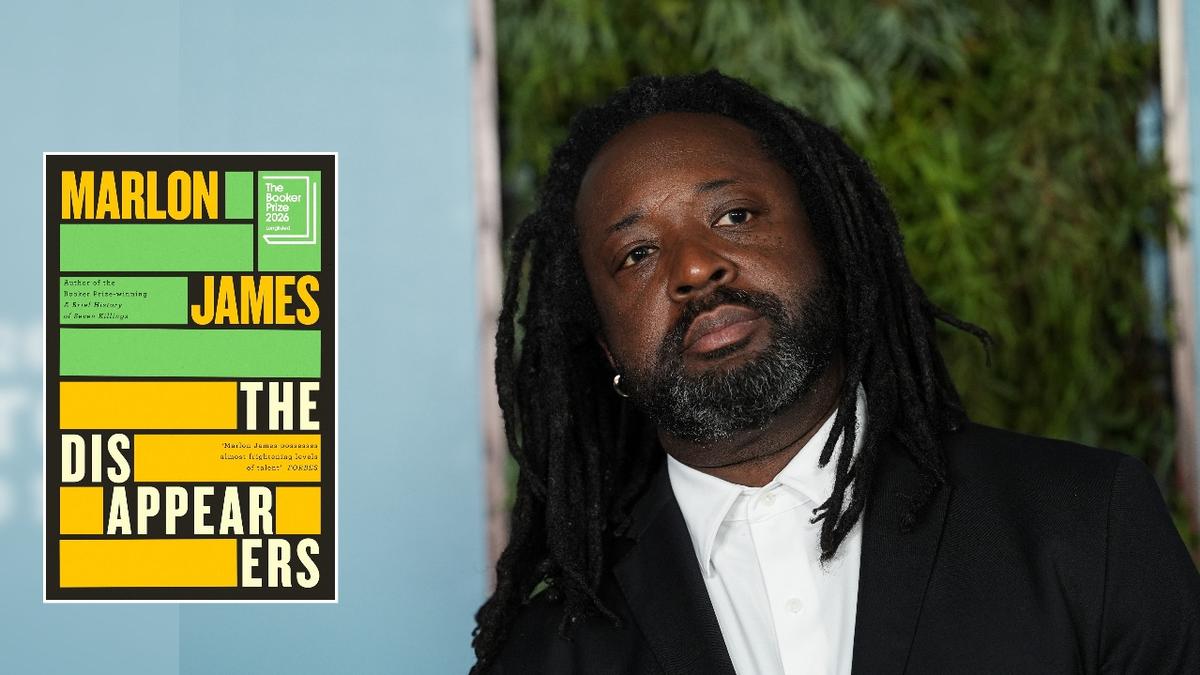
Marlon James won the Booker Prize in 2015 for his novel, ‘A Brief History of Seven Killings’. | Photo Credit: Getty Images Marlon James, in his Acknowledgements at the end of his Booker Prize-shortlisted novel, The Disappearers, writes that “The novel is total fiction. The novel actually happened.” It is this navigation with what consists of fiction, truth and justice in a world marked by colonial histories of brutal oppression, hate crimes against women and members of the LGBTQIA+ community, along with the myriad forms of normalised systemic racial, sex-based, class and/ or caste-based discriminations that the narrative broadly entails. However, more specifically, James is referring to the atrocity at the heart of his epic narrative.The novel opens with eight queer, mostly amateur, actors who have gathered together to stage a play in 1988 Kingston, Jamaica. A fairly innocent undertaking except that this is exactly what it is not in the eyes of a highly homophobic society, especially because of the choice of the play itself. They are hoping to stage Fortune and Men’s Eyes, the 1967 play that was set in a prison and raised pertinent questions about sexuality and violence. In a crew member’s words, “this is the kind of play that blows open the whole fragile myth of Jamaican male sexuality and homophobia” and that “prison is the ultimate male institution and yet masculine sexualities that could never happen outside in the normal world flourish in there all the time”.And true to the innermost fears that dictate the lives of these eight men, during a regular rehearsal day, the cast and crew are intercepted by a violent mob and the end result is one death and seven lives inexplicably changed forever. The gory details of the incident are narrativised throughout the novel from varying perspectives but instead of showing it as one major traumatic intervention in the lives of eight queer men, James shows how violence was a threat that infused every single day of any queer person in the country at the time. Don’t look awayJames explains in an interview with the Booker Prizes how his book is based “on a violent incident that was rumoured to have happened but was never proven... But in Jamaica we trust rumours more than facts, so the fact that people kept whispering about it meant it was true.” And most of the events that transpire throughout this polyphonic (in true Bakhtinian fashion) novel are available to the reader in the form of almost archival repositories. This takes the shape of diary entries of one of the central characters (Edmond ‘Eddy’ Porteous) who takes us through the rehearsals of the play, and then there are interview transcripts of cast members (primarily Jordan Brown but also Eddy) with a journalist investigating the events that unfold on the night the hate crime takes place.And finally there are letters written by another central character (Havelock Titus) who was also the showrunner of the fated play. While this narrative mode can be a bit demanding for a reader and asks for an active engagement with the novel at every turn of the page, this is also part of the intentional narrative design that never allows for the reader to look away from the violence unfolding within the 613-page long book. Making the invisible, visibleThe title itself reflects the multi-layered storytelling that James offers in The Disappearers. On one level, the title can be said to be based on the disappearance of two cast members (Orrin Turner and Matt Chin) after the hate crime, which in turn leads to Eddy and Jordan undertaking their own investigation into their whereabouts.On another level, the title is reflective of how the queer community historically has been driven to become invisible in order to survive another day, thus making themselves ‘disappear’ from the gaze of a criminal justice system that treated them as perpetrators even if they were the victims. As Jordan says, “From when our families kick us out and pretend that we never born, we been going through being erased.”To say that The Disappearers is an artistic act of making visible the lives that are forced to be invisibilised would be an understatement. What the novel achieves is a far greater contribution to the literary representation of queerness and the violent histories of both homophobia and colonial oppression that result in what Jordan, borrowing from John Rechy in The Sexual Outlaw, calls ‘ancestral rage’. James’ magnum opus is just that. It is a literary outpouring of compounded and doubled ancestral rage that is meant to explode on each and every page. The Disappearers Marlon JamesHamish Hamilton₹999The reviewer is a Delhi-based literary critic and research scholar. Published - November 10, 2026 06:56 am IST
Review | Booker-shortlisted ‘The Disappearers’ by Marlon James is a literary outpouring of ancestral rage
Full Article
Original Source
Read the full article at Thehindu →KhanList aggregates and links to publicly available news content. We do not host full articles from third-party sources. Always verify important information with original sources.