
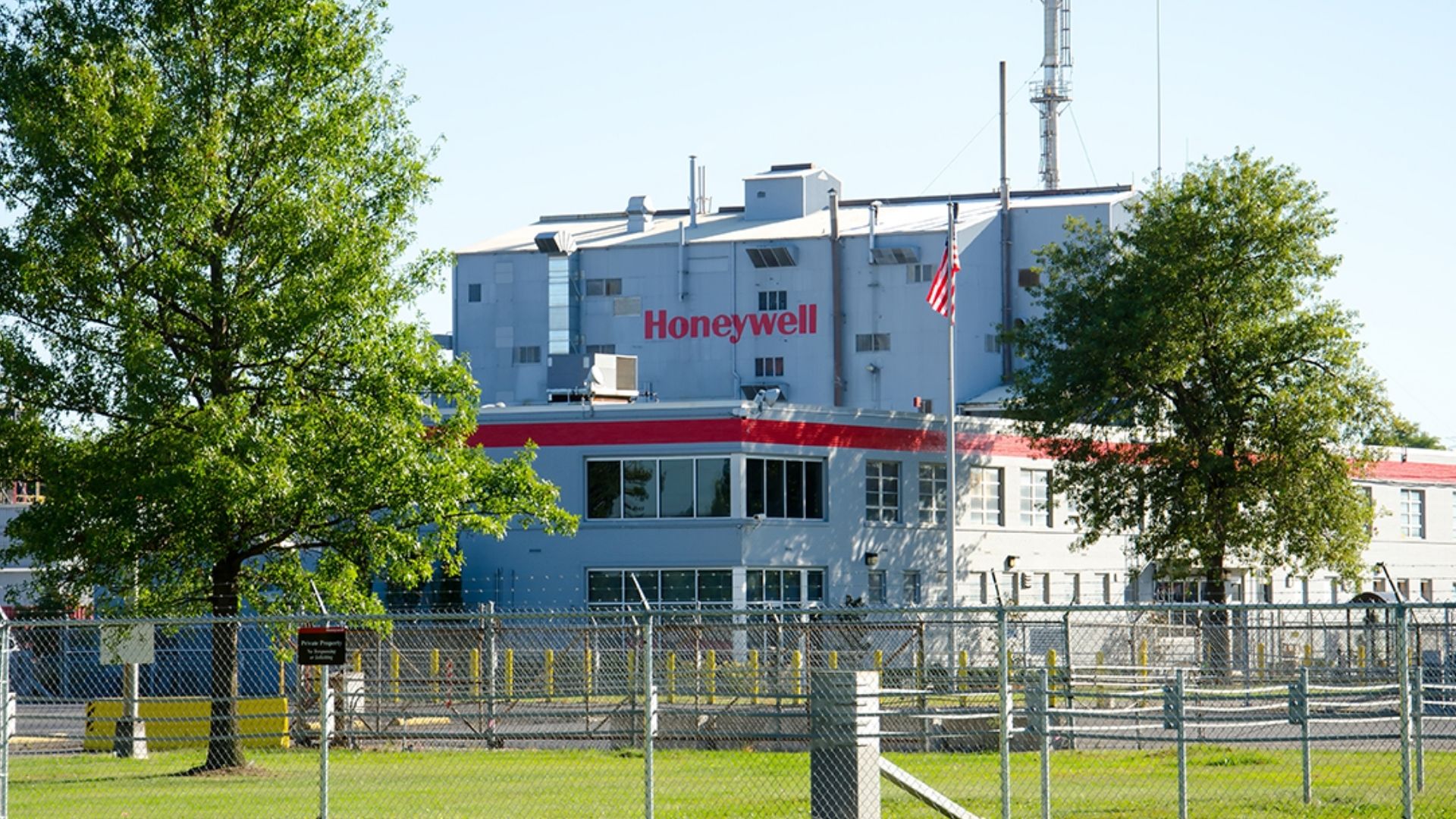
Raven-Flint Nuclear Corporation has been selected for the U.S. Department of Energy’s (DOE) Nuclear Energy Launch Pad program at Idaho National Laboratory, a step the company says could accelerate development of its planned uranium conversion facility and help rebuild a critical part of America’s nuclear fuel supply chain. The company also announced two other milestones. It has successfully produced uranium hexafluoride (UF₆) using its proprietary conversion process, and the U.S. Nuclear Regulatory Commission has docketed its application for engineering-scale uranium operations at Raven-Flint’s radiochemistry laboratory in Idaho Falls. Together, the developments mark a push by the privately held company to move its technology from laboratory development toward a commercial-scale uranium conversion operation. A second U.S. uranium conversion plant Raven-Flint plans to build a pilot facility called Torch at Idaho National Laboratory. The company describes it as a first-of-a-kind plant intended to demonstrate its uranium conversion technology at larger scale. Uranium conversion is an important step in the nuclear fuel cycle. Before uranium can be enriched for use in many commercial reactors, it is converted into uranium hexafluoride (UF₆), a chemical form that enrichment facilities can process. Raven-Flint says the United States currently has only one uranium conversion facility, originally built in 1958, and that the plant supplies less than half of current U.S. utility demand. The company intends for Torch to process 500 tonnes of uranium per year into UF₆, which it says would be enough to supply the fuel requirements of two large reactors. The facility could also produce domestic UF₆ for Department of Energy and DOE-affiliated applications, including material that could support defense requirements. Raven-Flint wants to eliminate elemental fluorine The more unusual part of the company’s approach is its Corvus Route, a proprietary uranium conversion process designed to eliminate elemental fluorine gas from the production chain. Conventional UF₆ production uses elemental fluorine as part of the conversion process. Raven-Flint argues that removing it could reduce the complexity and safety burden associated with traditional conversion facilities. The company says it has now successfully produced UF₆ using the Corvus Route, describing the result as a key technical proof point for its process. Raven-Flint also claims the technology could reduce capital costs by more than 30% compared with legacy conversion technology and eliminate dependence on foreign-made hydrogen-fluoride electrolyzers. Those are company claims, and the successful production announced here does not by itself establish that the process can achieve those economics or operate at commercial scale. Demonstrating consistent production at much larger throughput will be a major next step. DOE pathway and NRC review The company’s selection for the Nuclear Energy Launch Pad at INL could help address that scale-up challenge. The program, administered by DOE’s National Reactor Innovation Center, is intended to provide nuclear technology developers with access to technical expertise, facilities, and regulatory support as they work toward demonstrating new technologies. For Raven-Flint, that means developing the Torch facility within the INL ecosystem while continuing to advance its conversion technology. Meanwhile, the NRC has formally docketed Raven-Flint’s license application for engineering-scale uranium operations at its Idaho Falls radiochemistry laboratory. Docketing begins the NRC’s technical review process. Raven-Flint says the engineering-scale work will provide data that can inform a future licensing application for a commercial-scale facility. Why uranium conversion matters The development comes as the United States seeks to strengthen domestic control over more stages of the nuclear fuel cycle. Expanding nuclear generation requires not only reactors but also reliable supplies of uranium, conversion capacity, enrichment and fuel fabrication. Bottlenecks in any one of those stages can constrain the entire system. That makes uranium conversion a less visible but strategically important part of the nuclear industry. Raven-Flint is attempting to address that bottleneck with a process designed around a different chemical pathway, while using DOE and NRC programs to move from laboratory-scale development toward industrial demonstration. The immediate milestone is therefore not the construction of a 500-tonne-per-year plant. It is proving that the Corvus Route can reliably produce UF₆, scaling the process through engineering testing, and obtaining the regulatory approvals needed to operate progressively larger facilities.Get the latest in engineering, tech, space & science - delivered daily to your inbox.Kaif Shaikh is a journalist and writer passionate about turning complex information into clear, impactful stories. His writing covers technology, sustainability, geopolitics, and occasionally fiction. A graduate in Journalism and Mass Communication, his work has appeared in the Times of India and beyond. After a near-fatal experience, Kaif began seeing both stories and silences differently. Outside work, he juggles far too many projects and passions, but always makes time to read, reflect, and hold onto the thread of wonder.
Raven-Flint selected by DOE to build America’s second uranium conversion plant
Full Article
Original Source
Read the full article at Interestingengineering →KhanList aggregates and links to publicly available news content. We do not host full articles from third-party sources. Always verify important information with original sources.