
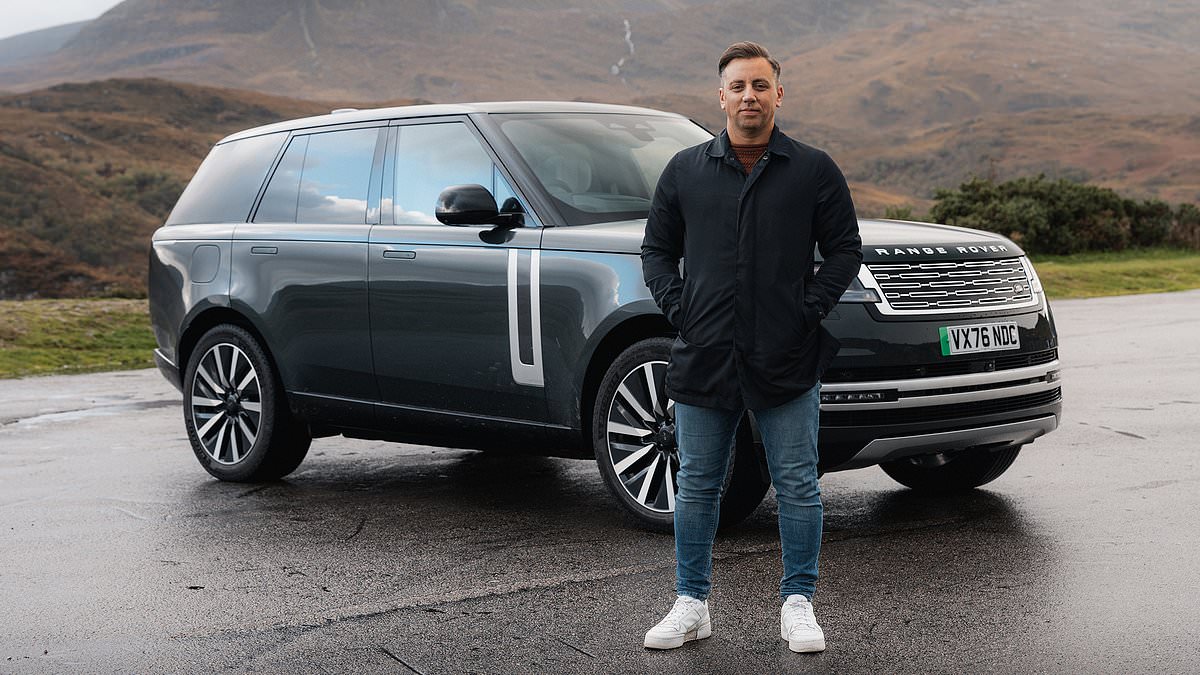
New electric cars from Jaguar Land Rover are like buses: you wait ages for one, then two or three turn up at the same time.It's been ten years since the company launched its first – and until now only – EV, the Jaguar I-Pace. But the British carmaker is now firmly planting its foot on the throttle of its electric transformation.After all the razzmatazz surrounding Jaguar's controversial Type 01 unveiling at the start of the month, JLR is next looking to ditch Range Rover's gas-guzzling 'Chelsea Tractor' reputation with the first all-electric versions of its full-fat luxury SUV and smaller Range Rover Sport sibling.In fact, the company is billing it as the best Range Rover you can buy right now. And so it should be, given its elevated asking price.The Range Rover Electric starts at £154,070 – almost £50,000 more than the entry-level diesel – with prices climbing to nearly a quarter of a million pounds for the range-topping long-wheelbase version.Bosses say its performance is on a par with – if not better than – the petrol V8 Range Rover. It boasts the same 900mm wading depth and class-leading off-road ability, while vowing to enhance the SUV's already lofty levels of refinement. There's just one caveat: you'll need to plug it in every 333 miles.Will this appease Range Rover's typical cash-rich, time-poor customers? I was one of the first people to spend a full day and several hundred miles behind the wheel in Scotland to find out... The new £154,070 Range Rover Electric is being billing as the most accomplished Range Rover yet. The Daily Mail and This is Money is among the first to drive it extensively on and off roadSpot the differenceThe lack of engine noise is about the only way you'll tell the battery-powered model apart from any other Range Rover as it glides past.It looks almost identical to the petrol, diesel and hybrid versions of the fifth-generation L460 SUV that debuted in 2021. Aside from the lack of exhausts, a blanked-off grille and a different wheel design, you're unlikely to identify the electric version in an identity parade of Range Rovers.The only other visual change is a redesigned floor – and you'll only notice that if you're unfortunate enough to be run over by one.It doesn't even have a single 'Electric' badge stamped onto its familiar bodywork. So owners in London's affluent suburbs won't even be able to argue its green credentials with the tyre-slashing eco campaigners who target SUVs in the capital.But this is entirely by design.As JLR shifts into a new electric era, it's keen to maintain consistency across the volume-selling, profit-generating products that prop up the business.With around 70,000 full-fat Range Rovers delivered globally each year, the British luxury carmaker is understandably reluctant to tamper with the flagship's winning formula.It's a stark contrast to sister brand, Jaguar. Its divisive new Type 01 EV is a major departure from the petrol and diesel cars it stopped selling late last year as it aims to revive the struggling 90-year-old marque.In terms of price, the entry £154,070 example is the high-spec short-wheelbase Autobiography.That's £46,540 more than the most affordable combustion Range Rover, the D300 Diesel in HSE trim. The cheapest oil burner in the equivalent Autobiography specification rings in at £127,540, so £26,530 less than the EV.The lowest-priced equivalent petrol is the P380 3.0-litre supercharged V6 at £130,520 (£23,550 less than the Electric) while the most inexpensive plug-in hybrid is the P460e at £137,390, so a £16,680 saving against the EV. To the untrained eye, it's almost impossible to tell the Range Rover Electric from a petrol, diesel or hybrid variant. All four options will remain on sale, JLR says Aside from its lack of exhausts, a flush grille and a unique wheel designs to improve air flow, you're unlikely to identify the EV550 in an identity parade of petrol and diesel Range Rovers Range Rover Electric SWB: Will it fit in my garage? On sale: nowPrice: from £154,070 for EV550 Autobiography SWBPrice of car tested: £157,610 EV550 First Edition SWBDIMENSIONSLength: 5,258mm Width: 2,003mmHeight: 1,868mmWheelbase: 3,197 mmKerb weight: 2,885kgBoot capacity: 818 litres (2,175 litres with rear bench folded)PERFORMANCEBattery: 118.5kWhElectric motors: x2 349bhp permanent magnetic motors (one at each axle) Max power: 542bhp (550PS)Max torque: 850Nm Drive: all wheel driveTransmission: single speed auto0-62mph: 4.5 secondsTop speed: 125mphOfficial WLTP range: 372 milesJLR real-world range: 333 miles CHARGINGMax DC charging speed: 350kW10-80% charge time: 22 minutes Battery, range, power and chargingThere's just one drivetrain option in the UK: the EV550. At its beating heart is a huge 118.5kWh battery pack with a double stacking of nickel manganese cobalt cells mounted beneath the floor.This is linked to two 260kW permanent-magnet electric motors, one on each axle.While the pair are capable of producing more than 640bhp, combined output is capped at 542bhp. JLR says this represents the 'sweet spot' rather than overwhelming customers with unnecessary power.The twin e-motors generate a colossal 850Nm of torque, giving the Range Rover Electric more pulling power than the P540 4.4-litre twin-turbo V8 petrol while matching its 0-62mph sprint time of just 4.5 seconds.Top speed is electronically limited to 124mph.Its official WLTP range is up to 372 miles. However, JLR quotes a real-world figure of 333 miles.And recharging shouldn't leave you hanging around too long. Find an ultra-rapid device capable of delivering up to 350kW and the battery can be replenished from 10 to 80 per cent in 22 minutes. Could a typical high-flying Range Rover owner be able to schedule that amount of time into their busy diary? Possibly not.A ten-minute charge adds up to 137 miles of range.It also features an all-new traction management system with software that reacts to wheel slip in just 50 milliseconds – around 100 times faster than its combustion-powered equivalents. The company insists this means there is 'no compromise to legendary Range Rover all-terrain capability'.There is another concession to going electric other than charging time and range.Towing capacity is limited to 2,500kg, which is 500kg less than the plug-in hybrid Range Rover and 1,000kg down on combustion-engined versions. You'll barely tell any difference between the interior of the electric and petrol Range Rover. It has sumptuous leathers and weighty metallic controls you expect in a plush SUV What's it like inside?Much like the exterior, the cabin is largely indistinguishable from the combustion Range Rover.It's bathed in the sumptuous materials buyers expect from the company's flagship product, from soft-touch leather surfaces to weighty metallic door pulls and seat controls.Oddly, it retains the transmission tunnel running through the centre of the cabin floor despite the EV's lack of conventional running gear. Bosses say customers requested for 'consistency'. I'm not convinced. Engineers have utilised the space by housing the battery electric module that manages charging.The interior feels as immensely spacious as any other Rangie, with second-row accommodation rivalling that of a Rolls-Royce limousine.Like combustion-engined Range Rovers, the boot offers a cavernous 818 litres of space, while the electrically operated split tailgate doubles as a bench - an even handier feature in the EV if you're sitting around waiting for the batteries to charge.Unlike other electric cars on the market, there's no 'frunk' under the bonnet. JLR says this is because it would be too high and that owners would muddy their expensive clobber trying to load items in and out of it. There are no physical buttons or switches for the temperature settings or changing the drive modes. All of these are built into the touchscreen, which can be a frustrationThe main feature of the cockpit is the brand's latest iteration of the Pivi Pro infotainment system, which has a floating 13.1-inch glass touchscreen with haptic feedback and a 13.7-inch digital driver display.While logically laid out and blessed with crisp graphics, it responds inconsistently to swipes and presses, meaning it's far from the last word in touchscreen technology. But it at least looks good and doesn't span across the dashboard like some rivals.Frustratingly, you're forced to delve into the screen to adjust the simplest of heating and ventilation settings – and to switch between driving modes – after Range Rover removed a physical control button panel as part of the 2023 facelift. For ease of use, it really should reverse that decision.The only significant visual difference from the combustion-powered Rangie's cabin is the gear selector, which now features an 'S' mode to activate its single-pedal driving mode. The Range Rover Electric delivers its abundance of power in a very different way to most EVs. Rather than neck-snapping levels of torque, it gathers speed in a more civilised manner 'This isn't just the most cosseting Range Rover I've driven. It's one of the quietest cars I've ever experienced,' Rob saysHow does it drive?What's immediately obvious within seconds of taking the wheel is that it delivers power very differently from most EVs.While electric cars typically serve up neck-snapping acceleration the moment you brush the throttle, the Range Rover Electric gathers pace in a far more measured and civilised manner.Matt Becker, JLR's dynamics guru, explained that his team deliberately modelled power delivery to mimic the V8 petrol engine, providing the effortless, linear surge buyers in this segment expect.But it goes one better: it's the most accomplished Range Rover at virtually every speed.You can precisely modulate acceleration through the full travel of the pedal. When you do, it piles on pace with a smooth serenity no previous Range Rover can match.If you're in a hurry, there's ample power in reserve to dispatch slower traffic with consummate ease.And it does all of this in near-total silence.If you really want, you can activate a synthesised soundtrack created by musicians that changes according to throttle input. But the car is best enjoyed in complete serenity with the fake soundtrack muted.This isn't just the most cosseting Range Rover I've driven. It's one of the quietest cars I've ever experienced.JLR says that even without the active noise-cancelling technology piped through its speakers, the EV is seven decibels quieter than the V8 petrol. That's the difference between watching television in your living room and reading a book in a library. A combination of twin-rate air suspension, revised adaptive dampers and 7.3 degrees of rear-wheel steering makes this hefty 2.8-ton luxury SUV feel remarkably agile Between corners, it wafts effortlessly in the way only a Range Rover can. So refined is its chassis that it's almost like it's erasing imperfections from the road beneathThere's real refinement in the way it slows down, too.There is no obvious transition between its regenerative braking and the conventional discs providing the stopping forces. Select one-pedal driving mode and it does most of the hard work for you, even bringing the vehicle to a silky smooth standstill using what JLR calls its 'chauffeur-stop' function.Perhaps the most impressive achievement, though, is the way it disguises its considerable bulk.With a kerb weight of just over 2.8 tons (800kg of which is the battery pack), it's unsurprisingly the heaviest Range Rover ever built. Yet it never feels cumbersome on the move.With the battery mounted deep within the chassis, the Range Rover Electric's centre of gravity sits 88mm lower than its combustion-powered siblings, while rigidity has increased by 56 per cent.Combined with the addition of twin-rate air suspension, revised adaptive dampers and 7.3 degrees of rear-wheel steering, the result is a hefty luxury SUV that feels remarkably agile.And despite all its technology, it never drives like a numb, computer-operated machine.You ebb and flow with the road as it changes direction, moving through bends with a fluidity that's hugely impressive for something of this size and mass.Between corners, it wafts effortlessly in the way only a Range Rover can, with the chassis seemingly erasing imperfections from the road beneath.Yet it still feels suitably enormous. Because Range Rover buyers want a sense of commanding scale.Rarely has such a long day behind the wheel passed so pleasantly or so quickly. Any car with the Range Rover letters stamped onto its boot lid needs to be able to go off-road. And the EV does it with more ease than its combustion siblings Owners' concern for the paintwork will run out long before the Range Rover Electric's off-roading ability does. It can even wade through water almost a metre deepCan it go off-road?It's a Range Rover, so it ultimately has to be capable of tackling steep climbs, deep ruts and nearly a metre of water if it's going to wear the esteemed badge of honour.The Range Rover Electric does all of that – and arguably with even greater ease than its combustion-powered siblings.Because its electric motors generate masses of immediate torque and the traction management system is constantly scanning for the slightest hint of wheelspin, there's no need to stop to engage low-range gearing as you would in a petrol or diesel model.There are dedicated off-road modes covering every scenario: sand, grass, snow and rocks. Ride height can be raised to two different levels depending on the severity of the terrain.Ultimately, it will be your concern for scratching the expensive paintwork that runs out long before the Range Rover Electric's off-road ability does.And flooding won't cause it any issues either, thanks to its near metre of wading depth. During our day driving in chilly conditions heading north from Inverness and tackling some tough off-road routes, we were getting around 310 miles of range. Range Rover's claim of 333 miles will be achievable under normal driving conditions - but is it enough against rivals?Is 333 miles of range enough?On a cold – and predictably wet – October day, my route covered a mixture of roads and off-road tracks. And the Range Rover Electric returned an average of 2.6 miles per kWh.On a full charge, that equates to roughly 310 miles.In warmer conditions and with all four wheels firmly on tarmac, I'm confident owners will be able to match the 333-mile real-world figure JLR quotes.But is that enough by today's standards?Smaller SUVs such as the BMW iX3 and Volvo EX60 are already claiming more than 500 miles between charges, while direct premium rivals including the Porsche Cayenne S Electric and the forthcoming BMW iX5 and Mercedes-AMG GT SUV are both targeting more than 400 miles.Yet JLR remains adamant that 333-mile figure will be sufficient for most customers. Why? Because it has analysed more than 360 million customer journeys and found that 97 per cent fall within the Range Rover Electric's single-charge limits.That's all well and good, but the firm admits the EV is attracting clients who don't own its products.Managing director Martin Limpert told me that around 70 per cent of the Electric's customers are expected to be new to Range Rover. And only one in five currently owns an EV.What's certain is that they're people who are hard to please and expect the very best from their premium products. And 333 miles is some way short of what is available elsewhere.With all that said, the company reckons it has a global 'waiting list' of 80,000 potential customers itching to place an order. Rob says the EV sets a new standard for performance and refinement for a Range Rover. But with predominantly cash-rich, time-poor customers, the convenience of a combustion engine might win outThe Cars & Motoring verdictWithout question, the EV sets a new benchmark for Range Rover in terms of overall performance.It amplifies everything that's great about the flagship SUV. It's ridiculously refined, whisper-quiet, effortlessly powerful and astonishingly responsive on and off-road for a vehicle weighing almost three tons.But there are concessions that come with switching to battery power. The lower towing capacity will be a sticking point for some, while its 333-mile real-world range is a long way short of rivals.For the well-heeled folk who can afford a new Range Rover – and won't give two hoots about soaring fuel prices and saving money by going electric – the requirement to schedule charging might simply not fit into their busy schedules.The convenience of filling up at a fuel station in a matter of minutes rather than waiting for a battery to top up might also sway them towards the longer-legged diesels and petrol-guzzling V8 (which is around £6,000 less expensive in the same Autobiography trim). Because for the cash-rich, time-poor clientele spending £150,000 on a premium car, compromise is rarely part of the deal.
Range Rover Electric driven: The best Range Rover yet - but will cash-rich, time-poor customers buy it?
Full Article
Original Source
Read the full article at Dailymail →KhanList aggregates and links to publicly available news content. We do not host full articles from third-party sources. Always verify important information with original sources.