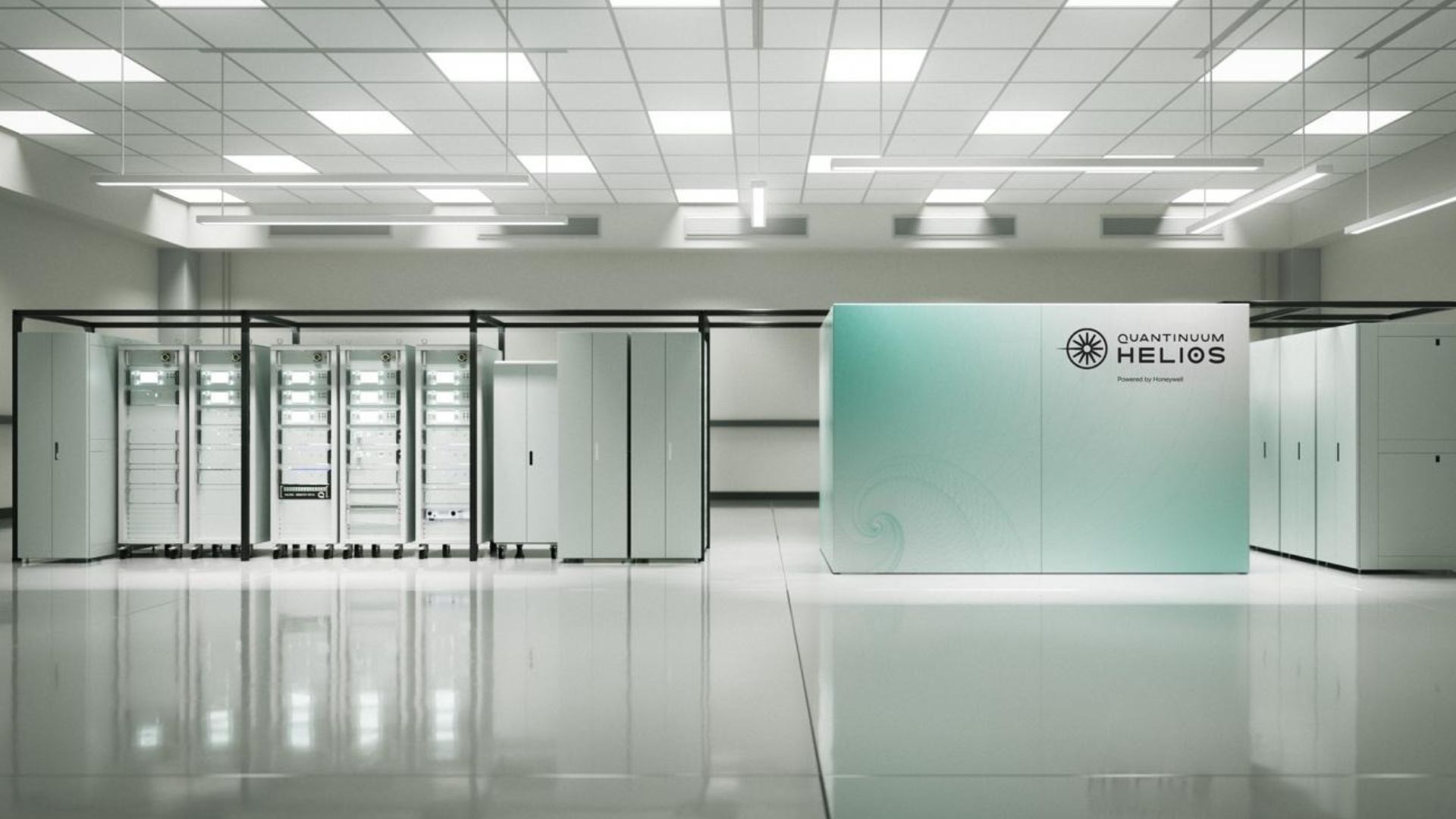
Quantum computing has spent years proving that quantum processors can work. The next challenge is considerably less glamorous. Figuring out how to manufacture and package those systems at scale. That is the problem Quanta Computer and Quantinuum are now tackling. The companies have signed a collaborative development agreement to jointly develop hardware infrastructure for future generations of Quantinuum quantum computers, with the goal of making the systems more modular, manufacturable, and scalable. The partnership pairs Quantinuum’s trapped-ion quantum computing technology with Quanta’s experience manufacturing complex computing and cloud infrastructure. Rather than announcing a new quantum processor, the companies are focusing on the industrial machinery and hardware ecosystem needed to turn increasingly sophisticated quantum processors into deployable systems. Building a quantum computer is not simply a matter of putting more qubits on a chip. Quantum computers have unusual hardware demands Quantinuum’s machines use trapped ions as qubits. Its H2 system, for example, stores quantum information in ytterbium ions and uses precisely controlled laser-based operations to manipulate them. The architecture uses a quantum charge-coupled device (QCCD) approach, in which ions can be moved between different regions of the processor. This architecture gives Quantinuum an important advantage: its qubits can have all-to-all connectivity, meaning any pair of qubits can be brought together for operations. Its current H2 system has 56 fully connected qubits and reported two-qubit gate fidelity above 99.9%. But scaling such machines requires much more than increasing the qubit count. Quantum processors need sophisticated lasers, vacuum systems, control electronics, cooling, and extremely precise mechanical and electrical infrastructure. As the systems become larger, all of those components have to work together without introducing errors that overwhelm the quantum computation. This is where Quanta’s manufacturing expertise becomes relevant. From laboratory hardware to manufactured systems Quanta is best known as a major electronics manufacturer and supplier of advanced computing infrastructure. Its business spans servers, cloud infrastructure and other complex computing platforms. The new agreement effectively asks whether some of that industrial expertise can be applied to quantum computers. The companies say engineers are already working on the next generation of hardware infrastructure. The objective is to establish manufacturing processes and supply chains alongside the development of the quantum technology itself, rather than waiting until a more advanced processor is ready and then attempting to industrialize it afterward. That could become increasingly important as Quantinuum moves through its hardware roadmap. The company has been pursuing progressively larger trapped-ion systems, with its roadmap targeting hundreds of logical qubits and ultimately fault-tolerant quantum computing. Its newer Helios architecture is another step in that progression. Quantinuum describes it as using junction-based ion transport and multiple quantum-logic zones to improve routing and scaling. Why manufacturing may become the real bottleneck Quantum computing is often discussed in terms of qubits, but qubit count alone does not determine whether a machine is useful. A practical quantum computer needs sufficiently low error rates, fast operations, reliable control hardware and increasingly sophisticated error correction. It also needs to be reproducible. A laboratory machine that takes enormous amounts of specialized engineering effort to build is very different from one that can be manufactured, installed and maintained repeatedly. That is the gap this partnership is attempting to address. It also comes at a time when Quantinuum is pursuing broader integration with conventional computing infrastructure. In June, the company announced a collaboration with Hewlett Packard Enterprise focused on connecting quantum processors with high-performance computing and AI environments. The Quanta partnership tackles another part of that same transition: the physical infrastructure behind the quantum processor. There is no guarantee that the collaboration will produce commercially scalable quantum computers, and the companies have not disclosed detailed specifications, production volumes or a timetable for the new hardware. But the direction is significant. The quantum industry is gradually moving from asking “Can we build a powerful quantum computer?” toward a harder industrial question. “Can we build many of them reliably enough for customers to actually use?” Quanta and Quantinuum are betting that answering the second question will require manufacturing expertise just as much as breakthroughs in quantum physics.Get the latest in engineering, tech, space & science - delivered daily to your inbox.Kaif Shaikh is a journalist and writer passionate about turning complex information into clear, impactful stories. His writing covers technology, sustainability, geopolitics, and occasionally fiction. A graduate in Journalism and Mass Communication, his work has appeared in the Times of India and beyond. After a near-fatal experience, Kaif began seeing both stories and silences differently. Outside work, he juggles far too many projects and passions, but always makes time to read, reflect, and hold onto the thread of wonder.
Quantum hardware scaling gets industrial boost as Quanta and Quantinuum team up
Full Article
Original Source
Read the full article at Interestingengineering →KhanList aggregates and links to publicly available news content. We do not host full articles from third-party sources. Always verify important information with original sources.