
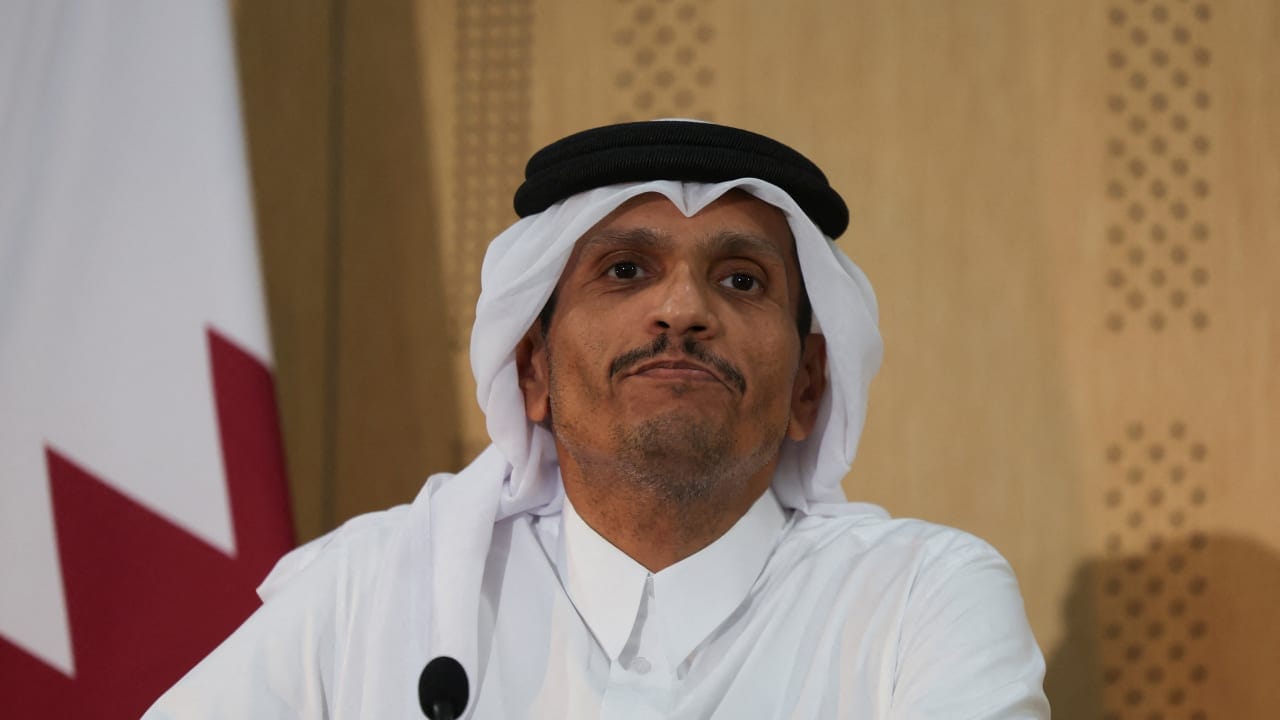
SEPTEMBER 8, 2026 18:47The Iran conflict will “only be resolved through a deal,” Qatari Foreign Ministry Spokesperson Majed al-Ansari told CNN on Monday, arguing that the “nucleus” of the broader regional crisis was the war Israel fought in Gaza.Acknowledging that sanctions have been a “staple” in diplomacy in the Middle East for some time, Ansari claimed that it hadn’t “yielded the results that have been expected.”Arguing that sanctions only impact the economy, the people, and the state’s ability to survive, Ansari asserted that “this issue will only be resolved through a deal. It will only be resolved at the negotiation table.”“Whatever leverage is used on either side will end up as an item on an agreement that (4:51) is signed at the end,” he reasoned. “The sooner we get to that agreement, the less suffering that will be had on the international economy, [and] also on the peoples of this region.”Qatar, like many of Iran’s neighboring Gulf states, has been repeatedly attacked by the Islamic Republic since Israel and the United States struck Iran at the end of February. Despite Doha’s economy and energy infrastructure not being spared from Iranian drones and missiles, Ansari framed the attacks as the consequence of Israel’s war against Hamas in Gaza.Vessels near the Strait of Hormuz, as seen from Musandam (credit: REUTERS/STRINGER)'The nucleus of this issue was what happened in Gaza'“We've said always in Qatar and in the region, the nucleus of this issue was what happened (0:50) in Gaza, and we need to go back to that, starting with the recent developments in the Strait of Hormuz and ending with finding a solution to the Palestinian issue,” Ansari said. “This cannot be dealt with as an afterthought. It has to be something that we work on carefully, regionally, and working with the international partners.”Dr. Ariel Admoni, a researcher with Ariel University and Jerusalem Institute for Strategy and Security, told The Jerusalem Post that Ansari’s framing of Gaza, and by extension the Israeli-Palestinian conflict, is typical of Qatar’s narrative.By presenting the current regional climate as a “spillover” from the Gaza war, Admoni said that Doha could adopt an “I told you so” stance with other powers in the region and attempt to create its own version of peace in the region. Admoni warned that Doha’s version of peace would rely on security concessions from Israel and the West.Ansari said that Qatar’s two main priorities were saying the strait is open and ensuring there is “no military escalation in the region, whether it be the missiles falling on our residential areas in the Gulf or the attacks on Iran.”Admoni suggested that Ansari’s rather forgiving stance toward the Islamic Republic could be connected to the LPG shipments Qatar has been able to make to India and Japan.Three liquefied natural gas cargoes loaded in Qatar and the United Arab Emirates were transferred between ships outside the Strait of Hormuz in recent weeks for delivery to India and Japan, according to ship-tracking firms. Unlike crude oil, ship-to-ship (STS) LNG transfers are unusual.“This kind of coordination appeared because most likely Qatar promised Iran amounts of money, while at the same time coordinating with Trump some kind of maneuver regarding Qatari gas,” Admoni theorized. “From their perspective, you need Qatari gas for stability, or at least to reduce instability… Qatar tried to project an image that without Qatar and Qatari gas, the international economy is fragile and in danger.”Ansari said he doubted there was an immediate solution to the crisis, suggesting instead that the “stalemate” between Washington and Tehran could only be phased out rather than ended immediately.Admoni noted that the comments came at a time when Europe is increasingly concerned about having sufficient gas supplies for the winter, with Qatari LNG exports still disrupted. He argued that Ansari’s remarks therefore serve as a form of international pressure that benefits Qatar.Adding to that pressure, Ansari warned CNN that closing the Strait of Hormuz could not become normalized, especially given there are other waterways that could be “weaponized in this way” and with potentially more “damaging consequences.”“We need to kill this in its infancy. It cannot become the new normal in war for countries to just close waterways in this way,” he said. “We've seen death and destruction at unbelievable levels as a result of maritime security being affected. The world today, with just one strait being affected like this, is facing inflation problems, is facing energy security problems, food security problems. We are facing an industrial catastrophe if this continues, and this is just one waterway.”US officials assessed that Hormuz was losing its strategic valueThough Ansari insisted that the continued closure of the strait has been a catastrophe, former Wilson Center global fellow Thomas O’Donnell told the Post only weeks ago that US officials were correct in assessing that Hormuz was losing its strategic value. New pipelines are being created which bypass Hormuz entirely.Admoni said that in the latest round of conflict, GCC states had also been less “convincing” on a unified approach toward Iran, and the intensity of the attacks has weakened.Follow us on Google
Qatari official: War in Gaza was the ‘nucleus’ for Iran’s attacks on the Gulf, pushes for deal
Full Article
Original Source
Read the full article at Jpost →KhanList aggregates and links to publicly available news content. We do not host full articles from third-party sources. Always verify important information with original sources.