
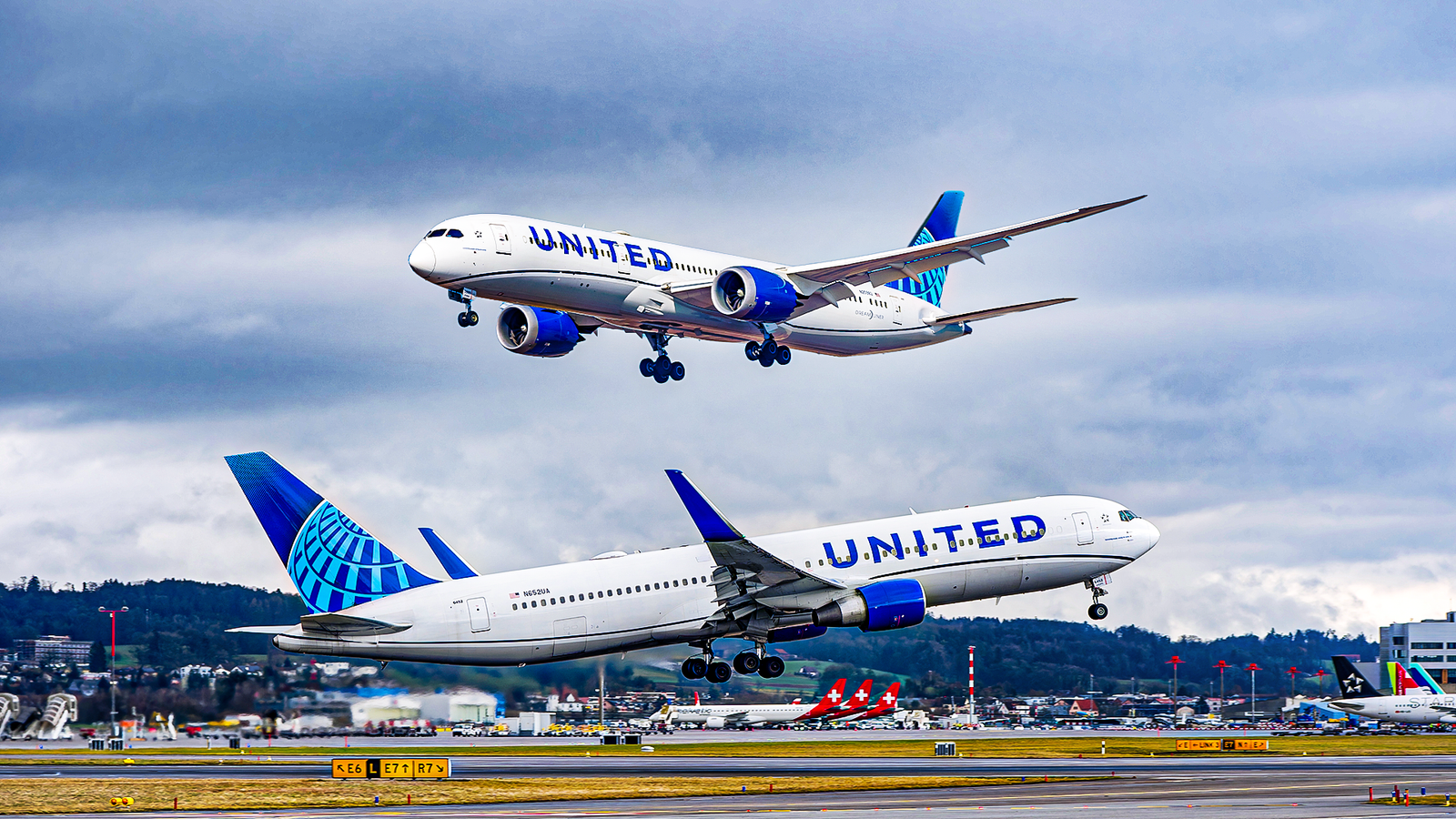
Published Nov 22, 2026, 10:00 AM EST Luke Diaz is a freelance military writer with experience with active duty experience in the US Navy as well as defense and industrial engineering. He is a former Naval Flight Officer who performed tactical air control on the carrier-based E-2 Hawkeye. On September 8, 1982, United Airlines brought the Boeing 767 into commercial service, revolutionizing its long-haul network with a twin-engine aircraft that could safely operate transatlantic routes dominated by quadjets. The airline still uses 53 of these legacy twinjets to anchor its transatlantic network from Newark Liberty International Airport (EWR) and Washington Dulles International Airport (IAD) more than 40 years later. The current fleet consists of 16 stretched 767-400ER aircraft with an average age of 23 years and 37 older 767-300ER aircraft with an average age of 29. United has historically relied on the 767 to serve European cities 'across the pond.' Now, United intends to retire all of these aircraft by 2030. To attract surging transatlantic travel demand without flooding routes with low-margin coach tickets, United is deploying 222-seat Elevated Boeing 787-9s featuring 99 premium seats, including 64 enclosed Polaris suites and 35 Premium Plus recliners, alongside stretched 787-10s for slot-constrained hubs like London Heathrow Airport (LHR). The post-pandemic rise in demand for year-round leisure and business travel to Europe reshaped United's business model around a 'premiumized' cabin. The Dreamliner's wider composite fuselage accommodates spacious suites in the front of the cabin with a lower 6,000-foot (1,829-meter) cabin altitude and higher air humidity, which softens jet lag regardless of seat number. Combined with 25% better fuel efficiency over the 767, these upgrades let United expand premium capacity and passenger comfort on top European routes and lower operating costs. Shifting Transatlantic Travel Demand Drives United's Widebody Renewal Credit: danielou_shots | Shutterstock Moving from the 1980s-era 767 to the 787 Dreamliner improves passenger appeal but also route flexibility. While the 767's flight range is limited to roughly 5,980 nautical miles (11,075 km), the next-gen 787-9 flies up to 7,565 nautical miles (14,010 km). Its faster Mach 0.85 cruise speed also shaves up to 50 minutes off eastbound Atlantic crossings, helping United meet tight European airport arrival slots while easily rotating aircraft onto Pacific routes on the West Coast for seasonal destinations. In 2022, following a landmark order for 100 787s and an option to buy 100 more, United CEO Scott Kirby gave these remarks: "United emerged from the pandemic as the world's leading global airline and the flag carrier of the US. This order further solidifies our lead and creates new opportunities ... to connect more people to more places around the globe and deliver the best experience in the sky." Stan Deal, president and CEO of Boeing Commercial Airplanes, also offered this comment: "With this investment in its future fleet, the 737. The Boeing team is honored by United's trust in our family of airplanes to connect people and transport cargo around the world for decades to come." Evolving from aluminum to composite jets not only makes the passenger experience better but also opens up more freight revenue for UA. The 767-300ER maxes out at 412,000 pounds (186,880 kg). In comparison, United can transport up to 52,400 pounds (23,768 kg) of high-margin commercial freight in the belly on each transatlantic flight, with the 787-9's increased maximum takeoff weight of 560,000 pounds (254,011 kg). That's before all the other improvements the Dreamliner delivers. Interior Upgrades Improve Long-Haul Passenger Comfort Credit: Michael Derrer Fuchs | Shutterstock Passengers traveling across the Atlantic will see immediate changes on the flightline and inside the cabin when the outdated 767s are retired in favor of 787 Dreamliners. The wider composite cabin significantly improves personal living space across all seating classes as compared to the tiny 1980s-era 767 configuration. While older 767s had open, doorless business seats and tight overhead bins, the forthcoming Elevated 787-9s feature enclosed Polaris suites with sliding privacy doors, wireless charging, and larger 4K TVs. Economy class passengers also benefit from wider aisles, sculpted sidewalls, dynamic LED mood lighting to facilitate time-zone transitions, and oversized overhead bins that can carry each passenger's roll-aboard bags. Additionally, the 787's single-piece carbon-fiber body can withstand substantially higher internal pressure without experiencing metal fatigue, enabling the cabin to maintain a comfortable 6,000 feet (1,829 meters) of pressure with 16% air humidity. Meanwhile, the 767 must maintain cabin pressure at the old standard of 8,000 feet (2,438 meters) in simulated elevation. It must also maintain air humidity below 10% to prevent metal joints from rusting, since a conventional riveted aluminum fuselage bends and stresses under high air pressure. After seven hours in the air overnight, passengers benefit from the increased blood oxygen level that the 787 delivers. That means fewer headaches and substantially reduced jet lag thanks to the lower cabin altitude and additional moisture. Dreamliner windows are also 65% larger than those on the 767 and use electronic dimming controls rather than plastic pull blinds to manage sunlight. The Dreamliner cabin is also significantly quieter during takeoff and cruise thanks to sophisticated acoustic insulation surrounding the engine nacelles and the lack of noisy high-pressure air lines for sub-systems because of its all-electric architecture. 787 Delivery Slowdowns Extend 767 Overhauls and Keep Airbus A350 Options Open Credit: Dutchmen Photography | Shutterstock Despite UA's rapid trajectory of 'premiumization,' Boeing must resolve significant assembly delays at its North Charleston facility in order to support the airline's goals. In order to replace its 53 outdated 767s, United Airlines updated its backlog to a firm order for 150 Boeing 787 Dreamliners, with options for a further 50. However, production was delayed considerably by Federal Aviation Administration safety inspections following quality problems with composite materials. Due to these delays, United was obliged to reduce the number of Boeing aircraft it planned to deliver in the near future from 165 to just 63, delaying the majority of new widebody deliveries until after 2026. In 2023, Kirby gave this update on the UA fleet: "Our planning and focus on the long term have helped us surge past other airlines that stood still. I'm convinced our strategy is the right one as we continue to add new, larger aircraft to take full advantage of our growing flying opportunities both internationally and domestically." Meanwhile, Deal spoke for Boeing and added these remarks: "United's unprecedented commitment to the 787 Dreamliner family is a testament to the market-leading operating economics and reliability of Boeing's widebody jets. With the 787, United will enjoy all the synergies of operating one of the largest, most efficient fleets in the skies." United will still be forced to spend millions of dollars maintaining the safe operation of 30-year-old aluminum aircraft while waiting years for delayed Dreamliners. High-time 767-300ER and 767-400ER aircraft are subjected to extensive, costly structural inspections by mechanics rather than being retired to desert storage. In order to make up for the timetable deficit, older aircraft, such as tail N641UA, which has nearly 100,000 flight hours and 20,000 landings, require expensive overhauls on their older General Electric engines in addition to thorough wing and tail scanning inspections. After taking a $200 million financial hit from factory delays and plane groundings, United CEO Scott Kirby put together a backup plan. Along with leasing 35 Airbus A321neo jets to cover short-term domestic flights, Kirby kept United's delayed order for 45 Airbus A350-900 widebodies alive. Holding onto those European factory slots gives United a real alternative if Boeing's South Carolina assembly delays continue. High-Bypass Engines, All-Electric Systems, and Composite Wings Power the 787's Efficiency Gains Credit: Robert Buchel | Shutterstock Moving from the Boeing 767-300ER to the 787-9 represents a major leap forward in jet engine design, which enables greater range and payload as well as better fuel burn rates. United's older 767s run on Pratt & Whitney PW4060 or General Electric CF6-80C2B6F engines built with 94-inch (239 cm) titanium fans and a 4.8:1 bypass ratio, producing around 60,200 pounds of thrust (268 kN). In contrast, the 787-9 uses General Electric GEnx-1B engines rated up to 75,000 pounds of thrust (334 kN). The GEnx features 111-inch (282 cm) carbon-fiber fan blades, a lightweight composite fan case that cuts over 400 pounds (181 kg) per engine, and an 8.8:1 bypass ratio that trims fuel burn by over 20% while cutting nitrogen oxide emissions by 55%. Additionally, the two generations also differ in how each aircraft powers its internal systems. In order to run the cabin air conditioning, start the engines, and heat the wings against ice, the 767 uses a conventional bleed-air configuration that draws hot compressed air above 392°F (200°C) straight from the engine cores, depriving the turbines of useful power. In order to improve engine efficiency and reduce cruise fuel consumption by about 4%, Boeing replaced the titanium air ducts on the 787 with an all-electric system powered by four engine-mounted generators that produce 1.4 megawatts of electricity. Since the 767's body is made of conventional aluminum sheets welded over metal ribs, it is susceptible to rust and metal fatigue during thousands of pressurization cycles. In contrast, the 787 uses single-piece body sections and long, thin wings that flex upward by roughly 10 feet (3 meters) at the tips during flight to smooth out turbulence and reduce air drag at Mach 0.85. Strong carbon-fiber composites constitute half of the 787's structural weight.
Premium Upgrade? United Airlines Is Replacing Its Remaining Boeing 767s With 787 Dreamliners
Full Article
Original Source
Read the full article at Simpleflying →KhanList aggregates and links to publicly available news content. We do not host full articles from third-party sources. Always verify important information with original sources.