
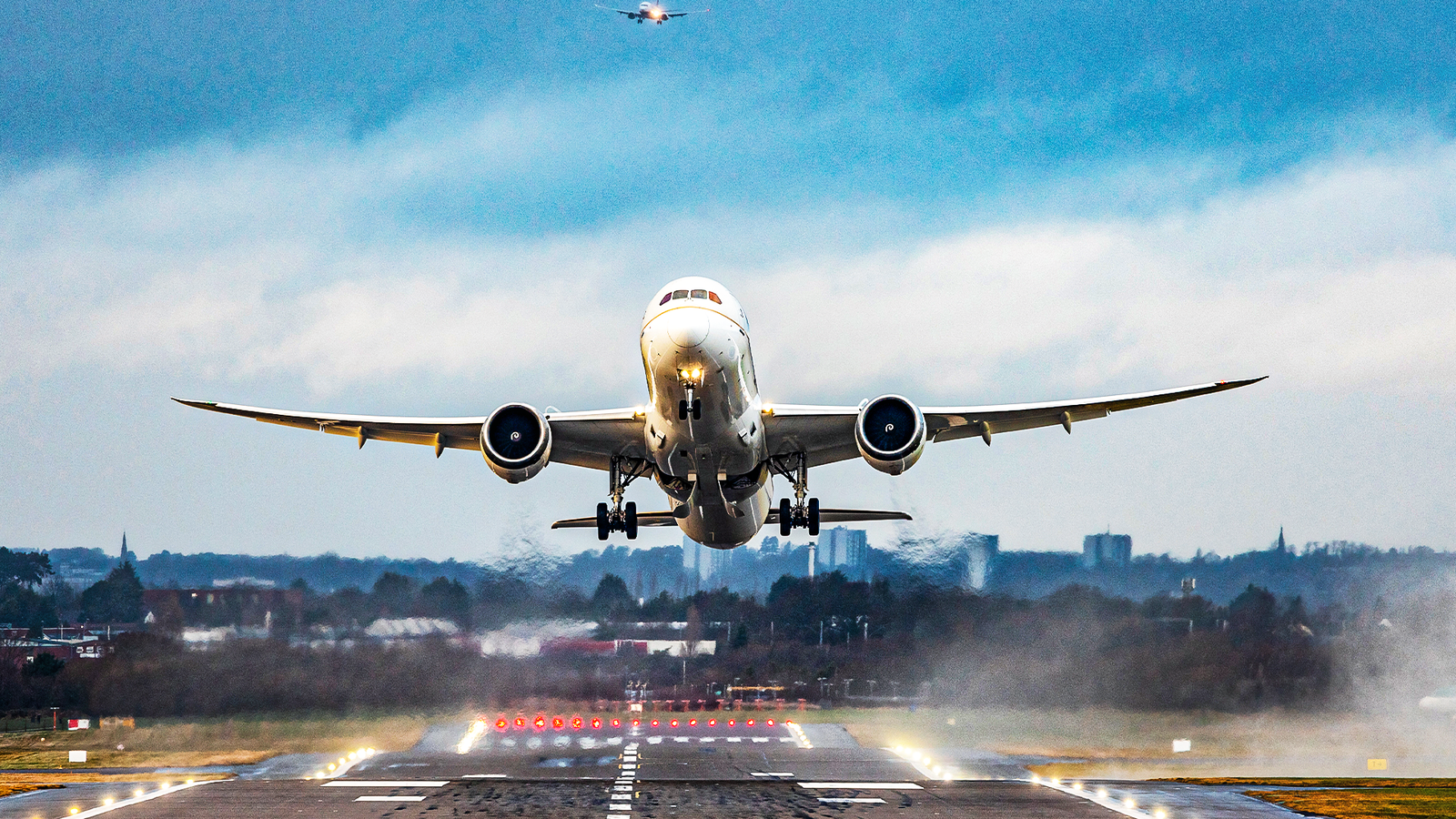
Published Aug 24, 2026, 2:00 PM EDT Airline and Airport Management Graduate, Student Commercial Pilot and Commercial Aviation Writer. Based in London & Nagoya Three seconds after takeoff, a pilot's hand moves to the landing gear lever. The three heavy steel assemblies below fold up into the belly of the aircraft and instantly remove a wall of aerodynamic drag, leaving the raw engine thrust unobstructed. In rare and demanding situations, flight crews consciously break this foundational rule, deliberately leaving three massive landing gear legs extended into a 200-knot (370 km/h) airstream. Aerodynamic efficiency, structural preservation, and emergency margins shape when crews retract or hold the gear lever. Standard operating procedures call for immediate retraction the moment two separate cockpit instruments confirm a positive climb, but specific technical conditions can push captains to override that muscle memory. What hidden mechanical warnings, runway contaminants, or flight deck calculations turn the industry's most basic takeoff habit into a dangerous mistake? What Does Positive Rate Actually Mean? Credit: Shutterstock Snatching the gear lever the instant the tires leave the pavement leaves zero safety margin for the aircraft settling back onto the runway. The pilot flying calls for gear retraction only after the altimeter and vertical speed indicator simultaneously confirm a sustained climb, a confirmation that typically takes three seconds after rotation. Initiating retraction before establishing this positive rate creates an immediate structural threat if the aircraft encounters sudden wind shear, a localized microburst, or a temporary loss of ground effect during rotation. If airspeed drops during the five to ten seconds it takes for hydraulic actuators to unlatch, cycle open the gear doors, and pull the heavy assemblies into the wheel wells, the aircraft will sink. If the main gear contacts asphalt while in transit, the unlocked drag struts and partially folded trunnions cannot support the airframe's weight, causing an immediate landing gear collapse. Additionally, premature retraction at a steep rotation pitch angle alters aerodynamic drag distributions, drastically increasing the risk of a high-energy tail strike against the runway surface. Protecting the airframe from premature touchdown explains why pilots wait for positive rate confirmation before touching the landing gear lever. There is a finite amount of time to wait for this confirmation; sometimes, waiting too long creates a completely different aerodynamic problem for the flight deck during the initial climb. Holding Back Takeoff Performance Credit: Shutterstock Delays caused by high flight deck workload directly degrade climb performance by leaving the aircraft exposed to prolonged aerodynamic drag. US Patent and Trademark Office filings detailing landing gear operations show that even a five-second delay in selecting gear up forces the airframe to carry massive unfaired structures through a 150-knot (278 km/h) airstream. During this period, open door bays and extended struts act more like aerodynamic speed brakes. Data from USPTO Patent 6854689B1 highlights that gear doors swinging open during the retraction sequence create a secondary drag spike. At high takeoff weights, carrying extended gear for an extra ten seconds can reduce total altitude gain by up to 50 ft (15 m) over the initial 3,000 feet (914 meters) climb segment. For widebody commercial jets flying strict noise abatement profiles, that missing altitude flattens climb performance precisely when maximum vertical clearance is required. Despite clear engineering data proving that delayed retraction compromises climb performance, pilots routinely elect to leave their landing gear extended in specific operational scenarios. Certain environmental conditions, mechanical anomalies, and brake system warnings require captains to deliberately override standard operating procedures. When The Gear May Have To Stay Out Credit: Shutterstock In daily airline operations, flight crews deliberately override gear retraction for three distinct operational reasons. These are brake thermal management, runway contamination, and spin-down snubber failures. Following a heavy-weight landing or a short turnaround, carbon brake assemblies can retain extreme heat. Retracting overheated brakes immediately into an unventilated wheel well risks hydraulic fluid ignition or melting tire thermal fuses. Similarly, when departing wet or slush-covered runways, pilots extend the gear through the initial climb so that high-speed slipstreams and centrifugal wheel rotation can sling away water and slush before it freezes solid inside sub-zero wheel bays. System alerts like the Airbus A320 BRAKES HOT ECAM advisory require crews to keep the gear extended until brake temperatures drop below 572°F (300°C), directly overriding standard noise abatement profiles published under the NBAA Noise Abatement Program. Additionally, modern transport airframes automatically apply main brake pressure during retraction to stop 220 lb (100 kg) main wheel assemblies from spinning into the bay. If the automatic snubbing system fails, pilots briefly tap the toe brakes manually right after liftoff to instantly kill rotation and eliminate gyroscopic forces before pulling the gear lever. Managing these mechanical exceptions can be relatively straightforward, as long as commercial crews can accept temporary climb degradation to prevent catastrophic airframe failures. However, while commercial pilots manage these delays under strict manufacturer procedures and calculated performance margins, a far more contentious gear-retraction debate exists at non-towered airfields across general aviation. Plenty of discussion and conflicting viewpoints persist about whether low-powered single-engine and light twin-engine aircraft can justify delaying gear retraction for safety reasons during initial departure. The Impossible Turn Credit: Shutterstock Flight instructors and safety analysts strongly dispute holding landing gear down over the remaining runway, though some disagree. In light single-engine and twin-engine aircraft, some pilots delay retraction assuming an engine failure below 100 feet (30 meters) AGL allows a straight-ahead touchdown on wheels, known to many as the impossible turn scenario. However, detailed stopping-distance calculations published by flight safety platforms like PilotWorkshops show that once an aircraft rotates and accelerates, the runway required to pitch down, flare, roll, and brake far exceeds the pavement left underneath the wings. At a typical climb speed of 80 knots (148 km/h), a light airframe covers over 135 feet (41 meters) of ground every second. If an engine loses power at 100 feet (30 meters) AGL, pilot recognition time and deceleration consume more than 2,000 feet (610 meters) of horizontal distance before the aircraft comes to a complete stop. Keeping the gear extended, the airframe suffers a parasitic drag penalty exceeding 30%, which significantly flattens the climb gradient. As a result, the pilot stays low over surrounding obstacles longer, trading critical altitude for a landing area that no longer exists. Holding gear down over the runway provides a false sense of security and actively degrades climb performance during the most vulnerable flight phase. Accepting that stopping on the remaining runway is mathematically impossible after rotation changes how pilots evaluate takeoff safety margins. Instead of relying on extended wheels to salvage an engine failure, survival depends on gaining altitude as rapidly as possible to maximize options, glide range, and maneuvering time. What Technologies Are Coming To New Airliners? Credit: Shutterstock In reality, this aerodynamic trade-off is accelerating the shift toward automated landing gear systems in next-generation airliners. Manual retraction relies entirely on human pilot perception, leading to variable reaction times during high-workload takeoff phases. Modern flight guidance systems, advanced by NASA research, integrate radar altimeters, inertial reference units, and wheel speed sensors to determine exact liftoff timing, removing gear-sequencing logic from human hands to ensure optimal climb gradients. Airbus patent filings for automated gear control demonstrate how digital flight computers monitor real-time ground effect loss and engine thrust to trigger gear retraction within milliseconds of establishing positive climb. Furthermore, smart sensors embedded in brake packs and wheel bays feed directly into flight management systems, automatically preventing gear retraction if brake temperatures exceed safe thresholds or if runway slush sensors detect heavy contamination. Automating the transition between ground and air reduces pilot workload and perfects climb performance and engine fuel burn. Today, as flight decks increasingly rely on computer algorithms to control critical airframe configurations, an essential operational question remains: how much authority should human pilots retain over mechanical gear overrides during complex emergencies? Can An Airliner Be Too Automated? Credit: Shutterstock Automating landing gear sequencing highlights an ongoing transition toward software-managed departure profiles across commercial aviation. As modern airliners integrate advanced flight control computers that evaluate atmospheric density, aircraft weight, and climb trajectory in real time, the standard three-second gear callout will increasingly evolve into an automated background calculation. Removing human delay from the initial climb segment ensures optimal obstacle-clearance profiles, but it also requires aircraft manufacturers to account for rare environmental edge cases where holding the gear extended remains the safer operational choice. Regulatory bodies like the Federal Aviation Administration (FAA) and the European Aviation Safety Agency (EASA) maintain strict airworthiness standards under FAR Part 25 regarding transport category aircraft performance during initial departure. Certifying fully automated gear systems requires proof that digital flight-control logic can reliably detect thermal overloads, brake-system anomalies, and airframe settling without false positives. The biggest test for automated departure management is whether it can preserve pilot agency while eliminating human reaction latency. Flight deck design in this modern era is all about balancing algorithmic efficiency against the seasoned judgment of aircrews operating at the envelope edge. So the next time you see an airliner departing with the landing gear still extended, picture what is actually happening inside the cockpit to cause this uncommon occurrence.
Positive Rate, Gear Up: The Few Times Pilots Wait Before Raising The Landing Gear
Full Article
Original Source
Read the full article at Simpleflying →KhanList aggregates and links to publicly available news content. We do not host full articles from third-party sources. Always verify important information with original sources.