
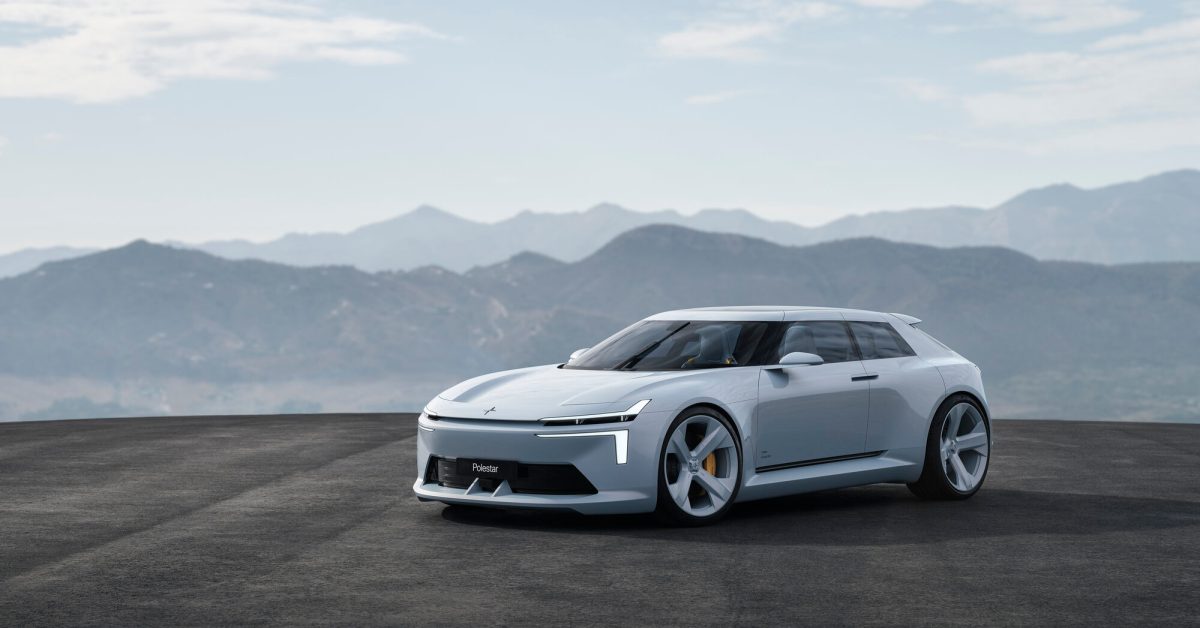
Source: Polestar Polestar has now fully unveiled the Formula 2030 concept, a low four-door electric sports car that previews the design of the next-generation Polestar 2 coming in 2027 and the Polestar 7 compact SUV. The concept sits just 1,350 mm (53 inches) tall, which is lower than the Polestar 5 grand tourer, and it brings physical buttons back into the Swedish brand’s interior. We reported in September that Polestar confirmed the Formula 2030 concept after showing it privately to investors and retailers in Gothenburg. Now we get the full set of pictures and the details. It’s the first show car built under head of design Philipp Römers, who joined from Audi in 2024. A low four-door “sports car” Polestar calls the Formula 2030 a “compact practical four-door sports car” that “sits within its own segment.” It’s 4,680 mm (184.3 inches) long and 2,021 mm (79.6 inches) wide, on a 2,780 mm (109.4-inch) wheelbase. For context, that’s about 3 inches longer than today’s Polestar 2 and roughly 5 inches lower. It’s also a bit shorter than a Tesla Model 3 and sits 3.5 inches closer to the ground. Polestar says the concept lands “somewhere between” the upcoming Polestar 2 and Polestar 7 in size. The proportions are classic sports car: long hood, short overhangs, the cabin pushed back over big rear haunches, and 22-inch center-lock wheels. There are gold Brembo calipers behind those wheels and Öhlins dampers on display in the trunk. Up front, Polestar kept its “Dual Blade” headlights, now set into an aero wing over a shark nose and a deep splitter. The automaker says this is the face of the next-generation Polestar 2 planned for 2027. There’s a single vertical windshield wiper, like on a race car, and a LiDAR unit that hides under an aerodynamic shroud and only shows itself when the car is driving autonomously. The rear is where things change the most. Polestar dropped the full-width light bar, which is on just about every EV these days, for what it calls “Single Blade” rear lights. It says they are being introduced here “ahead of series production.” Römers described the concept as a “bold evolution” of the brand’s existing design: “It is a physical embodiment of how we apply Polestar’s core values of design, performance and sustainability to the next production cars.” The rear doors are hinged at the back and there’s no B-pillar, so the whole side opens up to four individual seats. Physical buttons are back The interior is built around the driver. A curved 20-inch display, which Polestar calls the “HyperDIM,” is mounted directly on the steering column, and a 12.2-inch center screen sits in the center tunnel. But the bigger news is below that screen. Polestar added a panel of eight physical controls for the most-used functions, and owners could swap between types of controls, like rocker switches or rotary knobs, and program what each one does. Polestar says it is “committing to rebalance the mix of physical and digital.” Juan Pablo Bernal, the company’s head of interior design, put it plainly: “As a performance brand, we see a renewed focus on the driver, and so we re-balance the digital and physical. We introduce physical buttons and controls.” That’s a big change for a brand whose recent cars run almost everything through the center touchscreen. The cabin also physically changes with the drive mode. There are three of them: Performance, Normal, and Autonomous. In Performance, the center screen drops flush into the console and the steering wheel and its display pull closer to the driver. In Autonomous, the wheel and the seat move away from each other. The four seats use inflatable bolsters that shape themselves to each occupant, and the seat backs are made of a flax-based composite instead of virgin plastic. Google Gemini is built in, like in Polestar’s production cars. A see-through trunk floor The cargo area is the strangest part of the car. The rear opens as a clamshell, and the trunk floor is transparent, with custom Polestar bags strapped down underneath it with gold straps. Up front, the frunk holds two race helmets and a fire extinguisher, framed by a gold strut brace. Now for what’s missing. Polestar didn’t release a single powertrain spec. No battery size, no range, no power output, and no price. This is a design study, and Polestar isn’t saying it will build it. What it does say is that “various design attributes” from the concept will show up on the next Polestar 2 in 2027 and the Polestar 7 in 2028. Those are two of the four new models Polestar plans to launch in three years, and the 7 is going to be built in Europe. Europe is where this matters, since Polestar is shut out of the US under the federal connected-vehicle rule. The concept made its debut during the media drive of the Polestar 4 SUV. Electrek’s Take Polestar always impresses me with its design, and this is no exception with this new head of design. The proportions are sharp. Long hood, cabin pushed back, big haunches, and a roofline lower than the Polestar 5’s on a car with four doors and four real seats. If the next Polestar 2 keeps even half of this stance, it’s going to be the best-looking car in its segment. I don’t know about the trunk of this thing. Polestar itself calls the rear “UFO-esque,” and between the wraparound glass, the clamshell and the see-through floor, it’s a lot. But everything else on this car is pretty sharp. Polestar is putting physical controls back in its cars and saying so in plain words. The way they talk about it makes it sound like you can expect that of upcoming production vehicles. Now the usual caveat. A concept car doesn’t fix a balance sheet. Polestar lost $842 million in the first half of this year on a negative gross margin. Design has never been Polestar’s problem. Building these cars and selling them at a profit is. Charge your electric vehicle at home using rooftop solar panels. Find a reliable and competitively priced solar installer near you on EnergySage, for free. They have pre-vetted installers competing for your business, ensuring high-quality solutions and 20-30% savings, and lease and PPA options let you go solar with zero upfront cost. It’s free, with no sales calls until you choose an installer. Get personalized solar quotes online and receive guidance from unbiased Energy Advisers. Get started here. FTC: We use income earning auto affiliate links. More.
Polestar unveils Formula 2030 concept, previewing the next Polestar 2
Full Article
Original Source
Read the full article at Electrek →KhanList aggregates and links to publicly available news content. We do not host full articles from third-party sources. Always verify important information with original sources.