
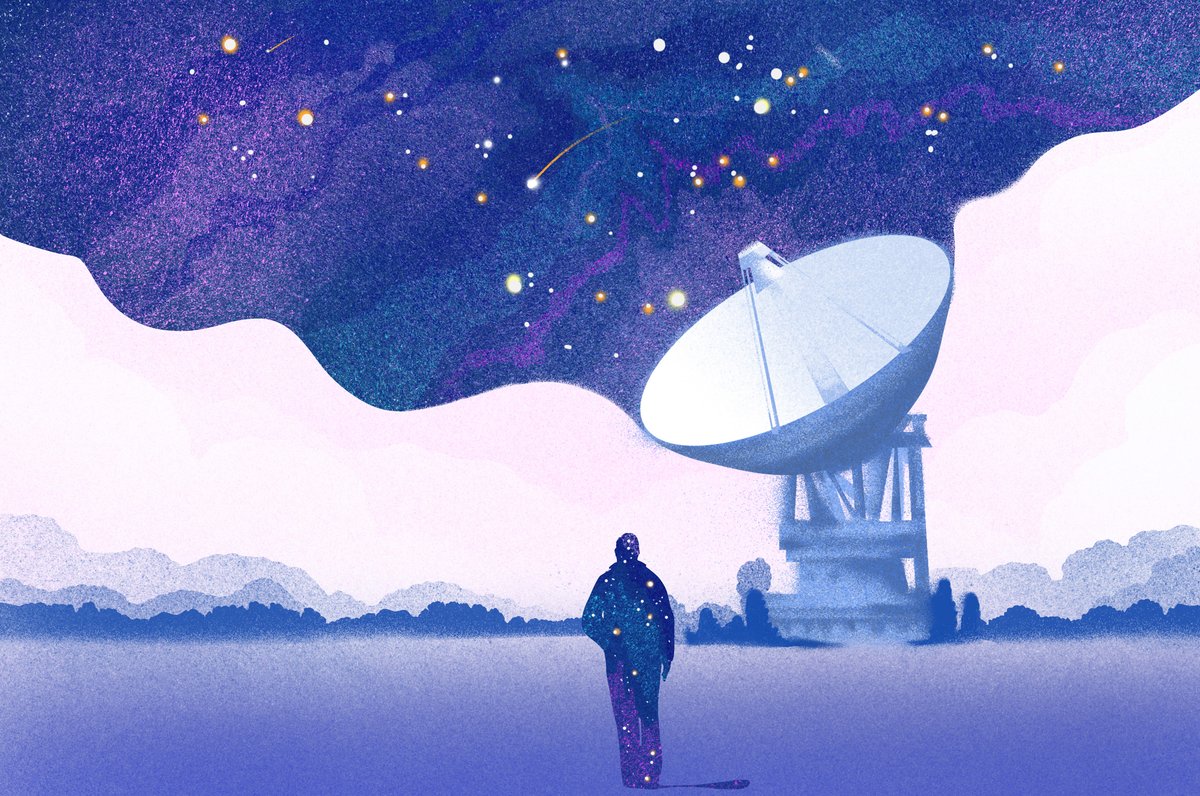
I scavenge in the junkyards of science,sifting through discarded jargon untilI find some vintage notion and considerhow the rust seems to give it character.Shame to let it languish in the trash.Maybe something can be done with it.Phlogiston, for instance, a principleonce thought to be present in all thingscombustible. An inner, secret spark.On supporting science journalismIf you're enjoying this article, consider supporting our award-winning journalism by subscribing. By purchasing a subscription you are helping to ensure the future of impactful stories about the discoveries and ideas shaping our world today.Ether, the medium that permeates allspace, by virtue of which light shines,electricity sparks, magnets attract.It was junked in favor of the ideaof a vacuum, a void, a nonexistencethat does not exist. Such a waste.Here’s another, mysterium, a beautyof a word. Just thrown away, barelyused, still packaged in its scare quotes.It signified an odd set of spectral linesemitted from the void that is not a void,subsequently determined to be ... butyou don’t need to know what it meantback in the sixties, the era of tie-dye andbell-bottoms—which keep comingback from oblivion. Why shouldn’tmysterium make a comeback too?Repurposed to mean an anomaly orfugitive trace, nothing tremendous—just disquieting, to be briefly notedthen ignored or reasoned away.Should humans persist and succeedin building machines that obedientlyanswer every question we can ask,let mysterium be what’s left behind—the blind spot, the irritating doubt,the x that will forever be unknown.Subscribe to Support Independent JournalismGreat science journalism requires human expertise, time, effort and creativity. And it costs money. That’s why I and the journalists here at Scientific American hope you’ll join our community.When you subscribe, you are supporting staff and freelance journalists who are passionate about telling science stories that are true, important and compelling. Our editors and reporters are often experts in their fields, which means they understand the nuances of big discoveries and can untangle the breakthroughs from the hype. With a subscription, you are also supporting rigorous fact-checking to ensure the words we publish are precise and accurate. And you’re supporting original illustrations, graphics and photos that bring you closer to an advanced laboratory, an ice sheet in Antarctica or a space mission in orbit. You’re helping us craft other types of high-quality journalism as well: Our newsletters are carefully written, edited and curated by staffers you have or will come to know and love. Our Science Quickly podcast is based on original reporting, collaboration with editors and scientists and exacting production.Subscriptions keep this engine running so we can continue to deliver thoughtful, rigorous and independent science journalism to you. In an era of viral misinformation, this work is crucial. If you value what we do, I hope you’ll consider joining us as a subscriber
Poem: ‘LET x BE’
Full Article
Original Source
Read the full article at Scientificamerican →KhanList aggregates and links to publicly available news content. We do not host full articles from third-party sources. Always verify important information with original sources.