
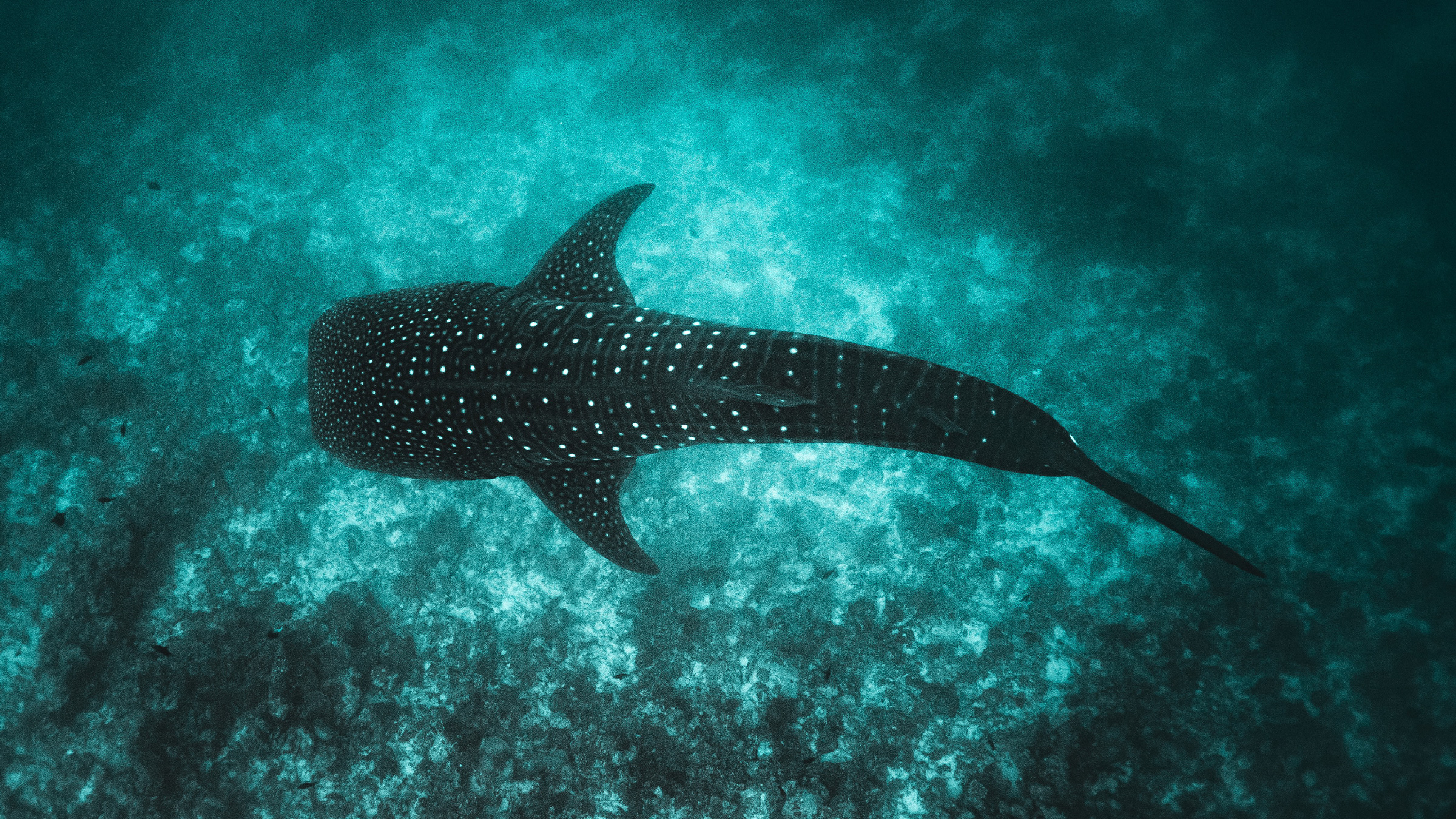
A new marine protected area planned for Indonesia’s Saleh Bay will turn nearly half of the bay into a protected zone for whale sharks.Adult and juvenile whale sharks are known to use the bay for feeding, but a recent population survey there documented newborn whale sharks for the first time.Local fishers have worked closely with nonprofit Konservasi Indonesia on whale shark conservation and are now benefiting from a growth in ecotourism and a new role as guides taking visitors to see the sharks. Plans to create a marine protected area for whale sharks in Indonesia’s Saleh Bay would give the world’s largest fish important new protections across several stages of its lifecycle, conservationists say. Besides serving as a migratory route and feeding ground for adults, there is growing evidence that the sheltered bay acts as a safe haven for juvenile whale sharks (Rhincodon typus), allowing them to develop in waters rich in food but free of predators. Sightings of newborns also indicate the bay may be a whale shark pupping ground, which would make it the first-ever to be documented anywhere in the world, although researchers caution this is yet to be confirmed. According to a document from the provincial government, seen by Mongabay, the marine protected area (MPA) would cover 90% of known whale shark hotspots in Saleh Bay, which lies in the shadow of the volcanic Mount Tambora on Sumbawa Island in West Nusa Tenggara province. The species, classified as endangered by the IUCN, has been monitored there since 2015. The MPA has received the support of the West Nusa Tenggara provincial government and local communities, with conservationists now waiting on a final decision from Jakarta. A whale shark in Saleh Bay, 2016. Besides serving as a migratory route and feeding ground for adults, there is growing evidence that the sheltered bay acts as a safe haven for juvenile whale sharks. Image by Egaryan Saadi via Wikimedia Commons (CC BY-SA 4.0). “[The MPA] is important because this bay represents a key habitat for the first initial, juvenile years of this species,” Meizani Irmadhiany, senior vice president at Konservasi Indonesia (KI), an NGO, said in an interview with Mongabay. “Protecting this bay means … protecting the future of the population worldwide.” The global population of whale sharks is estimated at 119,000-238,000 individuals. Indo-Pacific whale sharks, which make up 75% of the total, have declined by 63% in the last 75 years. The number of Atlantic whale sharks, the other main group, has dropped by 30%. Experts cite targeted fishing, bycatch in nets and vessel strikes as key threats. Typically growing to around 12 meters (39 feet) long, whale sharks can filter 6,000 liters (1,585 gallons) of seawater an hour through their gills, sifting out plankton, krill and shrimps to eat. They often live to 80 years and don’t reach sexual maturity until they’re 30. The sharks are ovoviviparous, meaning they give birth to live young which have hatched from eggs inside the mother. KI’s latest population assessment of whale sharks in Saleh Bay, published in July, documents 174 individuals across 884 sightings. Researchers identify each shark through its unique spot pattern. According to the report, fishers since August 2024 have reported five sightings of very small whale sharks in Saleh Bay, between 1.2-1.5 m (3 ft 11 inches to 4 ft 11 inches) long. A video of a similar-sized shark caught in fishing nets a month later confirmed to researchers that they were whale sharks as opposed to a different species. A stranded whale shark in West Java, Indonesia. Image courtesy of the Indonesian Marine and Fisheries Ministry. The fishers use a unique form of fishing vessel called a bagan, which involves nets and lights and allows them to fish for shrimp and squid at night. The lights also attract whale sharks, giving the fishers unique insights into the lives of this marine megafauna. “Their observations and cooperation made it possible to record an exceptionally rare life stage that conventional research surveys could easily miss,” said Mochamad Iqbal Herwata Putra, focal species conservation senior manager at KI, in an email to Mongabay. Only 33 sightings of whale sharks under 1.5 meters long have been reported in previous scientific papers, he said, “mak[ing] the discovery valuable for understanding an early life stage that remains largely unknown.” He said the evidence for a whale shark nursery in Saleh Bay remained “preliminary”: “We have not confirmed births within the bay or demonstrated the repeated use by neonates needed to establish it formally as a nursery.” In May, the governor of West Nusa Tenggara formally designated 73,165 hectares (180,795 acres) of the bay for whale shark conservation. This extends an existing MPA to cover more than half of the bay’s total 145,900 hectares (360,526 acres), an area almost twice the size of New York City, safeguarding feeding and developmental habitats as well as the movement corridors that connect them. Indonesia’s Ministry of Marine Affairs and Fisheries is currently reviewing the proposals ahead of what KI hopes will be formal recognition of the extended MPA in 2027. A diver dives with whale sharks in Indonesia. Local fishers have worked on whale shark conservation and are now benefiting from a growth in ecotourism and a new role as guides taking visitors to see the sharks. Image by Debbie Arriaga/Cialome via Flickr (CC BY-NC 2.0). A draft management plan that protects the whale sharks has already been discussed with stakeholders, including representatives from the government and local communities, according to KI’s Meizani. “It’s not just about putting lines over a map,” she said, stressing that the needs of fishing communities, the wider ecosystem, and other tourist activities such as diving must be taken into account. The plan also involves working with fishing communities to draw on their local knowledge, as well as helping them to continue supporting whale shark conservation by recognizing vulnerable young sharks and avoiding harmful interventions. Fishers previously saw the whale sharks as a threat because, she added, because they eat schooling fish targeted by humans such as anchovies and sardines. But the fishers have learned to live with the whale sharks. The biggest threat they now pose is to their nets: If a shark gets caught, fishers have to cut holes to release them and then spend time repairing the nets when they could be at sea. The whale sharks also bring extra income, with KI helping to train the fishers as guides and teaching them how to responsibly take tourists out to see the sharks. Hamzah is a fisher and guide from the coastal village of Labuan Jambu, at the southern end of Saleh Bay, who caught a young whale shark in 2024. In an interview translated by KI and shared with Mongabay, he said that fishers traditionally called the sharks the “mother of fish,” and that the way in which ecotourism has developed is a huge benefit to fishers. “Income has increased quite a lot,” said his son Adam, also a fisher, according to the KI interview. “Tourism has brought things to life — people who previously had no work now have work — it provides an additional livelihood.” Banner image: A whale shark in Indonesia. Image by Ishan Hassan / Ocean Image Bank. A 10-year whale shark satellite study helps create new protected area in Indonesia In Indonesia, ‘opportunistic’ whale shark fishery shows gap in species protection Credits Topics
Plans for a new marine protected area boost whale shark conservation in Indonesia’s Saleh Bay
Full Article
Original Source
Read the full article at News →KhanList aggregates and links to publicly available news content. We do not host full articles from third-party sources. Always verify important information with original sources.