
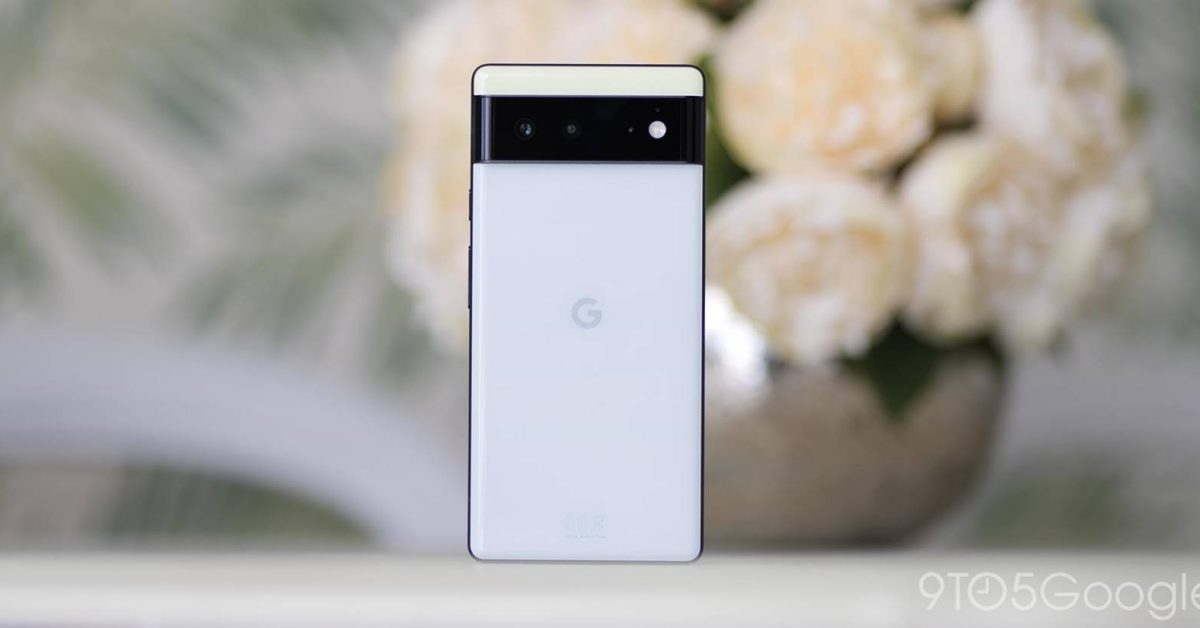
I think there are few smartphones in the past decade that have arrived carrying the sheer weight of expectation that greeted the Pixel 6 and Pixel 6 Pro in late 2021. Now on life support, just what did we learn from 2021’s reboot for the brand? Table of contentsThe design overhaul: Ad’visor’ to the boredEnter Google Tensor: It’s time to chip inThe complaints: Optical scanners and modem nightmaresThe software patch debacleFinally, modern camera hardwareHow the Pixel 6 shaped future generations There was a lot of bubbling hype around ahead of Made by Google before the Pixel 6 was unveiled. I think a lot of that is due to just how flip-flop the Pixel lineup had become after years of identity crises, weird experimental gestures, compromised battery sizes, and following on from the charming but overtly mid-range Pixel 5, Google said enough was enough and finally decided to swing for the fences. I think fans hoped that Google was done playing nice and coming second to Samsung and Apple. The Pixel 6 series was built to make a statement, introducing a brand new design language, custom silicon in the shape of Google Tensor, huge camera sensor upgrades, and a shockingly competitive price tag. For more video content, subscribe to 9to5Google on YouTube. Yet, looking back with years of hindsight, the Pixel 6 duo remains one of the most polarizing Google releases, probably ever, but we can’t get away from the important fact that it laid the technological foundation for everything Pixel represents today, but it did so while putting early adopters through a gauntlet of software bugs, sluggish biometrics, thermal throttling, and atrocious cellular connectivity. So with that in mind, this is the Google Pixel 6 and 6 Pro: the good, the bad, the ugly, and how this turbulent reboot shaped the future of Pixel. Before the Pixel 6, Google’s hardware design wasn’t exactly tearing up trees. I’d say it was best described as understated, if not entirely apologetic. The fabric cases notwithstanding, and maybe the soft-touch bio-resin finish of the Pixel 5 aside, nothing about them screamed “I am a flagship phone” across a crowded room. I genuinely feel that the Pixel 6 changed that overnight, but without losing some of the “playful” feel that has been a hallmark of basically all Google hardware. Dominated by a bold, edge-to-edge camera visor across the rear, the design was, dare I say it, instantly iconic. Instead of an awkward off-center stove-top camera island that rocked incessantly when placed on a flat desk, the camera bar acted as a natural kickstand. It gave the Pixel line an unmistakable silhouette that Google continues to iterate on today. One thing that was interesting at the time and even more so today is how the line was separated at launch. Two distinct yet similar designs with dual-tone pastel glass backs. The Pixel 6 had a bigger dash of “fun” with the Sorta Seafoam, Kinda Coral, and the striking Stormy Black. The 6 Pro leaned into more traditional executive styling with polished aluminum rails and curved front glass, whereas the standard Pixel 6 has that flat display glass, matte black borders, and a boxier aesthetic. However, the hardware was not without ergonomic pain points. Both devices were heavy, slippery, and massive. Google completely abandoned the compact form factor of the Pixel 5, offering no refuge for small-phone purists after the palm-friendly 4a and even the smaller Pixel 4. The polished rails of the Pro were a magnet for grease, while the glossy back panels made both phones still feel like a wet soap bar without a protective case. Complaints aside, the design was arguably the biggest standout. I think they still look great today. Enter Google Tensor: It’s time to chip in The biggest architectural gamble with the Pixel 6 generation was the departure from Qualcomm Snapdragon processors in favor of in-house silicon. Before launch, we’d heard so much about the first-generation Google Tensor chip thanks to numerous leaks, but really had no idea what it would bring to the table. Developed in partnership with Samsung’s Foundry, Tensor, or “Tensor G1” as it is known today, was not designed to beat Apple’s A-series chips or Qualcomm’s Snapdragon lineup on synthetic Geekbench benchmarks. Google’s main pitch was on-device machine learning. The first-gen Tensor chip unlocked voice typing through Google Assistant that was fast and accurate enough to genuinely replace keyboard tapping, real-time live translation, Magic Eraser photo cleanup, and instant offline speech transcription. These are now commonplace, but they felt like real differentiators at the time. In everyday UI tasks, the Pixel 6 felt fluid and remarkably responsive. Paired with Android 12 and the debut of the Material You’s dynamic theming engine, using the phone felt fresh, cohesive, and modern but styled with Google’s trademark flourishes. The trade-off was efficiency. Fabricated on Samsung’s 5nm LPE node, the first Tensor generation struggled, well, struggled is an understatement, with sustained thermal performance. Under heavy loads or prolonged 4K recording sessions, the phone warmed up rapidly. Gaming performance was volatile, and battery life was wildly inconsistent between individual units. The complaints: Optical scanners and modem nightmares I think it’s fair to say that those issues were the tip of the iceberg. The first six months of the Pixel 6’s lifecycle were marred by two notorious hardware bottlenecks: the optical fingerprint reader and the cellular modem. Google made the controversial decision to ditch the ultra-reliable rear-mounted Pixel Imprint capacitive scanner in favor of an under-display optical sensor. You fell into a couple of camps with this problem in particular. I can’t say I had a single issue, save for unlocking being slower than the competition at the time, but for thousands of people, it was one of the biggest frustrations from the get-go. Google issued multiple software patches attempting to tune recognition algorithms, but software can only do so much to compensate for mediocre optical hardware. In my mind, the most damaging issue was cellular connectivity. So instead of using Qualcomm’s class-leading modems, the Pixel 6 series tried out Samsung’s Exynos 5123 modem. You’ll know all about this if you use either phone for any extended period of time. Dropped calls, slow to send text messages, weak signal basically everywhere, even when in the visible range of a cell tower. It was a mess. Even testing showed it was just bad compared to other flagship phones. It was a disaster, and this isn’t something you can ever fix with a software update. The software patch debacle Despite Android 12 being the biggest shift in the platform up until that point, and debuting on the Pixel 6 and 6 Pro, it was a very buggy update and one that needed near constant attention alongside the other issues this duo faced post-launch. The situation spiraled after the disastrous December 2021 security update. The update introduced critical call-dropping bugs so severe that Google was forced to pull the release entirely and pause OTA rollouts for nearly a month while working on emergency fixes that pushed into late January 2022. For a product line whose defining identity had always been pristine software and rapid, flawless monthly updates, the December-January release cycle was not a good look. That’s not discounting some early issues with the new and improved camera systems onboard. Finally, modern camera hardware For four straight generations prior, Google clung stubbornly to the aging 12.2-megapixel Sony IMX363 sensor. I’d say that the company was overrelying on computational photography wizardry to squeeze blood from a stone. With the Pixel 6 and 6 Pro, Google finally listened to the complaints and paired its legendary image pipeline with some actual cutting-edge optical hardware. Both phones pack a 1/1.31-inch 50MP Samsung ISOCELL GN1 main sensor, which captures roughly 150% more light than the Pixel 5. The resulting images delivered that lovely natural optical shallow depth of field, stunning dynamic range, and rich textures that no longer relied on over-sharpening algorithms. Night Sight became noticeably faster, and skin tones were rendered with unprecedented fidelity thanks to the introduction of Real Tone tuning. On the Pixel 6 Pro, Google added a dedicated 48MP 4x periscope telephoto lens. This transformed the Pro into a versatile long-range shooter, producing clean hybrid zoom up to 20x. I guess like basically everything else on the Pixel 6 and 6 Pro, the transition to a larger physical sensor was not entirely smooth. Close-up shots frequently suffered from optical fringing and falloff around the edges of text documents, highlighting the lack of dedicated macro capabilities on the standard ultra-wide camera. Before updates, there was a ton of oversharpening that felt like a hangover from the previously 12MP main sensor era that had to be ironed out. Video recording, while improved through HDRnet processing, still lagged behind the iPhone in low-light stability and frame consistency. Still, the Pixel 6 camera setup finally looked and shot like real flagship hardware. How the Pixel 6 shaped future generations In retrospect, the Pixel 6 was the messy blueprint that made everything that came after it possible. Google treated this generation as a clean break, and the hard lessons learned directly dictated the roadmap for subsequent flagships. The industrial design was one of the strongest areas, and we’ve seen it refined into an integrated visor on the Pixel 7 and 8 series, eliminating the delicate glass visor seams and smoothing out corner transitions. The optical fingerprint reader, while still not top-tier ultrasonic until the Pixel 9 series, saw improved hardware revisions and accompanying software facial recognition fallback added to the next device. On the connectivity front, the widespread backlash pushed Google to iteratively address modem efficiency and reception, moving through newer Samsung modems before laying the groundwork for better connectivity in recent years. The camera sensor’s higher baseline established on the 6 series provided the stable foundation for Google’s imaging algorithms to mature over several release cycles. The consistency is back and remains a strong suit of the latest phones once again. Crucially, the aggressive $599 pricing of the base Pixel 6 in some ways reset consumer expectations across the industry. I don’t doubt that it proved premium hardware and custom silicon did not require a four-figure entry fee. A lot of that has been ditched in recent years, but the point remains. The Pixel 6 and Pixel 6 Pro were fundamentally flawed pioneers for Google. They were the firm’s most ambitious hardware undertaking to date, and simultaneously one of the most frustrating phone series to live with during their initial launch window and beyond. If the Pixel 5 was a safe play ahead of this big pitch, the Pixel 6 was a risky dive into deep waters. It stumbled badly yet without those painful growing pains; the more polished, confident, and reliable Pixel devices we enjoy today simply would not exist. Follow Damien: Threads, Bluesky, Instagram FTC: We use income earning auto affiliate links. More.
Pixel 6 postmortem: How Google’s flawed reboot defined future hardware [Video]
Full Article
Original Source
Read the full article at 9to5google →KhanList aggregates and links to publicly available news content. We do not host full articles from third-party sources. Always verify important information with original sources.