
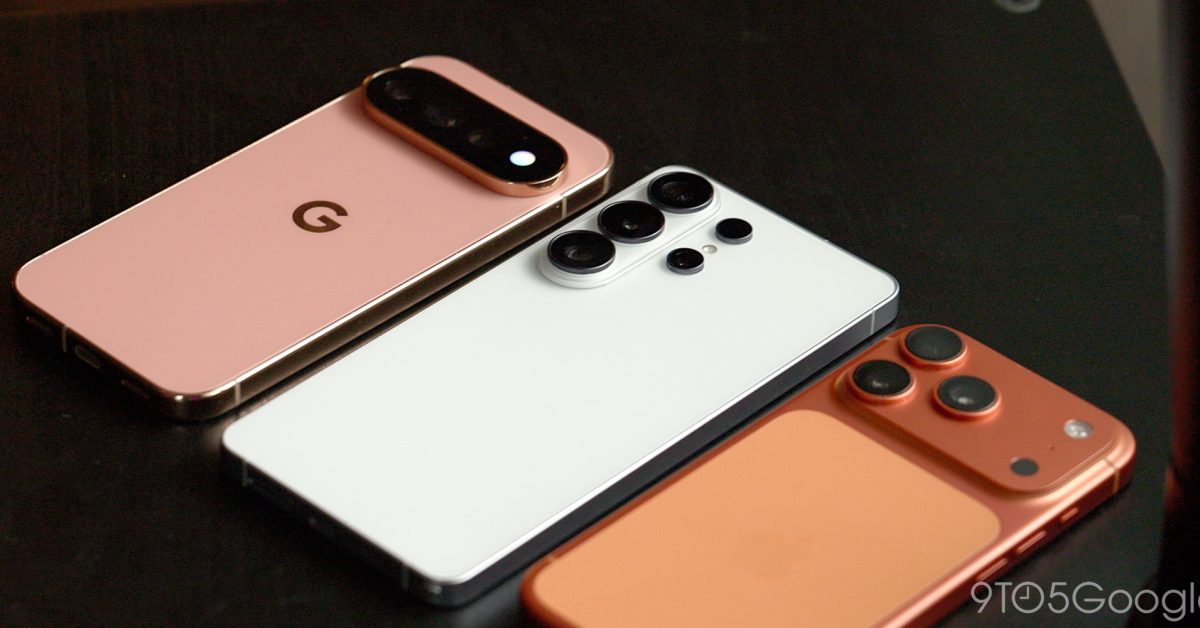
Like most Android fans, you probably enjoy having the latest and greatest smartphone buried in your pocket. The best camera, the best display, the fastest processor, and of course, as much RAM as any given smartphone OEM will pack in. And even as we’ve watched the typical flagship price balloon into the four-digit space, trade-in offers, carrier deals, and steep sales on certain hardware brands like Pixel have made it all too easy to keep up on what’s new in gadgets without breaking the bank year-in and year-out. Obviously, all of those routes towards a cheaper smartphone purchase still exist today — I assure you, anyone who regularly tunes into the NFL can recite Verizon, T-Mobile, and AT&T’s various deals by heart. But prices are rising so rapidly, with no sign of slowdown in sight, that I can no longer be sure any of those routes towards making new hardware more expensive will be available tomorrow. And honestly, we might hit a point where it’s increasingly difficult to recommend these phones to all but the most hardcore of enthusiasts, no matter how many sweeteners you add to the deal. Throughout 2026, we’ve watched as new generations of barely-modified hardware have launched with $100 price hikes. We’ve watched as months-old hardware suddenly jumped up in price without so much in the way of a warning or an official announcement. And even outside of smartphones, you have to wonder if Google really hoped its latest lineup of laptops would’ve launched with more models available for under four figures. What’s been an underlying problem throughout the market throughout the last year, though, seems ready to burst into something much larger beginning throughout the next few months. The Galaxy S26 Ultra already had a mid-cycle price hike, and its successor will likely cost even more. Recent price leaks have not exactly filled me with confidence over what hardware to recommend to anyone in the market for a new phone. The Galaxy S27 Ultra is sounding like it could arrive starting at $1,500, $100 more than the S26 Ultra’s current MSRP and $200 more than what that phone launched at earlier this year. Motorola’s attempt to come back to the flagship space in the US for the first time since 2023 could be completely derailed by rumors of an even higher price point that guarantees it won’t appeal to anyone. And while we’re certainly too far out to really predict anything regarding Google’s next-gen Pixel pricing, if you think the Pixel 12 might be your next phone, I’d start saving today. As you climb towards the $2,000 mark, it’s worth putting these costs into perspective. These are laptop prices — maybe not that new “PROLED” MacBook Pro, but certainly other upper-high end laptops from companies like Apple, Dell, and HP. $1,500 will buy you an mid-tier home treadmill, or a nice OLED TV, to say nothing of the truly practical ways you can put that much cash to good use in a time where the costs of everything is rising. While some might think there is no price ceiling that truly keeps them away from new Android hardware, I’d be willing to bet plenty of potential buyers are already being priced out of the high-end market entirely. We’re reaching a breaking point where the question might not even be about whether you can afford something, but whether you should, leaving customers with just two routes forward: keep your existing device, or opt for a midrange option when you can. Sure, saying “no thanks” to something like the Pixel 11 Pro XL right now might be easy enough. But moving forward, practically every single Android user will need to set some kind of personal limit on the price of a new smartphone, and if you’re convinced the midrange space might serve as your sole savior, you might want to think again. While RAM prices are bound to affect the final cost of Google’s Pixel 12, those constraints on a final bill of materials might mean a whole lot more to something like the Pixel 11a. After all, when you’ve already seen the Pixel 10a and its generation-old Tensor G4 chipset get hit with a $100 price bump, you have to wonder if it’s time to cut back on certain “premium” features. The Pixel 10a is already up to $600 at full price, and the Pixel 11a could cost even more. The next few years of budget-oriented smartphones — and I really am talking about anything outside of the flagship space — is about to shift in a way we haven’t seen in over a decade. In the 2010s, cheap components and streamlined production costs helped bring about excellent midrange options like Google’s Pixel A-series, Samsung’s Galaxy A-series, and some select Moto G entries. Moving forward, these same companies will need to pick between higher prices and reduced spec sheets. The dream of yesterday’s flagship becoming tomorrow’s budget phone is, at least for the time being, dead and buried. This isn’t just rampant speculation on my part. We’re already hearing about some companies making the decision to reduce RAM in their devices down to 8GB, 6GB, or even as low as 4GB, depending on the model and market it’s entering. It’s easy to see storage options also getting hit with their own downgrade — 128GB entry-level flagships could reemerge just as soon as they began to die off, and I wouldn’t be surprised to see 64GB options begin to reappear in sub-$600 models. That might be the sacrifice needed to keep other high-end features, like 120Hz OLED displays, hanging around in this price range. Of course, you can’t simply opt to forego RAM or storage in the same way that you can downgrade the display, and with the memory crunch set to possibly extend to 2030 or beyond, there could come a time where cutting back on raw specs or non-essential features stops being an either-or question. The knock-on effect is obvious: If you suddenly have a lot more people buying devices with less horsepower than previous generations, you’re going to see a reciprocal slowdown of any software development that requires hardware capable of reaching a certain threshold. Widespread on-device AI, for those of you who care about local models, seems like a pipedream at this point, but these market conditions are just as likely to crush, say, any hope of more games with high-end graphics coming to Android. It’s not that the hardware won’t exist to support these features — flagships will obviously still exist even if their price tags balloon over the $2,000 mark. It’s the audience size you have to worry about; for a large majority of developers, it simply won’t make sense to continue pushing the envelope for what constitutes a smaller and smaller crowd of potential users. The other solution is to hold onto whatever device you have in your possession right now, for as long as you can. That might not sound particularly exciting — I know I couldn’t tell you the last time I went more than six months without changing phones, even discounting review units — but it’s also the most reasonable approach to the current crisis. It’s not too late to jump on a recent flagship (think 2024 or later) before things get particularly dire, either, and with holiday sales coming up, I’d urge anyone on the fence about upgrading their current device with the means to do so to pull the trigger. Tomorrow’s price, simply put, will not be today’s. And hey, if there’s a silver lining to be found here, I think it’s this: we’ve seeing tech companies across the board — hardware and software alike — grow increasingly comfortable with the idea that, for the user, resources can be effectively unlimited. Those days are gone, and it’s going to force software developers, including Google, to make some changes that are probably long, long overdue. We might lose out on big hardware improvements, resource-heavy advancements, and flagship-esque affordable smartphones, but there’s always a chance Chrome’s memory usage finally gets under control. It might not be worth all of this pain, but it’s something, right? FTC: We use income earning auto affiliate links. More.
Will Galaxy S27 Ultra and Pixel 12 mark the end of the flagship era of smartphones?
Full Article
Original Source
Read the full article at 9to5google →KhanList aggregates and links to publicly available news content. We do not host full articles from third-party sources. Always verify important information with original sources.