
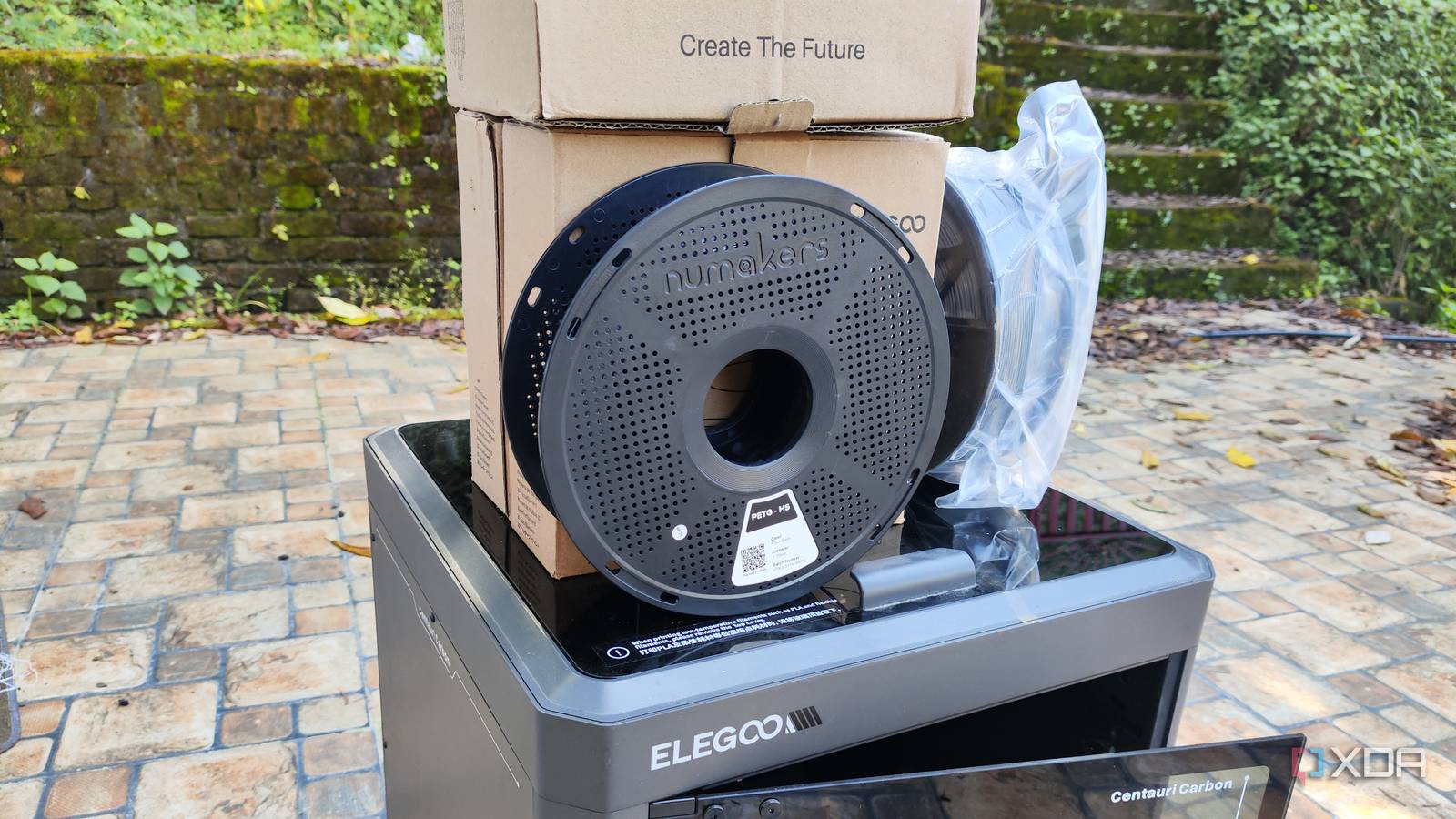
Published Nov 12, 2026, 11:00 AM EST Ayush Pande is a PC hardware and gaming writer. When he's not working on a new article, you can find him with his head stuck inside a PC or tinkering with a server operating system. Besides computing, his interests include spending hours in long RPGs, yelling at his friends in co-op games, and practicing guitar. If you’ve only recently gotten into 3D printing, you probably rely on PLA spools to turn STL files into tangible models. After all, PLA is fairly easy to use, remains relatively safe compared to industrial filaments, and melts perfectly fine at low temperatures without needing a dedicated enclosure. Not to mention, it preserves sharp corners and finer model details cleanly, making it pretty handy for desk accessories, figurines, cosplay props, and typical vanity models. But having gone through several filaments over the course of my 3D printing journey, I’m no longer the PLA fanboy I used to be as a beginner. Once I started tinkering with functional prints, PETG became a regular part of my 3D printing (mis)adventures, and now I prefer it over PLA for most of my models. PETG’s superior toughness makes it better for functional prints PLA just isn’t reliable for models involving mechanical load When you compare PETG to PLA, the latter surprisingly has a higher tensile strength. Specifically, PLA can withstand around 50–70 MPa of pulling stress, while PETG can only handle a maximum stretching stress of 40–55 MPa. On paper, you might be inclined to believe that PLA is more durable than PETG, but things are a lot different when it comes to models that get subjected to real-world loads. Let’s say I want to 3D print a clamp that holds my microphone’s boom arm. Although PLA has higher tensile strength, its rigid nature can work against this project. That’s because PLA is infamous for creeping under sustained weight, before eventually becoming so brittle that it snaps altogether. Relying on PLA for my mic clamp would be a bad idea, considering all the extra weight of my mic and its boom arm. On the other hand, I won’t have to worry about my clamp randomly breaking apart if I go down the PETG route. Compared to PLA, PETG has more impact resistance, and it flexes under stress instead of snapping altogether. Considering all the weight my camera mounts, stands, shelf brackets, tool hooks, and other mechanical clips need to bear, PETG becomes more reliable than PLA for long-term usage. PETG models are also more resilient to typical weather conditions I don’t have to worry about a little heat, sunlight, or moisture ruining my PETG prints Another neat aspect of PETG models is that they can survive outdoor weather conditions a lot better than their PLA counterparts. On the temperature front, PLA can deform at 55–60°C, which makes it a terrible option for designing components that may get exposed to even a little bit of heat. PETG, however, has its softening temperature in the 70–80°C range, which is more than enough to handle everyday, outdoor prints. Of course, I won’t go so far as to say that a PETG model will remain unscathed if I leave it in a heated-up car dashboard for hours or have it in direct contact with a thermally-throttled GPU. But when it comes to designing simple cases for tiny electronics or cable management tools for my PC, PETG can hold its own against slightly warm devices. PETG also fares much better against UV rats, making it a solid option for gardening accessories, garage mounts, and prints that may get exposed to outdoor sunlight. Likewise, it’s decently resistant to water and oils, which is why I often use it for my kitchen and bathroom accessories. Still, PETG has a few flaws of its own PLA is far superior for aesthetically-pleasing models Notice how I keep saying PETG has replaced PLA for “almost” all my prints? Well, that’s because there are still a handful of situations where I prefer PLA instead of its reliable counterpart. For one, PETG prints have a glossy appearance, which may not mesh well with typical vanity models, especially when you compare it to all types of cosmetic PLA spools out there. Post-processing is also easier on PLA than PETG, and although PETG models are fairly moisture resistant, the filament itself is hygroscopic and needs to be dried before printing. Heck, I even had to look into a few filament dryers just to avoid my semi-opened PETG spools from getting ruined by the excessive humidity in my backwater town. And truth be told, PLA is just easier to work with, as I don’t need to tweak the print profiles just to avoid stringing or bad bed adhesion. PETG remains my top choice for functional prints Although PETG needs a little more effort to print than PLA, the fact that its prints can survive a long time makes it a terrific option for folks who print as many functional models as I do. Even if you leave PLA out of the equation, it’s still safer to print than ABS, and handles UV exposure much better than its industrial counterpart. Combine that with the relatively affordable price tags on PETG spools, and you can see why it’s a constant companion in my 3D printing escapades.
PETG has replaced PLA for nearly everything I print, and the reasons have little to do with strength
Full Article
Original Source
Read the full article at Xda-developers →KhanList aggregates and links to publicly available news content. We do not host full articles from third-party sources. Always verify important information with original sources.