
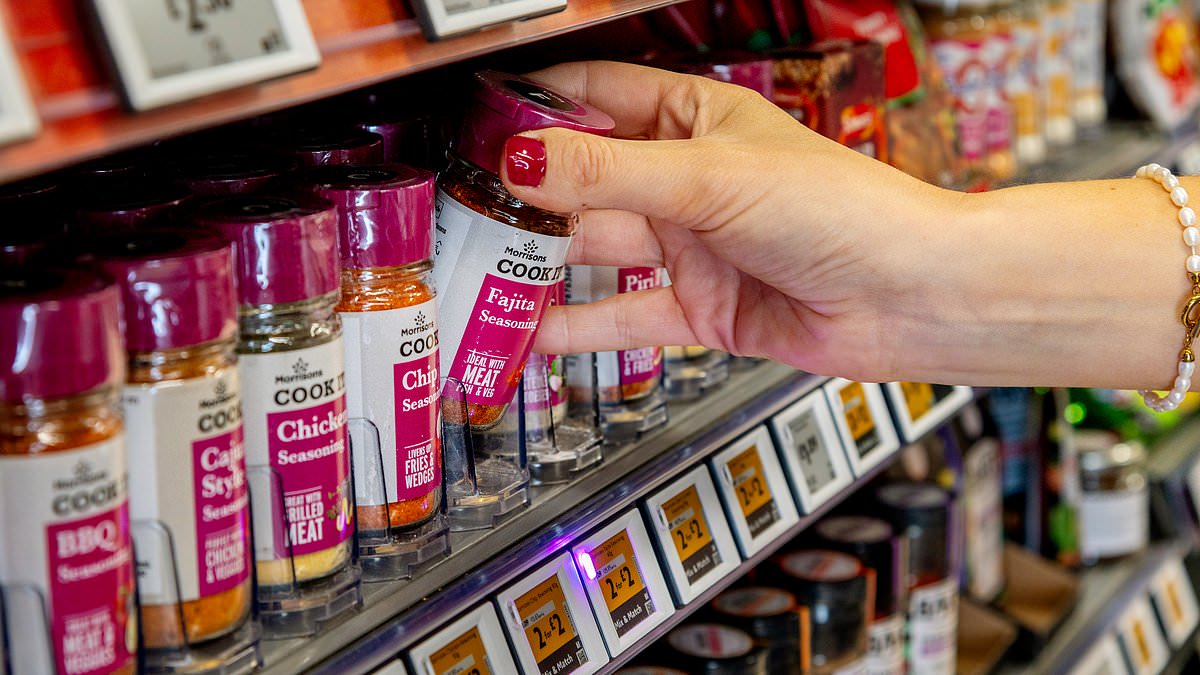
Morrisons has launched flashing electronic shelf labels designed to help shoppers find products faster, amid fears dynamic pricing could soon be introduced in British supermarkets. Shoppers can search for a specific product via the More Card loyalty app's 'product finder tool'. The correct shelf-edge label in the supermarket will then light up. Supermarkets are working at pace to figure out new ways to get shoppers to increase their spending in stores. For now, Morrisons' flashing shelves are aimed at guiding shoppers to the right product. But some are concerned supermarket chains across Britain could eventually introduce dynamic pricing. Dynamic pricing is where the cost of groceries can change by the minute thanks to computer-controlled digital price labels. Morrisons says it has partnered with French firm Vusion to 'digitise pricing across its entire supermarket estate using electronic shelf labels to automate price updates and improve pricing accuracy'. Flashy tech: Morrisons is rolling out flashing electronic shelf labels designed to help shoppers find products fasterAndrew Opie, director of food and sustainability at the British Retail Consortium (BRC), said: 'Digital pricing displays are simply a way of updating and checking thousands of prices in a fast and cost-effective way, so they can continue to offer great value for customers.'Morrisons told This is Money it was aligned to the BRC statement on the topic of dynamic pricing. In April 2026, the Bank of England warned that more businesses were planning to use 'market-responsive pricing tools', with around a third of companies expected to adopt them. Dynamic pricing technology is already used on shopping websites like Amazon, but supermarkets such as the Co-op have been trialling it in 700 stores nationwide.While supermarkets in Britain are not currently using dynamic pricing, many, including Co-op and Morrisons, are shifting towards digital shelf labels, which will, in turn, make price changes quicker to implement. Taking an example, if dynamic pricing was introduced across British supermarkets, a pack of yoghurts could be £1.10 in the morning and £1.50 in the afternoon. A bottle of wine could be priced 10 per cent higher on a Friday evening – essentially, supermarkets would use customer spending data in an attempt to price 'dynamically'. Any move towards dynamic pricing in British supermarkets would prove controversial, given that food is an essential purchase unlike concert tickets or flights.Advocates of dynamic pricing claim shoppers already benefit when prices fall, and have claimed consumers can limit the impact by choosing where and when they buy. Clive Black, of Shore Capital, told The Times earlier this year: 'Changing prices is very expensive. 'When Tesco changes prices, it has to replace a piece of plastic or cardboard across thousands of stores.'The initial drive for these displays is operating efficiency, standardisation and compliance, but the longer-term possibility is dynamic pricing. 'Whether that is in the interest of shoppers or shareholders is a moot point.'Morrisons previously said it would launch its digital flashing shelf units in September this year.Morrisons said: 'The app will share the in-store location, ask the customer to confirm if they are in the right aisle, and then the corresponding digital shelf label will flash magenta, making it easier for the customer to spot the exact product they want.' It added: 'The feature is ideal for navigating high-density product aisles like herbs, spices, or sauces, as well as locating popular seasonal items such as cranberry sauce.' The new technology, which Morrisons claimed was the first of its kind in a British supermarket, will be live in all 270 Morrisons shops that currently have electronic shelf-edge labels installed before Christmas. Gordon Macpherson, of Morrisons, said: 'We know that Christmas is one of the busiest times of the year for our customers, and we’re always looking for new ways to make their shopping experience as easy and convenient as possible.'Our new "shop to light" feature is a great example of how we’re using technology to make a real difference in store, helping our customers find the products they need quickly, whether they’re shopping for their Christmas dinner or just popping in to pick up a few last-minute essentials.' Marks and Spencer has also been testing the use of 'pick to light' shopping technology in its wine aisles. In its latest half-year results, Tesco said it had more than 7,500 digital advertising screens across the group, including at Booker and convenience chain One Stop. DIY INVESTING PLATFORMSAJ BellAJ BellEasy investing and ready-made portfoliosHargreaves LansdownHargreaves LansdownFree fund dealing and investment ideasinteractive investorinteractive investorFlat-fee investing from £4.99 per monthFreetradeFreetradeInvesting Isa now free on basic planTrading 212Trading 212Free share dealing and no account feeAffiliate links: If you take out a product This is Money may earn a commission. These deals are chosen by our editorial team, as we think they are worth highlighting. This does not affect our editorial independence.Compare the best investing account for you
Morrisons rolls out flashing digital shelves - is dynamic pricing coming to supermarkets?
Full Article
Original Source
Read the full article at Dailymail →KhanList aggregates and links to publicly available news content. We do not host full articles from third-party sources. Always verify important information with original sources.