
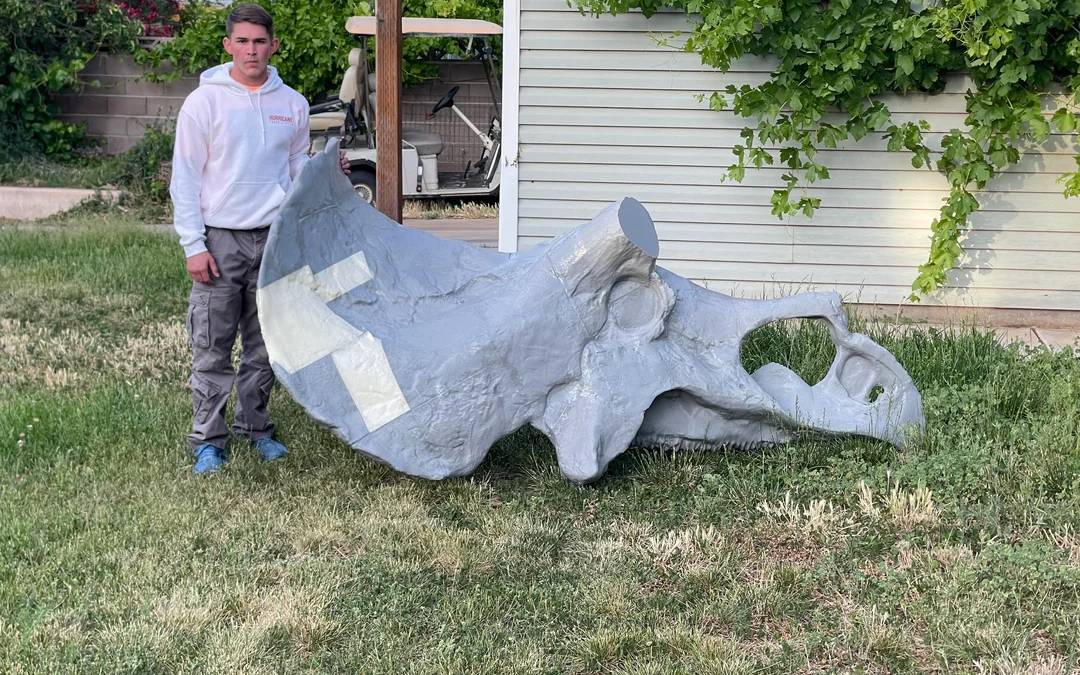
Published Aug 3, 2026, 7:00 AM EDT Sydney Butler is a technology writer with over 20 years of experience as a freelance PC technician and system builder and over a decade as a professional writer. He's worked for more than a decade in user education. On How-To Geek, he writes commerce content, guides, opinions, and specializes in editing hardware and cutting edge technology articles. Sydney started working as a freelance computer technician around the age of 13, before which he was in charge of running the computer center for his school. (He also ran LAN gaming tournaments when the teachers weren't looking!) His interests include VR, PC, Mac, gaming, 3D printing, consumer electronics, the web, and privacy. He holds a Master of Arts degree in Research Psychology with a minor in media and technology studies. His masters dissertation examined the potential for social media to spread misinformation. Outside of How-To Geek, he hosts the Online Tech Tips YouTube Channel, and writes for Online Tech Tips, Switching to Mac, and Helpdesk Geek. Sydney also writes for Expert Reviews UK. He also has bylines at 9to5Mac, 9to5Google, 9to5Toys, Tom's Hardware, MakeTechEasier, and Laptop Mag. The enthusiasm for dinosaurs never seems to get old, which feels like an ironic thing to say considering the dinos were gone long before our ancestors decided to stand up and walk on only two legs. Going to a natural history museum used to be a highlight for me as a child, where I got to see real dinosaur fossils rebuilt and posed to show you the scale of these amazing animals. Now, thanks to home 3D printing technology, makers are bringing that big-boned experience home. The Smithsonian quietly gave makers a prehistoric treasure trove Your tax dollars at work How do you make an authentic 3D print of a real fossil? Well, you need the help of the professionals, because you're probably not going to find a T. rex skull in your backyard. Many universities and other educational organizations have been using 3D scanning technology to preserve a digital copy of fossils and other artifacts for years. In fact, in 2015, my office at the university where I worked as an educational technology specialist was above the anthropology and archeology department. This is how I got involved in printing replicas of bones from the Homo Naledi discovery. The printer I had at the time was incredibly primitive, and the scan was in the form of a point-cloud, which meant I still had to turn it into a solid mesh and clean it up before it could be printed. Afterward, it could be finished and painted by the experts in the department, but this gave us a way to display highly-accurate replicas of this precious find. Getting the scan data from the researchers who did the work wasn't exactly hard, but back then it wasn't exactly advertised either. Now, the Smithsonian has a big, beautiful dedicated website called Smithsonian 3D. Here you'll find 3D models more refined than what I had to work with over a decade ago, and with the proliferation of cheap advanced 3D printers, people are taking advantage of this free data. I really do mean free. As you can see from the catalog listing above, these scans are "CC0", which means they're Public Domain. Turning museum scans into printable dinosaur bones The leg bone's connected to the... In July 2026, a Reddit user known as Content-Weird-8057 posted in r/3Dprinting about his project to create a life-sized Triceratops skull. According to the Redditor in question, this is a life-size replica of "Hatcher" the Triceratops. The entire thing is printed in ABS which, according to him, was chosen to make the supports easy to dissolve using acetone. This choice also makes it possible to joint the pieces with solvent-welding, where ABS parts are fused together chemically. Printing a dinosaur is a marathon, not a weekend project At least it's not 65 million years Credit: Content-Weird-8057 via Reddit This was anything but a weekend project. It took 1,773 printer hours on three Qidi Xmax 3 printers. Those stats break down into even sillier numbers: 60KG of filament, or 132lbs. 120 print beds total. Project time from April 28, 2026, to June 5, 2026. The assembly was a major challenge. You can tell the scale from the images, especially when seen next to a human figure, and planning how to split this into 120 prints that could then be chemically welded together later must have been no joke. According to the post, he kept the skull separated into two halves, and the halves are removable. Without these concessions, the skull wouldn't fit through a door! The frill is 8.5 feet wide, and from the top of the snout to the back of the frill, the model measures 6.5 feet! Even more impressive, this isn't their first project. There has also been a full-size T.rex and Utahraptor. Both on display at Red Cliffs Mall in St. George, Utah. So if you live near there, and they're still up, it's worth a visit. ELEGOO Centauri Carbon 2 Build Volume 256 × 256 × 256 mm Connectivity Wi-Fi The ELEGOO Centauri Carbon 2 builds on the solid foundation of its predecessor and adds an affordable, effective multicolor system to the mix. Why these projects matter I love projects like these for numerous reasons. First, it shows you how far 3D printing has come over a relatively short time. Second, it also shows how makers have developed amazing methods to plan, execute, and refine models. Third, isn't this democratization of data just awesome? It's the same with NASA's free 3D models, which are almost all public domain, since NASA is a government organization. You can just spend time in a 3D modeling app to prep the model and then make your own tangible piece of history. It doesn't even have to be life-sized. Nothing stops you from printing a desktop replica of a dinosaur based on scans of real fossils. Like most of you reading this, I don't have the room for a dinosaur inside my house, and I certainly don't have the budget for 132lbs of filament, but a desktop dino? I could do that, and so can you.
People are 3D printing life-sized dinosaur skeletons with free Smithsonian models
Full Article
Original Source
Read the full article at Howtogeek →KhanList aggregates and links to publicly available news content. We do not host full articles from third-party sources. Always verify important information with original sources.