
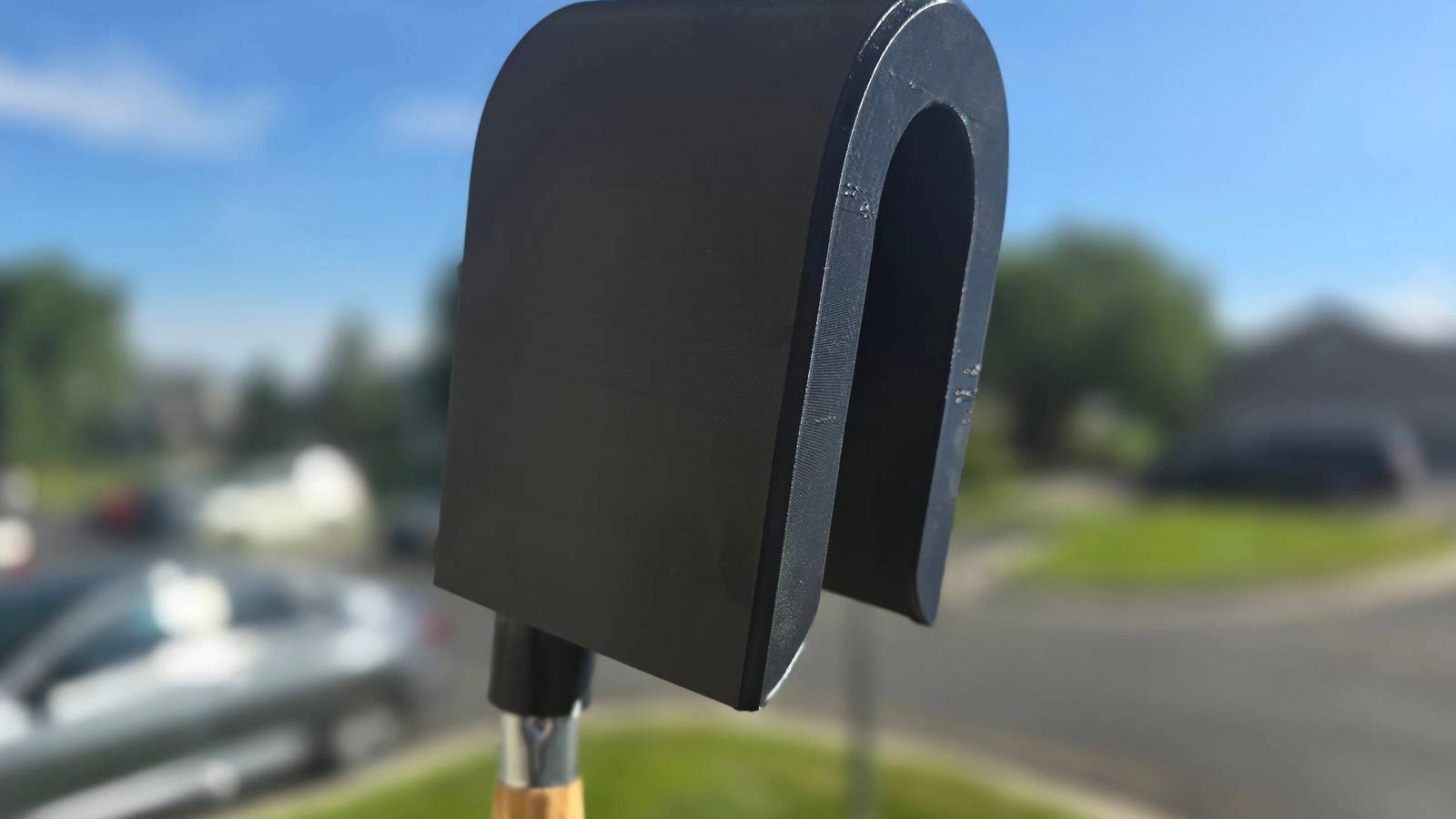
Published Nov 3, 2026, 6:00 AM EST Tim has been covering technology for almost 20 years, in that time spanning a broad range of topics from security to product reviews. He is especially focused on the Apple ecosystem, productivity, and consumer advice. Over the years Tim has written thousands of articles, reviews, and round-ups in addition to producing video content and original photography. A graduate of journalism, he found his footing as a freelancer with a laptop and loves how he is able to work from practically anywhere. Now a Senior Editor for iPhone, Mac, and Smart Home at How-To Geek, Tim still loves to write. He can also be found crafting round-ups and productivity posts for the Zapier blog. Earlier in his career Tim spent nearly a decade as a writer and eventually Apple section editor for MakeUseOf. Tim currently lives in Brisbane, Australia. Outside of work he loves to hike and work out, play video games, and spend quality time with his wonderful partner and two cats Inka and Roger. Flock cameras have been in the news a lot in 2026, for all of the wrong reasons. This recently came to a head when the cameras were described as “indiscriminate mass surveillance” by a federal judge. So is it any wonder that people are fighting back with their 3D printers? Flock Security is in the news again There are now more than 200,000 cameras across the United States Credit: Proton Produced by Flock Security, Flock cameras appear at the side of the road so that they can photograph and analyze every vehicle that drives past. In addition to registering the license plate number, time of day, and location of the camera, Flock’s “vehicle fingerprint” feature logs vehicle make, model, color, and other identifying information like dents or stickers. This information is stored within Flock’s system, where it is accessible to law enforcement. Concerns have long been raised over the fact that this data is collected and stored for every vehicle, whether or not the driver is suspected of any wrongdoing. One federal judge in Oklahoma ruled that a police officer violated a woman’s Fourth Amendment rights when they used data gathered by Flock Security as part of a traffic stop. The officer accessed Flock’s automated license plate reader (ALPR) system on the basis that the woman was traveling in a vehicle that was registered in California. Data gathered by Flock’s systems detailing the woman’s whereabouts was used to justify a search of the vehicle, which led to a discovery that resulted in the woman’s arrest. However, the judge ruled that all evidence gathered from Flock’s systems, along with anything discovered during the vehicle search, must be thrown out due to violating the woman’s reasonable expectation of privacy. The judge later wrote that Flock Security’s broad-brush approach to logging constitutes “a type of indiscriminate mass surveillance.” A broader picture is beginning to emerge, where states like Florida and Texas are moving to block Flock cameras over privacy concerns. In February earlier this year, Amazon parted ways with Flock following a controversial Super Bowl commercial that arguably generated more buzz than the halftime show. Flock camera maps have appeared online to document where these cameras are located. Some people are taking matters into their own hands Introducing the Flock Sock The Flock Sock emerged as a response from those who see these cameras as a privacy violation. Arguably one of the internet’s tamest reactions to Flock’s cameras, the Flock Sock is a 3D-printed slip-on cover that the author claims is “designed to help protect a Flock camera from the harmful radiation of the sun.” Tongue planted firmly in cheek, the description goes on: “Your city spent their very own hard-earned tax dollars scattering these cameras everywhere to keep you safe, all it cost you was a little privacy. The very least you can do is help protect these valuable civil servants from getting a bad sunburn.” The STL file consists of a dimensionally accurate camera cover and an adapter that fits onto a broomstick. All up, the print requires just shy of 150g filament and takes less than four hours to produce. Without the adapter, the filament cost drops to around 120g. The model has been shared far and wide, but has been hosted on MakerWorld since July and appears not to violate the repository’s rules. The author maintains that these covers are non-permanent and cause no damage to private property. Even so, printing and applying these covers is done at your own risk. To be absolutely clear, How-To Geek is not advising that you produce or deploy the “Flock Sock” or any such model like it. Why 3D printing? Easy does it Credit: Tim Brookes / How-To Geek What’s especially interesting here is the intersection between what some see as activism and the democratized nature of manufacturing that 3D printers have become associated with. One could just as easily construct a cover from cardboard or plywood to achieve the same result. It would arguably be faster to use other methods of construction, depending on your level of ability, given the nearly four hours it takes to print a Flock Sock. But 3D printing turns the process of manufacturing an item into a trivially easy and passive pursuit. A model can be designed and refined by those with know-how, indexed and disseminated online in a way that the internet has truly mastered, and produced at home with nothing but cheap filament and time. Owning a 3D printer desensitizes you to just how "science fiction" the ability to turn digital files into physical items really is. While Flock’s camera count is only increasing, companies like Ring appear to finally be taking security a little more seriously following their decision to pull out of a deal with the company.
People are 3D printing covers for Flock cameras in response to “indiscriminate mass surveillance"
Full Article
Original Source
Read the full article at Howtogeek →KhanList aggregates and links to publicly available news content. We do not host full articles from third-party sources. Always verify important information with original sources.