
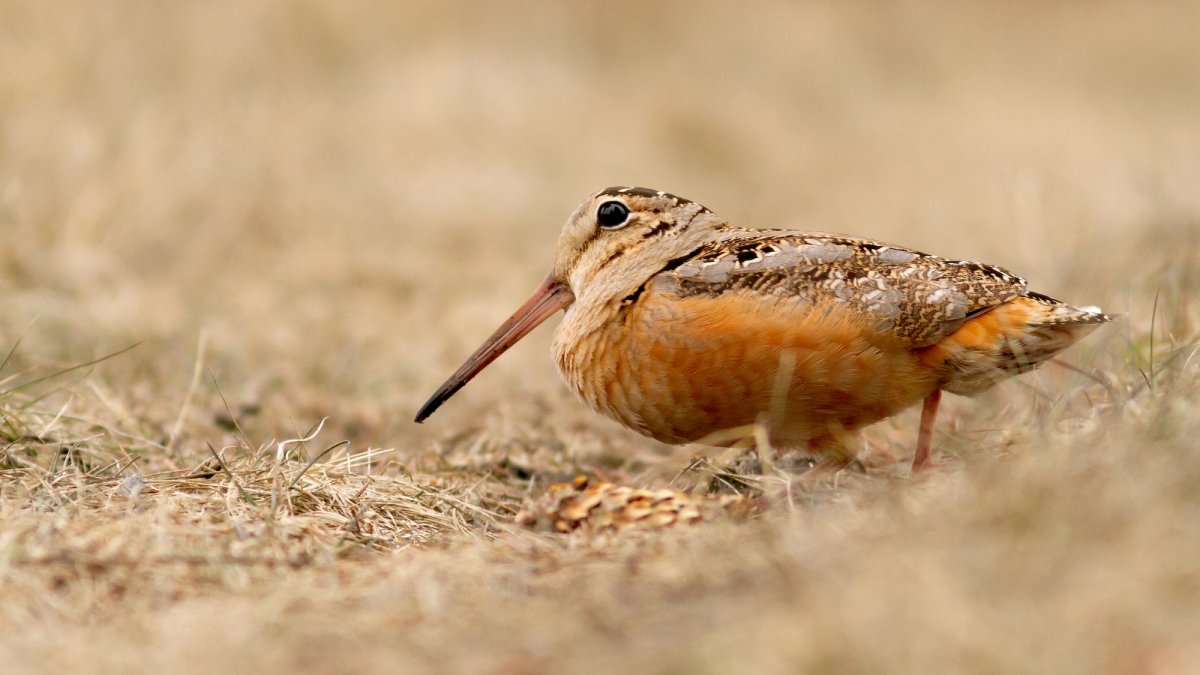
Six of the eight known woodcock species are native to specific islands. Credit: Simon Garneau via Getty Images As far as birds go, the eight known species of woodcock (genus Scolopax) look like they specifically evolved to go viral on the internet. You’ve probably seen at least a few videos of the birds on social media darting across beaches and being incredibly vocal. As if their small, squat bodies and comically long beaks weren’t enough, they also vocalize with distinctively cartoonish peeping tweets during their mating displays. Woodcocks are part of the larger sandpiper family, but unlike their migratory relatives, most only travel extremely short seasonal distances. Six of the eight species are only found on specific islands, and some of them don’t even migrate at all. So how did these evolutionary oddballs even get their start—and stop migrating? To piece together their unique avian story, biologists analyzed the DNA of all eight woodcock species and 22 species of snipe. American Woodcock “The distribution of woodcocks and snipes around the world is really unusual,” John Bates, the curator of birds at the Field Museum’s Negaunee Integrative Research Center in Chicago, said in a statement. “They’re not terribly aerodynamic, and yet they’ve clearly gotten around.” Bates and his colleagues published the results of their work today in the journal Proceedings of the National Academy of Sciences (PNAS). The years-long endeavor involved not only examining preserved woodcock specimens housed in the Field Museum, but a fossilized sandpiper previously excavated from a cave site in Haiti. The remains found on the island of Hispaniola are around 1,000 years old, but that is still extremely young in the grand history of shorebirds. The earliest members of the sandpiper family began in the northern hemisphere before slowly migrating to islands along lower latitudes. Those birds subsequently migrated much shorter distances after settling in the warmer climates. However, they didn’t remain sedentary. Based on the DNA analysis detailed in their study, Bates and his team theorize that snipes from Africa eventually traveled across the Atlantic Ocean, then evolved into new species in South America. From there, more of the birds made their way over the Pacific Ocean to New Zealand. Their examinations also cleared up a bit of confusion. Biologists initially believed the fossilized sandpiper from Haiti was a woodcock, but the most recent data now shows that it’s a snipe. “Snipes and woodcocks have been around for 20 to 25 million years,” Bates explained. “Over that time, as new species have evolved and moved around the world, their migratory patterns have changed, too.” These changes are likely to continue amid today’s dramatic climate shifts, but that may pose a problem for the beloved woodcocks. “These are definitely birds that would be affected by changing habitats and changing climates,” said Bates. “Some of these woodcocks are found only in the mountain forests on islands between Asia and Australia, and if those forests get cut down, the birds are going to be gone too.” 2026 Popular Science Home of the Future Awards 39 products that will improve your everyday life.
Peeping woodcocks are evolutionary oddballs
Full Article
Original Source
Read the full article at Popsci →KhanList aggregates and links to publicly available news content. We do not host full articles from third-party sources. Always verify important information with original sources.