
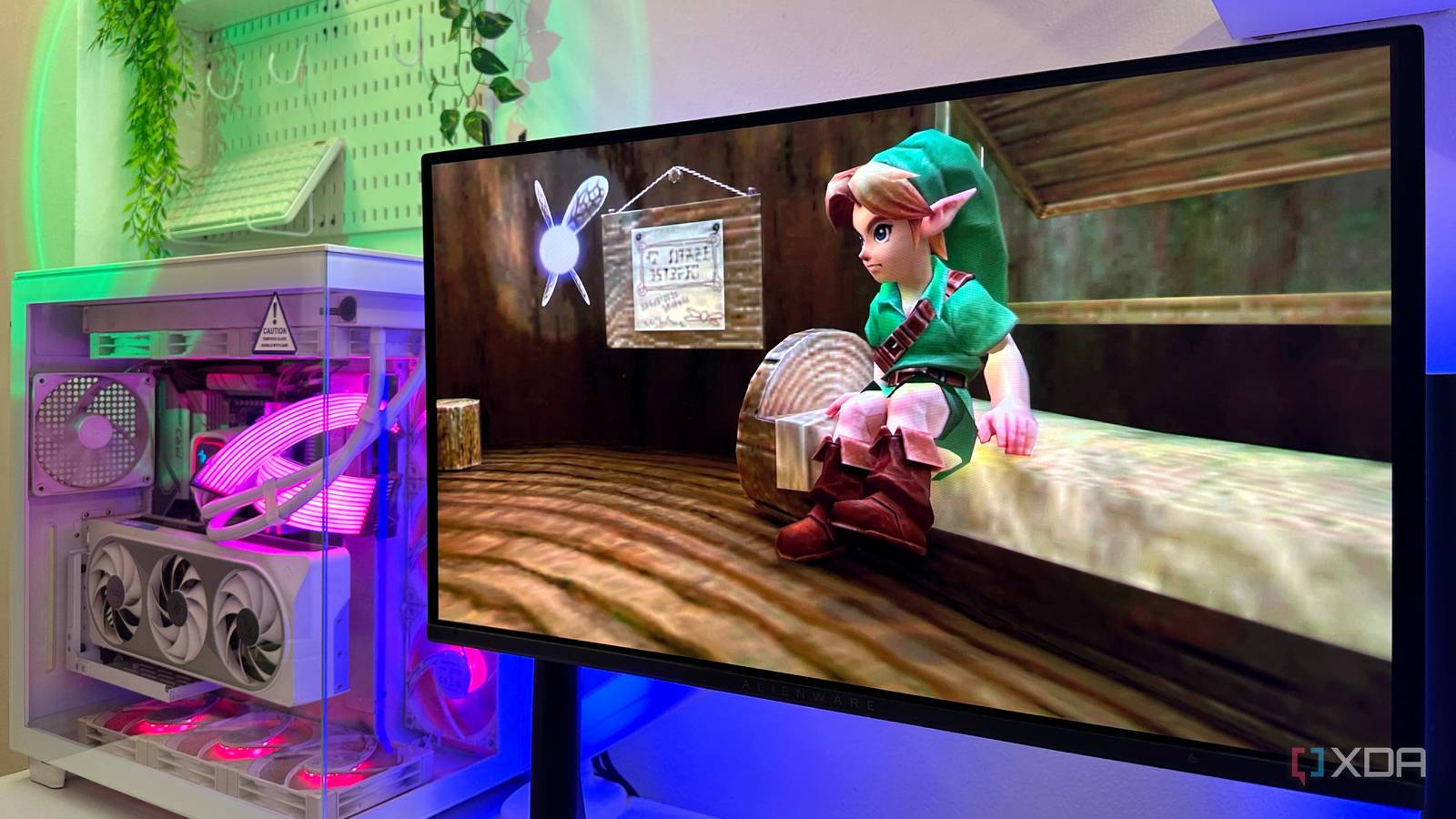
Published Nov 16, 2026, 3:01 PM EST Gaming has been Samarveer’s greatest passion, and the Literature graduate in him takes immense joy in dissecting games for their themes, messages, and impact. Samarveer holds a deep appreciation of gaming, and considers the platform to be the most immersive and impactful across all media. He can be found engaging with gaming communities online, always ready to debate the finer points of ray tracing or itching to write an 8-page collegiate thesis on any game that impacts him emotionally. For years, emulation has been the obvious answer to playing Nintendo classics on a PC. If you've wanted to revisit Super Mario 64, Zelda: Ocarina of Time, or the latest Pokémon game, all you had to do was buy the cartridge, dump the ROM onto your PC, and set up an emulator. This method works, and emulators are superb at emulating decades-old hardware easily. Now, however, something has changed. I can now play these games on a PC without asking my PC to pretend it's a Nintendo 64 first. It's hard not to wonder whether we've reached the point where emulation is no longer the best way to experience some of these classics. Super Mario 64 got there years ago, and now, with the Ocarina of Time remake having fantastic PC ports so soon after release, PC players might soon have no reason to bother with emulators. Native PC ports have changed the equation Your PC no longer needs to disguise itself as Nintendo hardware first For years, playing Nintendo 64 games on PC meant accepting one compromise — emulation. For all intents and purposes, it was the price of admission, and N64 emulators made that price easy to pay. However, an emulator still recreates the console rather than running the game as a PC title. Super Mario 64 has escaped that problem. Its decompilation opened the door to native PC projects that use modern hardware without an N64 emulator. On top of running natively without emulation overhead, this also unlocked PC-exclusive features, with PC users enjoying higher resolutions, unlocked framerates, modern controller support, and ultrawide support. The original Ocarina of Time, too, followed a similar path. The 1998 game already has a native PC port through Ship of Harkinian, the "unofficial" PC version. It's a very clear distinction, actually — an emulator first recreates the machine that game was built for, which puts a layer of software between you and the game. A native port, on the other hand, makes the game work on the machine in front of you, no strings attached. And once you experience the latter, the former can feel like an unwelcome middleman. In fact, native PC ports have a rather unique way of convincing you that some of these games have simply outgrown their original hardware. The benefits of PC ports are impossible to ignore Emulators work hard, but they can't match PC ports' sheer capabilities There's no denying that emulation is an incredible technical achievement. And yet, it also involves a rather funny amount of computational theater. Your PC could be powerful enough to run the game thousands of times over, but the emulator still has to recreate a Nintendo-shaped environment before the game can do its thing. Native ports manage to do away with that ridiculousness. Since they don't have to translate what the original console was doing, these games can take full advantage of the hardware and OS actually sitting on your desk. Effectively speaking, higher resolutions and framerates aren't just "clever tricks around the software"—they're features of the PC version you won't get elsewhere. When it comes to controls, the difference becomes even more obvious. A modern PC port can understand an Xbox or PlayStation controller directly, including the hundreds of other local controllers you could possibly connect to your PC. Plus, you also get button remapping, since the game, no matter how old, behaves like software designed for a modern platform. For those with modern monitors, ultrawide support in emulators has always been rare. Ultrawide monitor users have always had to hope and pray for an ultrawide patch for their game's emulated version, and that's before hoping that their particular emulator version works with that patch and doesn't break their other ten games. Modern PC ports once again come to the rescue here, turning games designed around a 4:3 CRT TV into something that feels surprisingly comfortable on a 2026 gaming setup. So when I say the Super Mario 64 and Ocarina of Time PC ports are compelling and impressive, I'm not saying it because these games just run faster on my PC. It's because they remove so many of the compromises that made emulation necessary in the first place. Emulation still has its place, especially for games without native ports. But when the alternative is a native executable that boots directly into the game and treats your PC like it is, firing up an emulator starts to feel less like preservation and more like taking the scenic route. The games deserve to escape their hardware This is bigger than just two Nintendo classics, by the way I love the added features and performance I get from PC ports of games like Super Mario 64 and Ocarina of Time, sure. However, the most beautiful part of all this is that community-led decomp and recomp projects have unshackled these games from Nintendo Hardware. Now, they get to evolve independently of the Nintendo 64 or the DS. That changes preservation, too. An emulator preserves the original environment, while a native port can preserve the game while letting it grow. Better PC-exclusive features to enhance and mold the experience to the hardware can become part of it, without dragging the N64 along for the ride. Of course, this doesn't make emulation useless. Most games will never receive a native port, and emulation remains invaluable for preserving software whose original hardware is disappearing. But these two games demonstrate how unnecessary that go-between can become when the underlying code is understood well enough. If I can boot Ocarina of Time or Super Mario 64 directly onto my PC, play them at modern resolutions and framerates, and mod them to my heart's content, I'm not sure why I'd willingly pretend my RTX 4070 Ti is an N64. It's the emulator that's the old-fashioned part now There was a time when emulation was the closest thing PC gamers had to own a piece of Nintendo's history without actually owning Nintendo's hardware. That made things like Mugen64 or Project64Plus indispensable. But preservation doesn't have to mean freezing a game exactly where it was in 1998. Preserving something can mean letting it move forward, which is exactly what PC ports are managing to achieve. Ship of Harkinian
PC ports of Zelda: Ocarina of Time and Super Mario 64 make emulation pointless
Full Article
Original Source
Read the full article at Xda-developers →KhanList aggregates and links to publicly available news content. We do not host full articles from third-party sources. Always verify important information with original sources.