Suitcases packed, car stuffed, out-of-office on: time to review the first half of the year in politics. As ever, figuring out what’s important from what’s not is the primary task of political analysis. Here’s my take on the four most important things in politics so far in 2026.1. The money kept rolling inBroken record warning: you may have read this around here before. But the single most important thing in Irish politics this year has been the continuation of the corporation tax revenues. We know how dangerously unbalanced this leaves our tax system and therefore our public finances. But it is far, far better to have that problem than the other one. Allied to continuing strong economic growth – much of it driven by the same multinational sector – it means the Government is running the strongest public finances in Europe, with all the benefits (though also the pressures) that brings.There were even signs this year that the economy may even be a bit Trump-proof. There were even signs this year that the economy may even be a bit Trump-proof. On Thursday, the US president announced the continuation of tariffs of 10 per cent to 12.5 per cent on countries including EU states. But the tariffs haven’t had as much as an effect as some anticipated, and long-feared targeting of the Irish pharma sector hasn’t materialised. Chips giant Intel unveiled a further €5 billion investment in Leixlip.So the economy and the public finances remain in good shape. If you doubt the importance of this, spend five minutes imagining what our politics looks like if the Government has €15 billion to €20 billion less to spend every year. I’ll save you the trouble: no budget giveaways, no cost-of-living packages, no extra cash for public services, no public sector pay deal. Ain’t pretty.READ MORE2. And the Government kept spending itThe thriving economy and the river of corporation tax cash supplies the Government with the resources to spend more on public services, pensions, welfare, infrastructure, and so on. In part, this is a response to a very real public demand to ease cost-of-living pressures and to meet shortcomings in public services. And if politicians are not responsive to the public mood, they soon find themselves seeking another line of work.So when considering the Government’s tendency to throw money at problems, we must acknowledge the constant clamour from the public, the media and the Opposition for more spending. When have you ever heard an Opposition politician in the Dáil argue for more prudence and lower spending increases? But we must also say plainly that it is the duty of a responsible government to say no sometimes and, above all, to run sustainable public finances.In fairness, Minister for Public Expenditure Jack Chambers is trying to restrain his more profligate colleagues. The budget package that he and Minister for Finance Simon Harris (preparing his first one, remember) signalled in the Summer Economic Statement this week seeks to moderate the spending growth of recent years. Yes, it’s still growing at a fair old clip at 6 per cent, but there is clearly a push to reassert some degree of fiscal discipline. Harris is promising tax cuts, but they won’t break the bank. It will be the toughest budget since before the pandemic. All good. Let’s see if it lasts.3. Unity debate gets louderAs remarked here recently, Sinn Féin has been turning up the volume on Irish unity. Mary Lou McDonald has made a number of interventions, not least with a Bill that would have compelled the Government to institute preparations for a potential referendum. Not just McDonald though – there’s a push across the organisation, which isn’t happening by accident. Elder lemon Gerry Adams has referenced the unity question in his last five podcasts (I listen so you don’t have to), but only once in the previous 12.There is no sign of new thinking on the issue in the party, but unity allows Sinn Féin to talk about something that they all agree on, and also serves as a handy stick to beat Micheál Martin, whom they hate because (among many other things) they believe he is insufficiently enthusiastic about unity. Mind you, some Fianna Fáil TDs appear to share that view.[ What happens to Northern Ireland after unity? Answers are starting to emergeOpens in new window ]But it’s not just Sinn Féin. Recently, Simon Harris has joined the chat. Harris promised a “blueprint” for unity by November and this week, after some flirting across the chamber during the Dáil debate, he met McDonald for discussions about unity. If you were to guess that this encounter prompted some not entirely appreciative commentary among Fianna Fáilers, you would not be wrong.There is no sign of the threshold for a referendum being reached, and no interest in the issue in the new British government. Southern voters are broadly in favour but hardly anyone thinks it’s a priority. But as a result of all this, unity is now occupying a place on the southern political agenda that it wasn’t before.4. Micheál sights the bend for home?Micheál Martin began this year under pressure following the calamity of last year’s presidential election. As usual, he rode out the pressure from the grumpy gang in his party, and is untouchable for the remainder of the year due to the EU presidency. But there is now a widespread sense among his TDs that Martin should go in the new year, once the presidency is concluded.Of course, he might – as he has done before, repeatedly – confound them. The arguments against Martin are not so much that someone else would be better, but that they are all fed up with him because he has been there too long. However, that the expectation of his departure now exists is a significant new fact.[ Miriam Lord’s End-of-Dáil-term awards: Holly Cairns still getting under Taoiseach’s skinOpens in new window ]Elsewhere, politics remains relatively stable. The Social Democrats are having a moment. Harris has stabilised Fine Gael and is almost certain to become taoiseach next year. There is an energy to the right of everyone, but it remains so far politically inchoate, despite the fuel protests. The big moves in Irish politics will have to wait until next year.
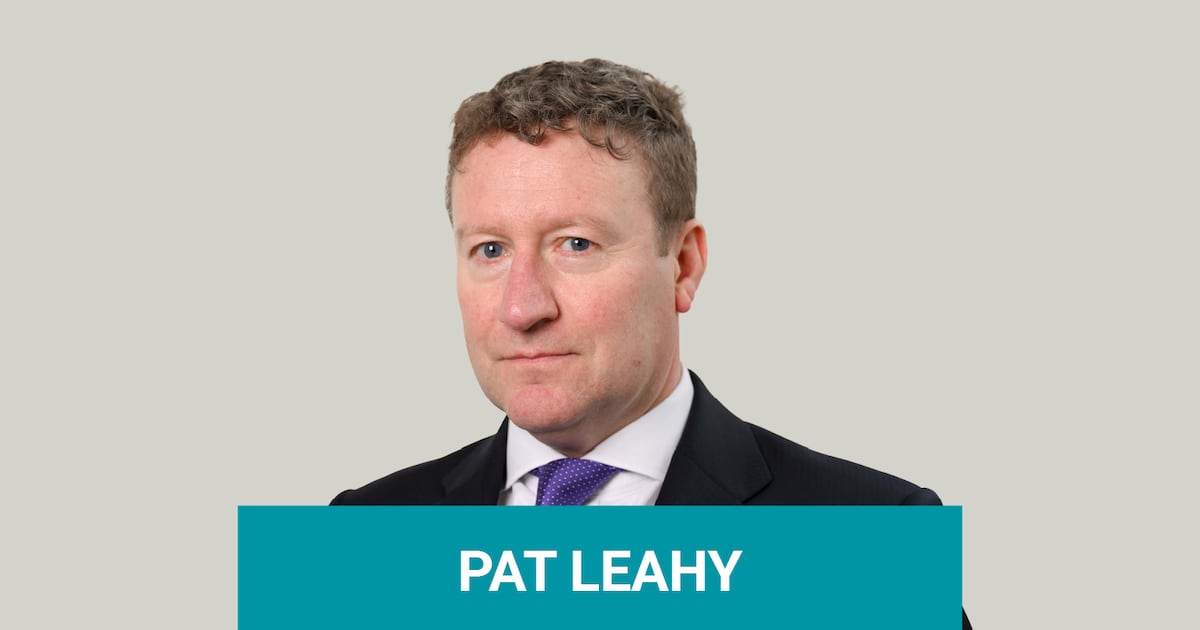
Pat Leahy: Is the Irish economy really Trump-proof? We’d better hope so
Full Article
Original Source
Read the full article at Irishtimes →KhanList aggregates and links to publicly available news content. We do not host full articles from third-party sources. Always verify important information with original sources.