
Palmer Luckey has a major complaint about the iPhone. The Oculus founder and Anduril co-founder took it to Walter Isaacson, Steve Jobs’ biographer, on Isaacson’s podcast The Builders. “Steve Jobs ruined everything with the iPhone,” Luckey said in an excerpt shared with Fortune. “We’re still suffering the impacts of his incredible product design.”Luckey’s argument was about what happens after someone learns to use a device. Apple’s original iPhone put web browsing, maps and a keyboard on a multi-touch screen that could change with the task. Luckey said the phone’s success encouraged designers to make products people could pick up in minutes. He argued that the same approach gives people fewer reasons to spend years mastering an interface and fewer ways to improve once they know the basics.Why Palmer Luckey says the iPhone changed what users could masterIsaacson framed the discussion around advances in how people interact with machines, from Doug Engelbart’s mouse and graphical interfaces to Jobs, “maybe culminating with Neuralink and chips in our brain.”Before the iPhone, Luckey said, “there was an understanding that technology was something that could multiply your output.” He pointed to Jobs’s description of the computer as a “bicycle for the mind.”“The problem with the iPhone is that it simplified everything to a degree where, yes, you could learn to use it in less than a minute,” Luckey said. In his view, it took about 10 minutes to reach the point where further practice offered little payoff.He used the keyboard to explain what that payoff can look like. “A keyboard requires weeks or months of consistent, focused training in order to be able to achieve a high rate of speed, a high rate of accuracy,” Luckey said.He gave Excel macros as an example of what experienced users can do with the same tool they use to type. “I get a superhuman input device where I can put words into the computer as fast as I can speak wordlessly and with an extremely high level of accuracy.”What the iPhone has to do with the ‘10,000-hour rule’Malcolm Gladwell popularised the “10,000-hour rule” in Outliers in 2008. It drew on research by psychologist Anders Ericsson and his colleagues on violin students. Ericsson and co-author Robert Pool later wrote that “there is nothing special or magical about ten thousand hours.” The figure was an average, and they emphasised deliberate practice. Luckey argues that an interface can give people more or fewer opportunities to benefit from that kind of practice.“The problem is that everything has become the iPhone,” Luckey said. “Every application is now the iPhone. Every product is the iPhone. Every virtual reality headset is the iPhone.” In products designed to be mastered in minutes, he argued, “there is no provision made for the man who will spend 1,000 hours, 10,000 hours, 50,000 hours learning his art.”Fortune pointed to a study of a generative AI assistant for customer support agents. The researchers found that it helped newer and lower-skilled workers the most, with “minimal impact on experienced and highly skilled workers.” The report also cited economist Robert Solow’s observation that “you can see the computer age everywhere but in the productivity statistics.” The productivity slowdown cited in the report began before Apple introduced the iPhone.Palmer Luckey applies his iPhone criticism to headsets and Neuralink“Everybody wants a magical human-to-computer interface where you can use it, and you don’t have to train, you don’t have to learn,” Luckey said. He questioned what a brain-computer interface would add if it simply gave people another way to navigate familiar controls. “Do we need to use this wondrous technology to have a different way of clicking a few buttons and operating an iPhone interface?”Ease of use also matters to people who train extensively. Speaking to MIT Technology Review about an augmented reality system for soldiers, RAND’s Jonathan Wong said the interface has “got to be pretty seamless,” according to Fortune.Luckey himself has praised Apple’s work on headsets. When the company unveiled the Vision Pro in 2023, he said Apple “did basically everything right,” according to Road to VR.Luckey even told Isaacson he’s “got some ideas” for interfaces that could take years to master. “I’m hoping it comes back around someday,” he said.
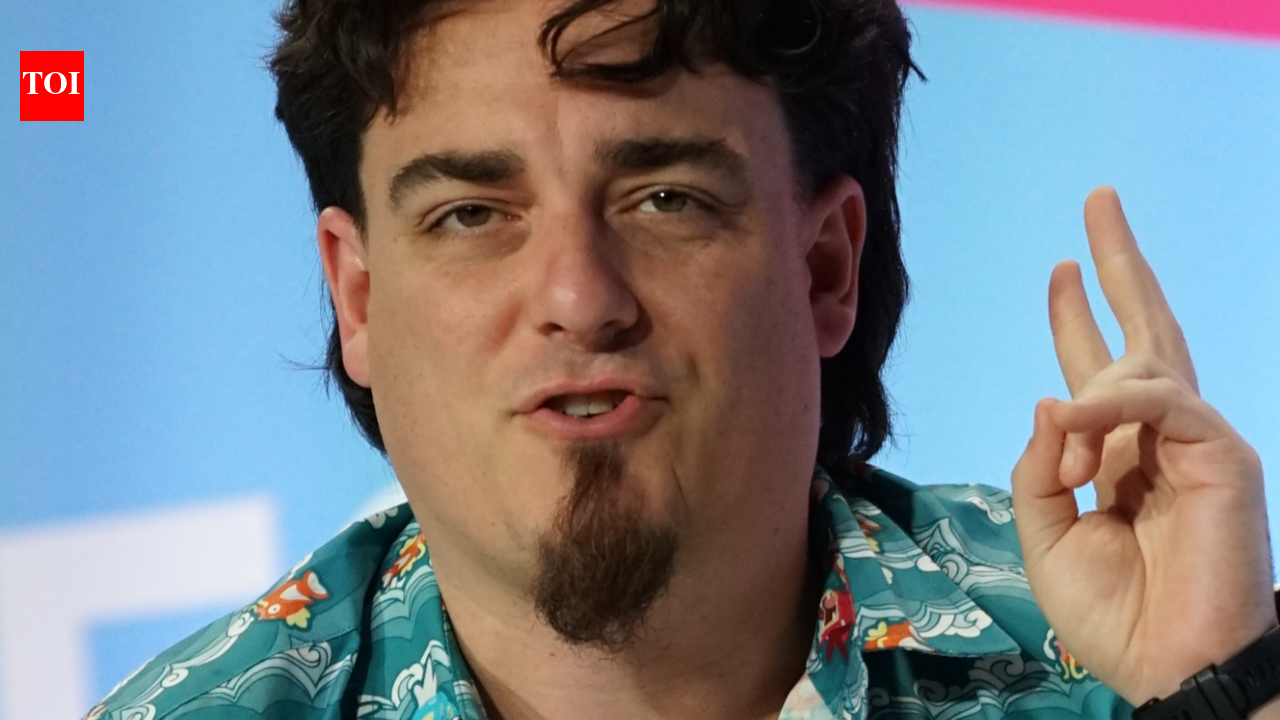
Palmer Luckey tells Steve Jobs’ biographer what he thinks Apple’s iPhone truly killed
Full Article
Original Source
Read the full article at Timesofindia →KhanList aggregates and links to publicly available news content. We do not host full articles from third-party sources. Always verify important information with original sources.