
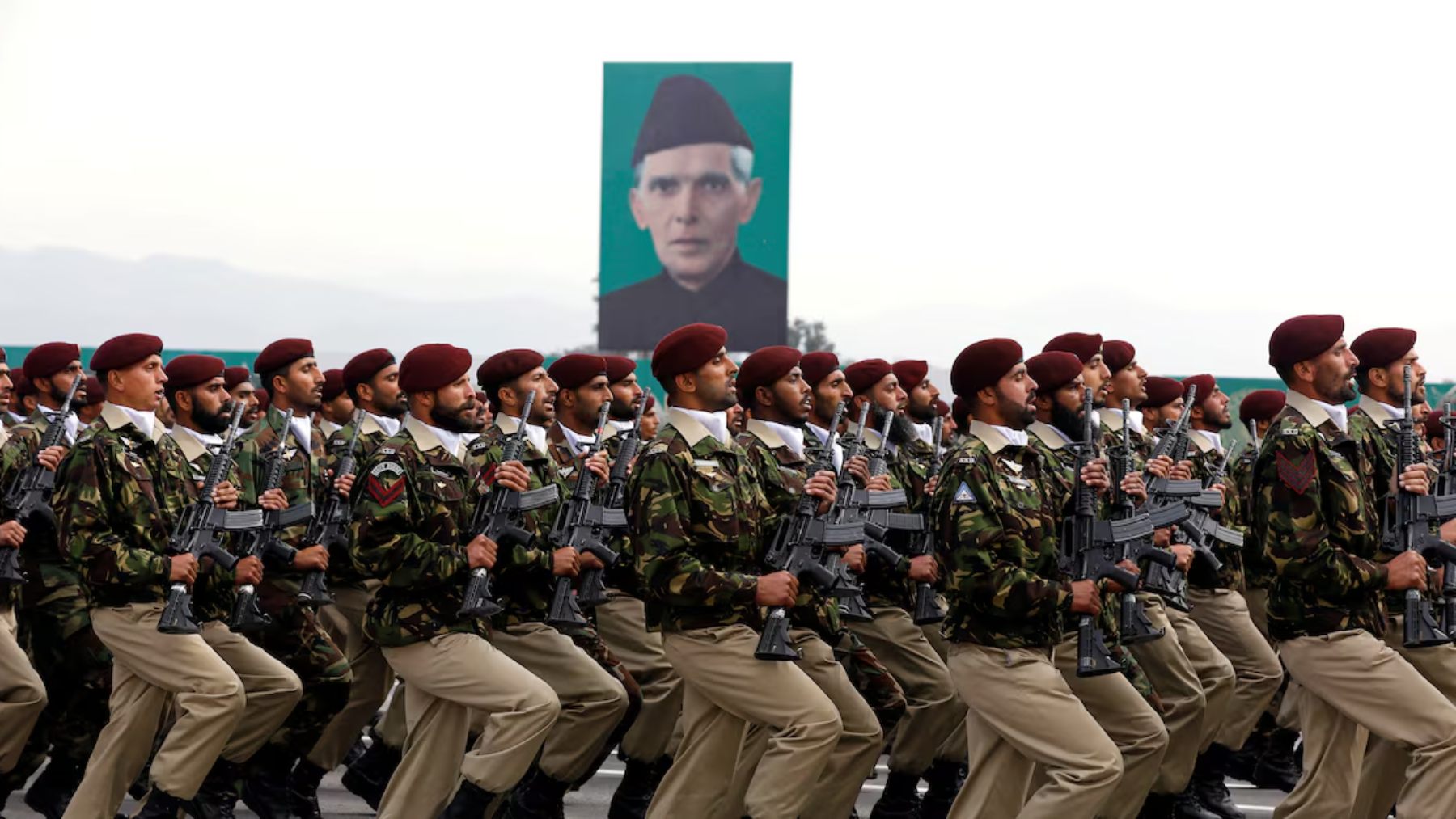
Islamabad says its forces will operate inside Saudi territory as Riyadh faces attacks, and Saudi Arabia, Turkey and Pakistan move to implement their collective defence agreement Pakistani Special Services Group commandos march during the Pakistan Day military parade in Islamabad, 23 March 2019 (Akhtar Soomro/Reuters) Published date: 29 November 2026 14:02 GMT | Last update: 31 min 48 sec ago Pakistan has sent troops to Saudi Arabia to strengthen the kingdom’s defences against attacks by Yemen’s Houthi movement, in a deployment that comes days after Pakistan, Saudi Arabia and Turkey reaffirmed their commitment to the Makkah Joint Defence Agreement. Pakistan’s military said on Sunday that the troops would operate within Saudi territory under existing defence cooperation arrangements, adding that the deployment would strengthen the kingdom’s defensive capabilities amid “emerging security concerns”. A send-off ceremony for the departing personnel was held on Saturday, attended by Pakistan’s Defence Minister Khawaja Muhammad Asif and Saudi Ambassador to Pakistan Rajeh Tami Albugamy, according to the military. “This deployment will contribute towards further strengthening the kingdom’s defensive capabilities amid emerging security concerns,” the military said. The announcement follows a meeting in Islamabad on 27 November between senior officials from Pakistan, Saudi Arabia and Turkey, who condemned what they described as “persistent and heinous” Houthi attacks on Saudi civilians and infrastructure. New MEE newsletter: Jerusalem Dispatch Sign up to get the latest insights and analysis on Israel-Palestine, alongside Turkey Unpacked and other MEE newsletters The three countries reaffirmed their commitment to the Makkah Joint Defence Agreement signed on 7 August, which provides for collective defence and mutual assistance in the event of an armed attack against a member state. The pact obliges the three countries to regard an armed attack on one member as an attack on all. It also paves the way for closer military coordination and training, defence-industry cooperation and deployment of agreed military capabilities. The three countries have been working on building the pact’s institutional structures, including a secretariat based in Saudi Arabia. Turkey moves closer to Saudi troop deployment as parliament approves Mecca defence pact Read More » Their latest meeting in Islamabad reviewed progress towards implementing the agreement and reaffirmed their commitment to support Saudi Arabia's security. Pakistan has had a military presence in Saudi Arabia for decades to train and advise Saudi forces. But the latest announcement comes amid a sharp rise in attacks on the kingdom. Reuters reported in October, citing a Pakistani official, that 30,000 to 40,000 Pakistani soldiers had been deployed to help Saudi Arabia defend its land borders and counter missile and drone attacks. Reuters also reported in May that Pakistan had sent thousands of troops, a squadron of jets and other military equipment to Saudi Arabia during the US-Israeli war on Iran. Saudi Arabia has been involved in the war in Yemen since 2015, when it led a military coalition supporting the internationally recognised government after the Houthis seized the capital, Sanaa, in 2014. The conflict escalated again this summer after fighting intensified between the Houthis and Saudi-backed government forces. The Houthis have made territorial gains along Yemen’s Red Sea coast and resumed attacks on shipping, while launching missiles and drones towards Saudi cities and infrastructure. Middle East Eye delivers independent and unrivalled coverage and analysis of the Middle East, North Africa and beyond. To learn more about republishing this content and the associated fees, please fill out this form. More about MEE can be found here.
Pakistan sends troops to Saudi Arabia as Houthi attacks test new defence pact
Full Article
Original Source
Read the full article at Middleeasteye →KhanList aggregates and links to publicly available news content. We do not host full articles from third-party sources. Always verify important information with original sources.