
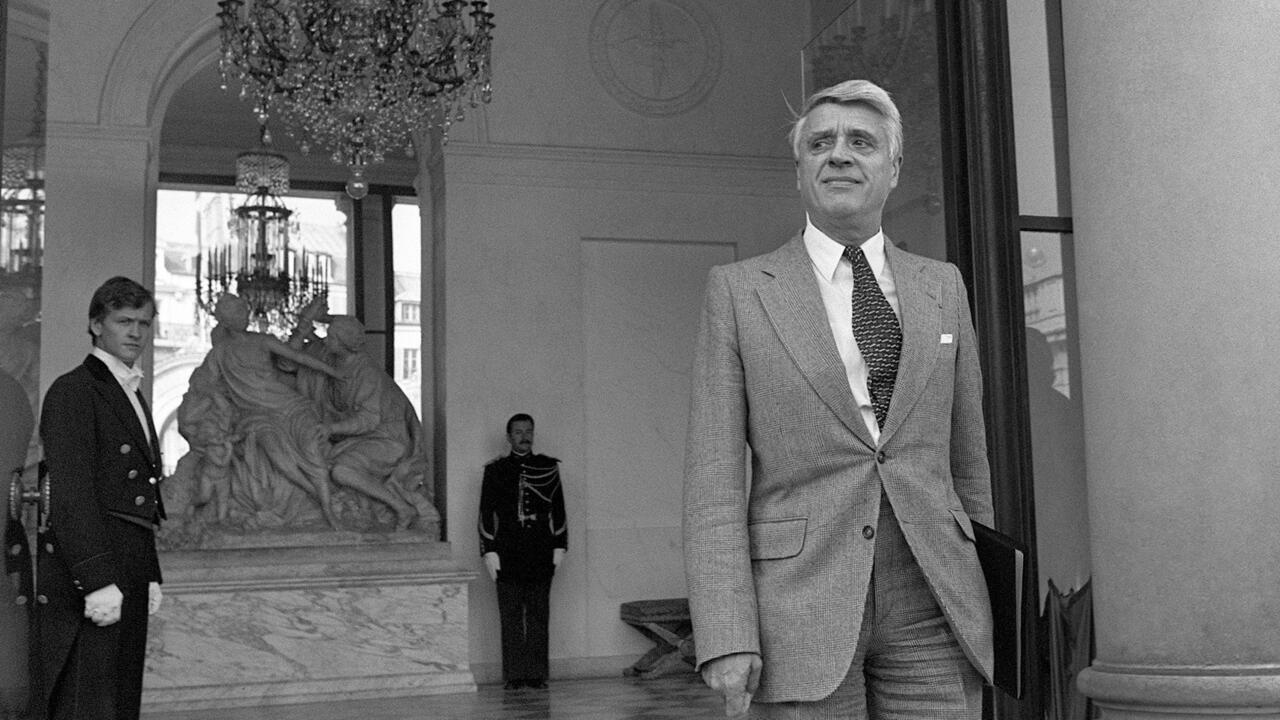
The body of former French labour minister Robert Boulin has been exhumed as part of a renewed investigation into his 1979 death, in one of France's longest-running political cold cases. His family, which rejects the official theory of suicide, hopes the latest forensic tests will finally help establish the truth. Issued on: 29/11/2026 - 15:52 2 min Reading time The exhumation took place on Thursday and the post-mortem examination on Friday, the national unit for unresolved crimes at Nanterre judicial court said in a statement. Toxicological and tissue examinations are now under way, prosecutors said. "It's an important step," said Didier Seban, the lawyer representing the Boulin family, stressing that several other lines of investigation were also being pursued. He described the removal of the body as "very impressive". Investigators are also questioning witnesses, including people who were present at the time of Boulin's death and others identified during the investigation. Scientific tests are also being carried out. "The scenario of Robert Boulin's death is becoming increasingly clear," Seban told AFP, without giving further details. Disputed death Boulin's body was found in a pond in Rambouillet, in the Yvelines department west of Paris, on 30 October 1979. He was 59 and serving as labour minister in the conservative government of Raymond Barre. Investigators at the time concluded that he had died by suicide, drowning after taking barbiturates. He had recently been accused of wrongdoing over the purchase of a plot of land in Ramatuelle, in southern France. His family has always challenged that account, favouring the theory of political assassination. Along with Jean de Broglie and Joseph Fontanet, Boulin was one of three prominent right-wing politicians who died violently during the presidency of Valéry Giscard d’Estaing (1974-81). Historians have suggested Boulin was seen as a possible prime minister. Boulin's daughter, Fabienne Boulin-Burgeat, has said her father wanted to represent "a third way against ultra-capitalism". Boulin's death has been the subject of a renewed investigation at Nanterre since three investigating judges were appointed in June to examine possible kidnapping, unlawful detention and murder. Valéry Giscard d’Estaing, the 'Grand Old Man' of French politics New lead in investigation The case took a new turn in 2022 after a man called Elio Darmon came forward. His testimony helped investigators identify a man who died in 1986 as a possible suspect. According to Mediapart, the suspect was Henri Geliot, a "gangster" born in 1919, whose number plate Darmon had passed on. Darmon had reportedly witnessed a conversation in the 1980s in which Geliot, other criminal figures and alleged security operatives discussed Boulin's death. They reportedly claimed to have staged his suicide after assaulting him in an attempt to derail his political ambitions. Darmon died in April, aged 79. Prosecutors in Lorient ruled out any criminal involvement in his death, saying it was caused by health problems. The family's lawyer said the forensic results could take several months. "We hoped to have the truth within 18 months when the Nanterre prosecutor's office took over the case," Seban said. "I still believe it." Another notable cold case concerns judge Bernard Borrel, whose body was found burned at the base of a cliff in Djibouti in 1995. Despite the family's ongoing fight to shed light on the case, the causes of his death remain a mystery. (with newswires)
France exhumes former minister's body in 47-year-old cold case
Full Article
Original Source
Read the full article at Rfi →KhanList aggregates and links to publicly available news content. We do not host full articles from third-party sources. Always verify important information with original sources.