
I cannot remember the last time something in the Sunday papers made me gasp, but that’s what happened last weekend when I read an interview with Alan Chang.“I don’t read books,” said the 30-something boss of Fuse Energy, a $5 billion (€4.3 billion) British tech-centric power supplier start-up, after a man from The Sunday Times asked him to list some personal interests.He doesn’t watch films either, and forget philanthropy. “I don’t believe in charities, really,” he said. “I think it’s an extremely inefficient way to deploy capital.”But the gasp-inducing line came when Chang, a former top executive at hard-charging fintech Revolut, revealed he had decided to set up Fuse in 2022 after discovering the British energy industry was full of mediocre clots. READ MORE“We just went on LinkedIn and then looked at: who are the people who work there? Where did they go to university? What is their track record? And I’d say the majority of those people I personally wouldn’t hire.”Never having met Chang, I have no idea if he made this preposterously arrogant comment for effect, or because he believes it. Either way, I was surprised by how surprised I was.It’s not as if outspoken chief executives are extinct, but they do seem to be more endangered.Ryanair’s Michael O’Leary remains a blustering aberration 17 years after telling me he would be retiring in three years so a more emollient leader could run the airline. That was in an interview where he called one industry rival “a rich kid who got off his arse” and said Virgin’s Richard Branson “doesn’t add up to much”. Not much has changed. Two months ago he called Rachel Reeves “a moron”, Ursula von der Leyen “an idiot” and complained that morons and idiots in the European Parliament were making “f**ked-up regulation”.In finance, JPMorgan Chase’s Jamie Dimon is still an outlier on Wall Street where he has branded everything from US politics to some of his own bank’s diversity programmes “stupid shit”.Meanwhile in tech, Palantir’s voluble Alex Karp stands out for musing about getting a drone and “having light fentanyl-laced urine spraying on analysts that tried to screw us”, and cheerfully agreeing some find him an “arrogant prick”.Why is the list of other forthright voices so small? It’s not just the steady march of the PR industrial complex, or vindictive politicians ready to make life difficult for companies that don’t toe the line.I suspect Chang’s comments seem especially jolting because he comes from a tech industry that has taken pretentious, overwrought leadership guff to an entirely new level in the past four years.I speak here of the wordy essays AI chieftains and their backers have been pumping out since ChatGPT’s arrival in 2022.“Artificial Intelligence is our alchemy, our Philosopher’s Stone,” declared Marc Andreessen in his 5,200-word Techno-Optimist Manifesto of 2023.[ How will history judge today’s chief executives?Opens in new window ]“A defining characteristic of the Intelligence Age will be massive prosperity,” promised Sam Altman the following year.One month later, Anthropic’s Dario Amodei produced a 14,700-word thumper on how AI might transform the world for the better.It turned out to have a sequel of 21,800 words, including footnotes, in which Amodei explained we were entering a phase that will “test who we are as a species”. Last month, Mark Zuckerberg burst forth with 6,500 words on “the path to a positive AI future” that took self-interested blither to a new peak.AI could give everyone “invention superpowers” and personalised tutors with “a PhD in every subject”, as well as “powerful tools to create new businesses”, he wrote, but only if Meta were free to flourish.“Meta is the company primarily focused on building personal superintelligence for everyone,” he earnestly explained. “Most other labs are focused on building AI for companies, governments or other institutions, so if those labs lead, then the balance of power will favour larger institutions over individuals.” [ Will the world trust Zuckerberg on personalised AI?Opens in new window ]Seriously. Give me an O’Leary rant any day, or a Chang slap, or anything free of the suffocating emptiness of so much corporate “communication”. I don’t agree with everything the straight shooters say. Sometimes they are pointlessly offensive and I am not sure I would want to work for any of them, which is just as well since I am certain none would hire me.I also find Chang’s Fuse Energy less exciting than his investors do. But we need more chief executives unafraid to speak directly, especially those controlling a powerful new technology that could reshape life as we know it. – Copyright The Financial Times Limited 2026
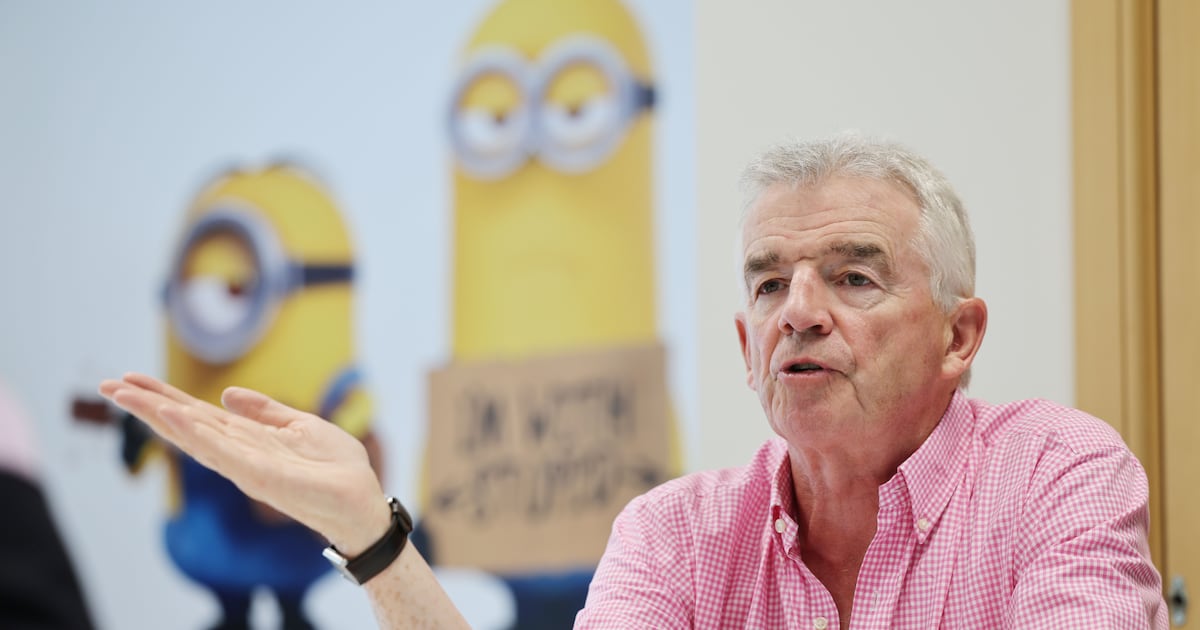
Outspoken chief executives are not extinct, but they do seem to be more endangered
Full Article
Original Source
Read the full article at Irishtimes →KhanList aggregates and links to publicly available news content. We do not host full articles from third-party sources. Always verify important information with original sources.