
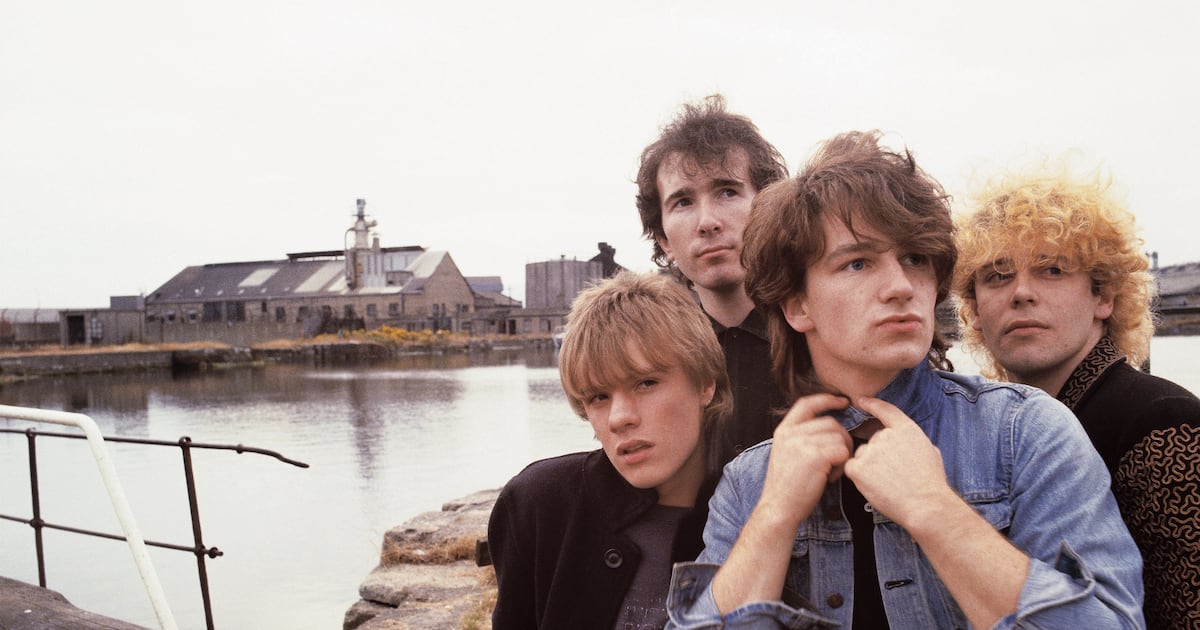
Exactly 50 years ago, on September 25th, 1976, a group of Dublin teenagers gathered in a suburban kitchen in Artane. Their musical talents took a while to emerge, as Róisín Ingle recounts in Drummer Seeks Musicians: The Making of U2, but their ambition knew no bounds. Nor did their politics. Over the last half a century, U2 have borne witness to an interconnected world in turmoil. Although their earnestness still grates with some, the band deserve credit for joining the dots between so many global struggles, raising money for and awareness of a vast array of causes. Few artists before them or since have used their fame as a force for good on this scale. Released in 1980, U2’s debut album, Boy, painted an abstract picture of adolescent alienation and grief. One track, The Electric Co, burned with anger about a schoolfriend who’d been sent to Grangegorman for electroconvulsive therapy. This seed of social concern sprouted in U2’s third album, War, which opened with Sunday Bloody Sunday, one of the most powerful protest songs of the post-punk era. READ MORE“This song is not a rebel song”, Bono insisted to audiences. But U2’s willingness to call out political indifference in the 26 counties over the Troubles (“We eat and drink while tomorrow they die”) was its own act of rebellion. Drummer Seeks Musicians, part three: Sing a New Song U2's rise begins in earnest with a television appearance, a talent contest win and the arrival of manager Paul McGuinness. But underpinning their success lies a deeper story of friendship, faith and loss.In the final episode Róisín Ingle speaks to Bono, The Edge, Adam Clayton and Larry Mullen Jr and asks the question at the heart of this series - not just how U2 came together, but how they have managed to stay and play together for the past fifty years.Story Lines is the home of audio storytelling from The Irish Times.To Larry Mullen jnr, Sunday Bloody Sunday wasn’t just about Northern Ireland. It was a plea to end “bitterness and hate”. An interest in wider struggles is woven through War, which tackled subjects such as the nuclear arms race (Seconds), Poland’s Solidarity movement (New Year’s Day) and forced migration (The Refugee). In 1986, U2 joined artists such as Joan Baez, Peter Gabriel and Sting on Amnesty International’s Conspiracy of Hope Tour. The experience broadened the band’s political horizons even further, as was evident from The Joshua Tree, which dealt with the Ethiopian famine (Where the Streets Have No Name), United States interference in El Salvador and Nicaragua (Bullet the Blue Sky) and human rights abuses in Argentina and Chile (Mothers of the Disappeared). To some, U2 seemed like do-gooders in search of a cause. But the band could have done far worse than draw attention to the dire state of the world and call for action.By the 1990s, U2’s concerts were packed with political speeches, video testimony and satellite interviews. During the Zoo TV Tour, Bono spoke nightly to aid workers in Sarajevo and tried in vain to get through to the White House. From demonstrating outside the Sellafield nuclear plant in hazmat suits to campaigning for the Belfast Agreement, U2 used their fame to convey a simple but powerful message: if people can unite around their shared humanity, political change will follow.It was during this period that Bono became involved with Jubilee 2000, a campaign to cancel the debt of the world’s poorest countries. G8 leaders who arrived in Gleneagles in July 2005 were astonished to find Bono and Bob Geldof roaming the conference halls in search of a deal. The summit’s decision to write off $40 billion (€35 billion) owed by the governments of 18 highly indebted African and Latin American countries didn’t go far enough for some NGOs, but it was still a remarkable achievement. U2’s political activism has also brought added scrutiny and accusations of hypocrisy over the band’s tax affairs over the years. Bono’s willingness to break bread with George W Bush to secure billions of dollars for the global fight against HIV/AIDS was also contentious. Coalition-building of this sort was at odds with what was even then the growing polarisation of politics. In an age where it seemed safer for artists to say nothing, the band added their voices to a wide range of causes, be it The Edge’s work on disaster relief, Adam Clayton’s campaign for mental health or Mullen’s focus on dyslexia awareness. Many musicians spoke out from afar against Russia’s invasion of Ukraine in February 2022. Few took the same risks as Bono and The Edge, who travelled to Kyiv in the early months of the conflict to perform Sunday Bloody Sunday in a subway station turned bomb shelter. Donald Trump’s first presidency was met with fierce resistance and popular protests. His second has produced an air of despondency. A new generation of musicians has been vocal about Gaza, but their efforts are often suffused with deep distrust of politicians and politics, as Kneecap’s lambasting of Andy Burnham shows.US rapper Macklemore’s dismissal from Ed Sheeran’s Loop Tour is a sign of how supine the modern music industry has become. Although promoters and venue owners ultimately forced out Macklemore, who is a vocal supporter of Palestinian rights, Sheeran’s suggestion that young audience members be protected from politics is troubling. Claiming to be apolitical while corporate power is brought to bear is itself a political act. When they opened their Las Vegas residency in 2023, it looked like U2 might be winding down politically. But their recent work has put this perception to rest. Days of Ash weaves together the killings of Renée Good by ICE (American Obituary), Sarina Esmailzadeh by Iranian security forces (Song of the Future) and Awdah Hathaleen by an Israeli settler (One Life at a Time) into a stark account of political violence, and repeats Yehuda Amichai’s weary prayer for healing (Wildpeace).The band still burns with anger 50 years after its members first gathered in Artane. U2 have been frequently mocked but rarely matched.Dermot Hodson is a professor of political economy at Loughborough University
Opinion: U2 are sometimes dismissed as do-gooders, but the last 50 years have proven it is no act
Full Article
Original Source
Read the full article at Irishtimes →KhanList aggregates and links to publicly available news content. We do not host full articles from third-party sources. Always verify important information with original sources.