
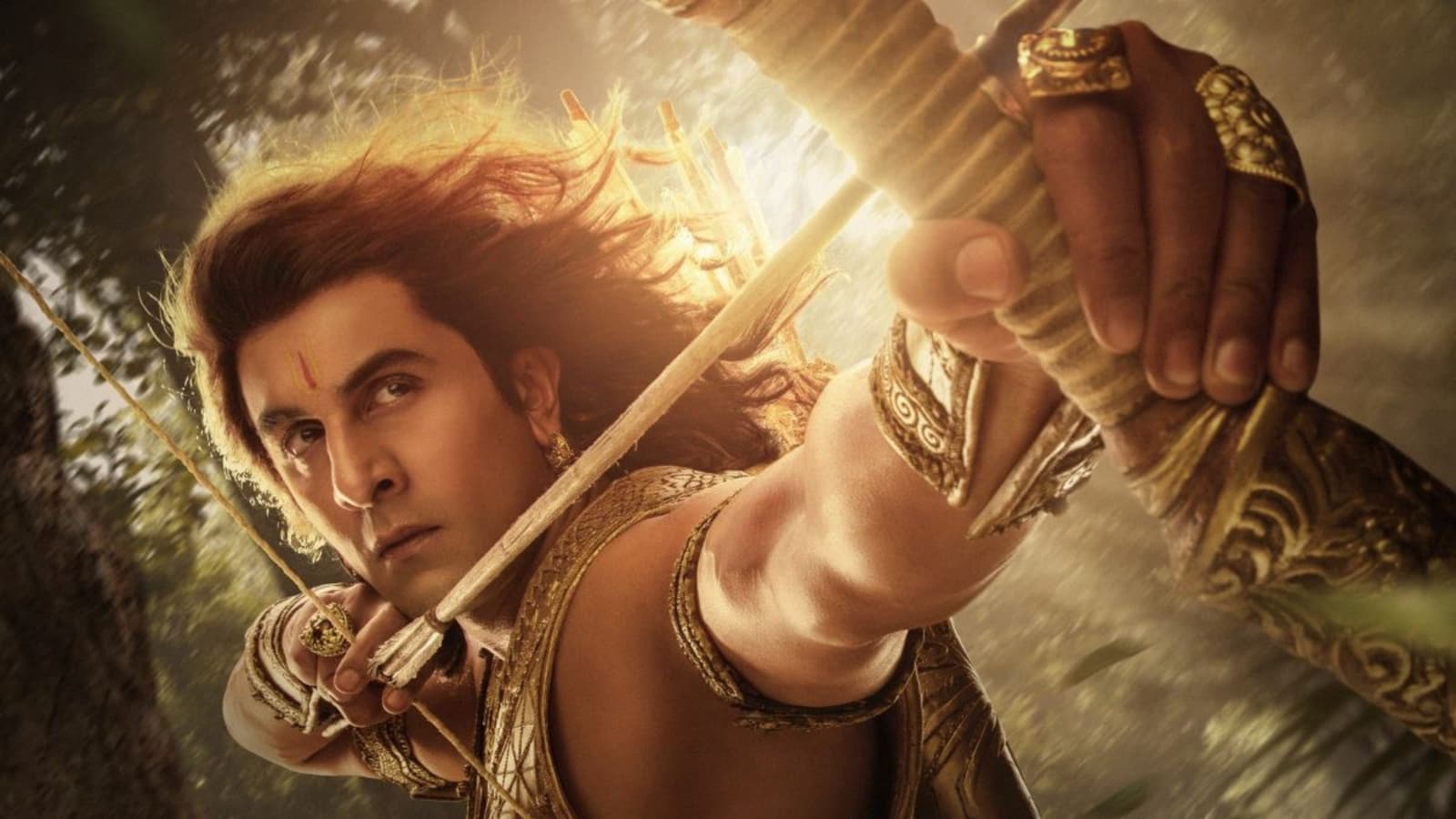
Mary Beard, one of the greatest classicists of our times, says ancient epics should be viewed not as dusty museum relics, but as vital, provocative, and deeply human texts that challenge how we think today. It is as true of The Odyssey, directed by Christopher Nolan, to which she referred, as it is to Namit Malhotra and Nitesh Tiwari's Ramayana.Here's why. Like it or love it, Ramayana: Part 1 is a 21st century interpretation, which acknowledges Ravana's immense power to do good for his community, the Asuras, as it does Ram's duty and responsibility as Maryada Purshottaman. At a time when heroes are scarce in society and evil is rampant, it is no surprise that Ramayana begins with an examination of what drives Ravana to become king of all three realms. In a telling scene early on in the film. Ravana's mother Kaikasi mocks him for playing the veena as a young man even as his community is struggling to survive. Ramayana's Ravana is a conflicted man, torn between rage for how his community has been treated through the ages and for the choice he has to make between art and war. Nowhere is it shown in as stark terms as when his 10 heads engage with each other, one suggesting peace, another war, yet another asceticism. It is one of the most innovative sequences in the film and embodies the contradictions in all of us, especially in modern times, where we all live schizophrenic lives.Ravana embodies this in him, while Ram has a more unilinear arc. He is the good son, playful brother, loving husband. He is the avatar of Vishnu who will save the world from the asuras. As he leaves, and his fellow Ayodhyavasis weep, he assures them that it is his dharma to fulfil his father's wish, as it is theirs to follow their new king.Yet Ravana is shown to be as dutiful to his mother, thanks to whom he chooses war, as to his sister thanks to whom he chooses another war. When his brother-in-law dishonours a servant, he despatches him to his death, fake moustache and all. And when he kidnaps Sita, after duly passing her test of reciting from the Rig Veda, it is not lust that drives him but vengeance.It is a pity that Sita, who is given enough agency to speak to the people of Ayodhya as she leaves with Ram, and a nice swagger with a sword in fighting with asuras, suddenly loses all sense of independence, something that would definitely surprise writers such as Chitra Banerjee Divakurni and Amish Tripathi who have reimagined her as a powerful princess of Mithila.If The Odyssey about a man finding his way home after 20 years, fighting monsters and temptresses, can be reinterpreted as a modern tale of refugees finding their way to new homes in hostile environments, Ramayana, imperfect as it may be, can be seen as a fight between the powerless and the empowered, between good and less good, between inherited authority and acquired power.After all, much as many would like to deny it, there is not one Ramayana, but many. Divakurni, who wrote Ramayana from Sita's point of view in the 2019 novel The Forest of Enchantments, says: "Multiplicity has been a key value in Indian culture down the ages." She believes that epics should be respectfully and thoughtfully re-examined in every age to allow people of different times to relate to them and learn from them. India has a long history of this already, she notes. She cites the Kambaramayanam in the South, Sarala Mahabharat from Odisha, Kashiram Das and Krittibaas in Bengali. "Even the famous Ramcharitmanas is a retelling that focuses on things different from Valmiki. There were also many plays down the ages that emphasised different aspects of the epics. But it is important to re-examine the original intelligently and without sensationalism or commercialism," she adds.In each version, there is something to be celebrated, and something to be thought about.Prof Vamsee Juluri of the University of San Francisco believes one is perfectly free to "interpet" Valmiki or Vyasa as they want. But then, audiences are equally within their "rights" (in a constitutional sense) to mock, criticise, debate, or praise the representations a particular filmmaker chooses to go with. The question, he believes, is less about "rights" than "responsibility," and the sense of responsibility that comes from within one's self towards art, literature, cinema, the public, and of course, in the case of movies about Rama, Krishna, and also about tradition."How does one decide what acts are creative, innovative, and welcome reflections on new or contemporary concerns, while also respectful of traditional representations," he asks. He classifies the various phases in film as follows: the silent era (1913-1920s); the early talkies (1930s-1940s); the golden age (in the south); the Doordarshan serial (1980s); the satellite TV/cartoon era (1990s) including the absolutely beautiful Indo-Japanese Ramayana: The Legend of Prince Rama, 1993; and the more recent history/politics coded epics such as Mani Ratnam's Raavan, 2010, and Rohit Shetty's Singham Again, 2024, and CGI-heavy interpretation, Om Raut's Adipurush, 2023."What started to change in a big way since the 1970s was the slow reversal of good and bad in the main characterisation, often inventing modern state-propaganda-concocted myths and projecting them into the stories (this was said about NTR's multirole 1977 epic Dana Veera Sura Karna)....The core question is therefore, is it still the "Ramayana" or even "Ram" we are watching depicted if the "interpretation" goes into a complete reversal of even core principles and sensibilities around the characters?'' he says. None of this is to say that there is only one way to tell the story, he argues. "There are many wonderful ways to tell that story. Ravana was never just a simple, black and white villain, and the movie Bhoo Kailas, 1958, with Jamuna, my mother, as Mandodari to NT Rama Rao's Ravana, is a good example. It was sympathetic to Ravana, recognised his monumental strengths, and yet, elevated Mandodari's decency as what we must honour over Ravana's obvious flaws. That is where I feel some of the new revisionist/colonial-propagandist versions are treading into dangerous narrative and ethico-political ground. But if key scenes, like Ravana's absolute lustfulness and cruelty to women, or Shurpanakha's near-lethal assault on Sita, are omitted or whitewashed, it goes beyond creative reimagination to a form of epistemic annihilation," he says. The core issue with the new movie and other experiments is less about intention, creative freedom, religion/politics, but simply about cultural competence, he adds. Perhaps the greatest triumph of this version, regardless of the cardboard-like swords, velvet dhotis, and Balaji TV series dialogues, is that it re-focuses our attention on one of the greatest stories of our time, examines afresh our relationship with the men and supermen who walked amongst us, and who taught us virtue, valour and the power of renunciation. (The author is a senior journalist)Disclaimer: These are the personal opinions of the author
Opinion: Opinion: Ramayana Is An Epic For Our Conflicted Times
Full Article
Original Source
Read the full article at Ndtv →KhanList aggregates and links to publicly available news content. We do not host full articles from third-party sources. Always verify important information with original sources.