
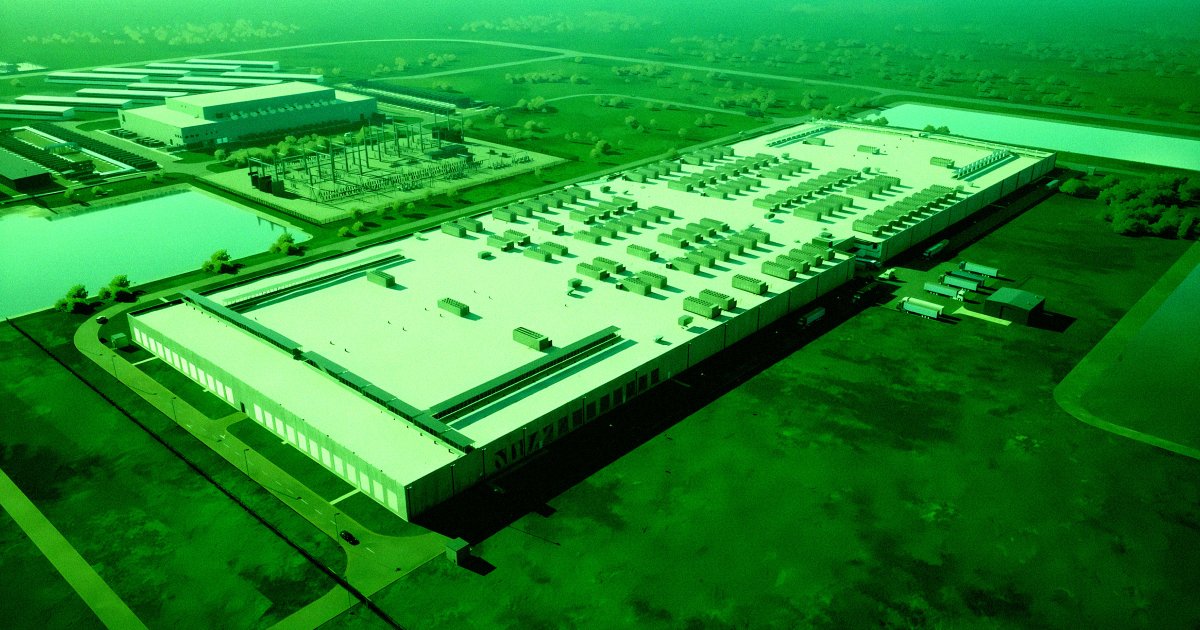
Applied Sciences / Futurism The midterms were in no small part a searing repudiation of the AI industry, and in particular data centers. In fact, of 41 ballot proposed measures that would crack down on data center development, Americans voted for all but one. The lone exception: the town of Harwood, North Dakota, population 845. According to reporting by The Washington Post, a lot of residents were hesitant to approve the $3 billion, 1.8 million square foot facility for the same reasons as their peers across the country: noise, environmental impact, and the shady backroom dealmaking that facilitated it. But all the same, they still voted against a measure demanding additional reviews and public hearings for big new industrial projects like this one, by a 3-to-1 majority — albeit, it sounds like, reluctantly. The reasons why are both charmingly parochial and unremittingly bleak. One 40-year resident, Mark Kerkvliet, was on board once he was assured that the data center wouldn’t drive up power costs. But he stopped short of endorsing the technology. “As soon as I was comfortable with the power use, I was on board,” he told WaPo. “Not because I like data centers or I like artificial intelligence or anything like that, but because this was very good for the city of Harwood.” The other glaring reason: if they voted against the project, led by the Texas-based firm Applied Digital, their next-door neighbor of Fargo, the state’s most populous city, would almost certainly get the contract instead. And you can’t let that happen. Blake Hankey, the mayor of Harwood, put it in frank terms. “It was always going to get built right around the same area that it was now,” he told WaPo. “If the data center is going to get put in this similar location, we might as well get the tax benefits and the tax revenue from it.” If AI data center construction is inevitable, in other words, then you might as well reap the benefits. Hankey estimated that having the project in the town would earn it $1.65 million in property taxes once it’s fully constructed, which is six times the entire tax revenue Harwood collected in 2024. Applied Digital claims that it will create 200 jobs. (That’s no joke in such a small town, but these data center job projections often turn out to be a mirage, especially after construction is finished.) But if AI data center is as inevitable as the townspeople believe, then the future is looking rather grim. Your town can protest an AI data center and maybe even shoot it down, but there’s no guarantee that the town next door won’t. If your primary objection to data centers is them being in your back yard, then perhaps you’re content to have them be built out of sight and out of mind. But many also oppose data centers for environmental reasons which become all the more exigent amid an accelerating climate crisis. In that case, forcing a data center to be built in a less ideal location for a multimillion or billion dollar company isn’t much of a victory. But who’s to say their — or the mayor’s — fatalism is correct? Exit polls showed that 76 percent of voters said they’re against new data centers in their community, and 56 percent considered AI and data centers a crucial or major factor in how they vote. A full 57 percent of Americans now believe AI is outright bad for society. Texas’s governor-elect Gina Hinojosa even campaigned on a data center moratorium. It just may be that opposition to the facilities has reached critical mass. More on AI: New AI Data Center Is So Huge That It’ll Generate the Heat of 23 Atomic Bombs Every Single Day
Only One Town in America Voted in Favor to Building a New Data Center, and the Reason Why Is Bleak
Full Article
Original Source
Read the full article at Futurism →KhanList aggregates and links to publicly available news content. We do not host full articles from third-party sources. Always verify important information with original sources.