
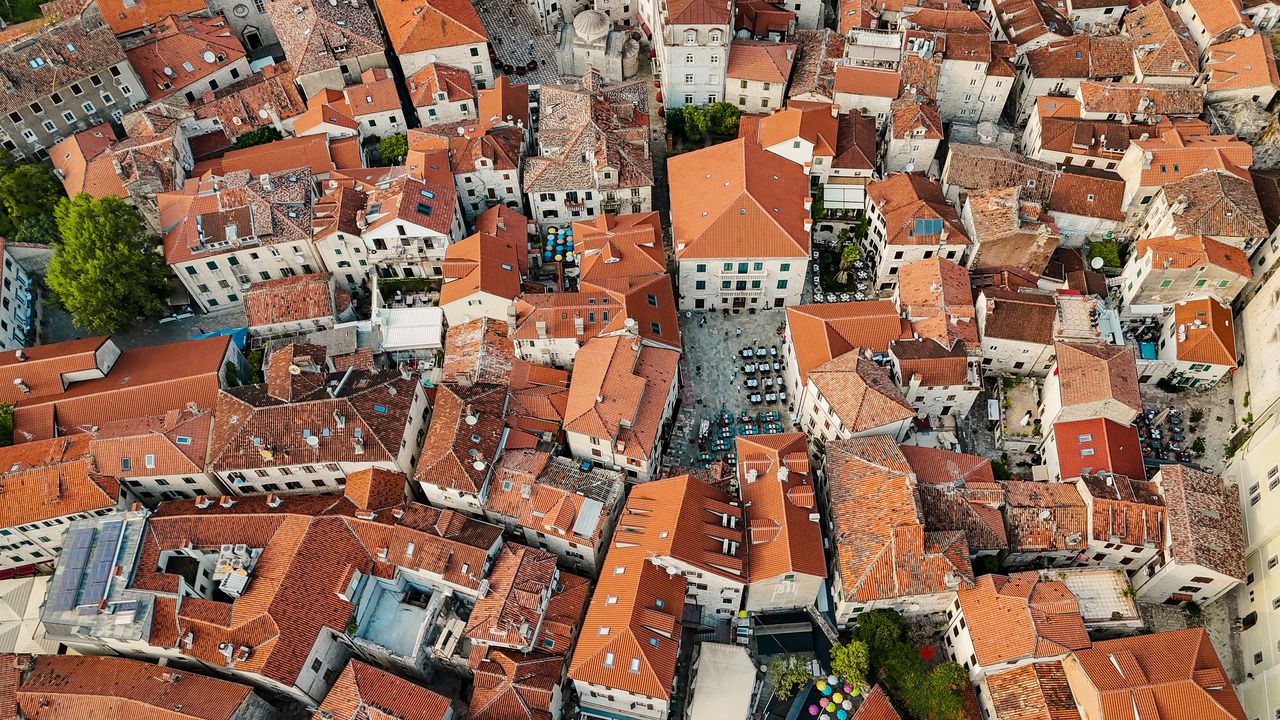
Montenegrins pride themselves on being the most laid-back people on the Mediterranean littoral, an accolade hotly contested by several nations I will leave unnamed for fear of accusations of slander. Indeed, so dedicated are they to leisure that they have devised “The 10 Commandments of a Montenegrin,” including such solemn admonishments as “if you feel like working, sit down, it will pass,” and “if you see someone resting, help him out.” It is unsurprising, then, that the UNESCO-listed walled city of Kotor was recently named one of the happiest places in Europe.I have been living on and off in Montenegro since 2014, and Kotor and its eponymous bay were a key part of what drew me there. Founded by the Illyrians and developed by the Romans and Byzantines, it was Kotor’s nearly 400 years as a stronghold on the frontier between Venice’s maritime republic and the Ottoman Empire that gave the town much of its current appearance: Romanesque churches, Gothic and Baroque palaces, and a labyrinth of narrow streets and small squares packed within formidable defenses.If you can, arrive by boat and imagine yourself at the helm of a Venetian galley or under the straining sails of a Montenegrin man-of-war. Water rushes past, glinting silver in the light of the sun, just risen above the mountains that ring the bay. On your right, Vrmac, the pine-clad ridge between the bays of Tivat and Kotor, descends steeply to stone sailors’ and fishermen’s cottages strung along the coastline in a terracotta-tiled array. Across the bay, the Baroque merchants’ palaces of Perast and the island church of Our Lady of the Rocks reflect in the water and slip by. Ahead, beneath the looming bulk of Mount Lovćen, the black mountain from which Montenegro takes its name, lies Kotor, its roofs and bell towers peeking above massive walls, and the defenses of St John’s Fortress snaking up the precipitous limestone slope behind.Narrow street in the old town of Perast, Kotor Bay Getty ImagesTie up among the bobbing masts of the marina and stroll through the stalls of the farmers’ market beneath the city walls: olives and oil, watermelons, berries and honey from the mountains, cured meats, homemade wines and brandies, and mounds of bright tomatoes and fragrant figs. Dubrovnik is only around 37 miles away as the crow flies, but thankfully there is not a scrap of Game of Thrones merchandise in sight, although the cruise ship looming over the port announces that mass tourism has not passed Kotor by. Nevertheless, it remains a living town, where locals go about their business among the babel of tourists, and laundry criss-crosses the narrow streets.Walk past locals chatting beside their motorbikes and enter the pedestrian Old Town through the Sea Gate beneath its Venetian lion. Ahead is the jauntily leaning early-17th-century clock tower; below it stands an elegant little obelisk known as the Pillar of Shame, used as the town pillory until the end of Venetian rule. The Square of Arms is lined with cafés and is the busiest part of town, but head further in and duck into Cinema Square for coffee beneath a spreading black poplar planted in 1667, which once shaded a long-vanished Franciscan monastery. If it is on the menu, try a slice of Kotor krempita, a local speciality of puff pastry and sweet custard.Opposite, the Kotor Cat Museum helps fund the care of the town’s cats, reputedly descended from mousers brought ashore by Venetian sailors. For cat-averse travelers, the tiny Romano-Gothic Church of St Michael in the same square houses the Kotor Lapidarium, a collection of stone artifacts from the Illyro-Roman period to the end of the 18th century.Once re-caffeinated, walk through pretty St Luke’s Square to Trg od Drva, or Wood Square. Here you can mount the ramparts or, if the heat permits, climb to the fortress for exceptional views over the town and bay. The climb to the Castle of St John involves about 1,350 steps and 850-some feet of ascent, passing the Church of Our Lady of Remedy halfway up. Having already done it a hundred times, I may leave you to it and order grilled sea bass at the excellent Bastion fish restaurant on the square.St. George Island near town Perast, Kotor Bay Getty ImagesAfter lunch, make your way to the Cathedral of St Tryphon, Kotor’s most important monument and one of the finest Romanesque churches on the Adriatic. Consecrated in 1166, the cathedral contains a splendid 15th-century gilded altarpiece and a 14th-century Romanesque-Gothic ciborium above the main altar, supported by red-marble columns and carved with scenes from the life and martyrdom of St Tryphon. The upper terrace offers fine views across the Old Town rooftops and the opportunity to feel like a potentate announcing their marriage to the populace in the square below. Nearby, the Maritime Museum, housed in the 18th-century Grgurina Palace, tells the story of the captains and sailors who carried Kotor’s influence far beyond the bay, but save it for another visit if the afternoon is slipping away.Collect a gelato from artisan ice-cream shop Moritz Eis on your way out the old town by the southernmost Gurdić Gate, then take a taxi for the 10-minute drive to the lower station of the Kotor–Lovćen cable car. The gondola climbs more than 4,265 feet in 11 minutes, rising above scrub, forest, and bare limestone until the entire bay and Montenegrin riviera opens beneath you. At the top, order a cocktail at Forza Kuk and watch the bay turn gold as the sun sinks towards the Adriatic horizon. Unless I am much mistaken, around about now Kotor’s place among the happiest places in Europe will feel less like marketing than stating the obvious. The Montenegrins may not have perfected idleness, but they have certainly made a persuasive case for it.The South Gate or Gurdic Gate and the moat of the fortifications of Kotor Getty ImagesWhere to eat in KotorBastionA dependable Old Town fish restaurant beside the northern gate, with a sheltered terrace by the city walls. Come for simply grilled local fish, seafood, and generous portions rather than culinary theatrics.Address: Stari grad 517, Kotor, Kotor Municipality 85330Website: restoranbastion.comIl PescatoreMy absolute favorite—a wonderfully simple working shellfish farm and family-run restaurant right on the water’s edge, where oysters and mussels are hauled from the water and served within minutes, accompanied by local wine and uninterrupted sea and mountain views. The kitchen only works until 5 p.m., so come for an unforgettable long lunch.Address: Perast–Risan road, near PerastWebsite: @ilpescatore_portomontenegroGalionKotor’s smartest waterside restaurant, just outside the Old Town, with broad views back towards the walls and marina. The menu combines polished Mediterranean cooking, local seafood, and a substantial wine list.Address: Šuranj bb, KotorWebsite: galion.meSenso BakeryA small bakery and coffee counter in the Old Town, particularly useful for breakfast, croissants, burek, and Kotor’s local custard-and-pastry speciality, krempita.Address: Stari grad 360, KotorWebsite: @sensokotorThe Church of Our Lady of Remedy is a Roman Catholic church. Getty ImagesWhere to drink in KotorJazz Club EvergreenA characterful, dimly lit jazz bar where live sets range from standards and blues to acoustic music and Balkan-inflected improvisation. Check its social media for performances rather than assuming there will be music every night.Address: Stari grad 422, KotorWebsite: @jazz.club.evergreenLetrikaAn eccentric, art-filled café by day that becomes one of the Old Town’s livelier cocktail and music bars after dark, with much of the action spilling into the surrounding lanes.Address: Stari grad 427, KotorWebsite: @letrika.kotorKotor Old Town Getty ImagesThe best hotels in KotorAs Kotor Old Town itself is notoriously noisy at night, the recommended places to stay are all nearby on the bay.Hyatt Regency Kotor Bay ResortA full-service resort a few minutes’ drive from the Old Town with a private beach, pools, and spa. Best for travelers wanting resort amenities within easy reach of Kotor rather than a room inside the Old Town.Palazzo SbutegaAn intimate boutique hotel in a restored waterfront stone palazzo, combining stunning contemporary interiors with a swimming pool, garden, and exceptionally personal hosting. It feels more like staying in a stylish private home than a conventional hotel.Casa del Mare – AmforaA small waterfront five-star boutique hotel in the village of Orahovac, north of Kotor, with its own beach and bedrooms overlooking the bay. A good choice for easy access to both Kotor and Perast.This article was originally published in Condé Nast Traveller UK.
One of the Happiest Places in Europe Is This Charming Walled City in Montenegro
Full Article
Original Source
Read the full article at Cntraveler →KhanList aggregates and links to publicly available news content. We do not host full articles from third-party sources. Always verify important information with original sources.