
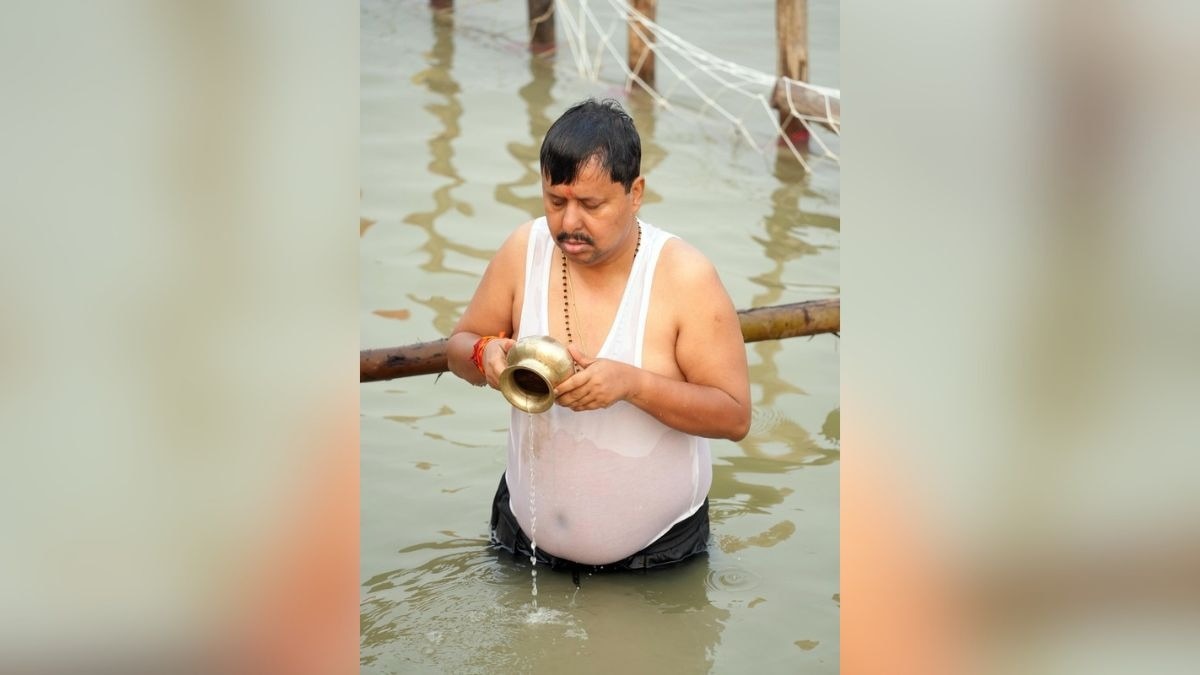
The trappings of high office can take powerful politicians far from the place where their journey began. But some traditions have a way of bringing them back. On November 13, it happened to BJP national president Nitin Nabin.As Chhath Puja began in Bihar, Nabin was at Patna's Digha Ghat, taking a holy dip in the Ganga with his family and performing rituals marking the beginning of the four-day festival. There was no elaborate political setting. Rather it was a return to a familiar riverbank, one that Nabin says has been a part of his family's life since his father's days. He recalled that the Ganga ghats along Patliputra were where the family came to offer Arghya and where his childhood memories, family traditions and faith continue to converge.Now occupying one of the most prominent positions in the BJP, Nabin spoke less about the political significance of Chhath festival and more about what it means to him personally. Chhath songs, he said, revived memories of his grandmother, other women in the family and generations of ancestors who observed the festival. Few forms of worship, he suggested, create such a powerful bond between family members.For Nabin, Chhath is an inheritance. “We have seen this festival since childhood and grown up with this tradition,” he said. The family has continued to visit the same ghats, giving the ritual a generational link. In a political life increasingly defined by national commitments, the familiar sights and sounds of Chhath offer Nabin a connection with home. Something distinctly personal about Nabin's observance of Chhath adds another dimension to his public persona. At a time when political stature often creates distance from one's roots, he continues to return to the same ghats where his family has offered Arghya for generations. It is this ability to remain connected to his roots, despite the demands of high office, that Nabin’s supporters say lends him the image of a down-to-earth and unassuming politician.For Nabin, Chhath is not just a festival but a reminder of his roots and values. That connection is central to understanding Chhath, one of Bihar's most distinctive festivals. Dedicated to the Sun god, also known as Bhagwan Bhaskar, and Chhathi Maiya, it is observed with extraordinary discipline and devotion. The rituals are not centred on temples or elaborate ceremonies conducted by priests. Instead, riverbanks, household kitchens and family courtyards become the places of worship. The devotees themselves undertake the rituals, often observing a rigorous fast and following strict rules of cleanliness and purity.The festival unfolds over four days, beginning with Nahay-Khay. Devotees bathe, clean their homes and prepare a simple, vegetarian meal. The second day, Kharna, involves a daylong fast, broken in the evening after prayers with offerings such as kheer. On the third day, devotees gather at rivers, ponds and other water bodies to offer Sandhya Arghya to the setting sun. Before sunrise the following morning, they return to offer Usha Arghya to the rising sun. The fast ends only after the final offering.The worship of both the setting and rising sun gives Chhath a distinctive symbolism—it is an expression of gratitude that does not distinguish between the fading and the emerging. The rituals celebrate the sun as the source of life and energy while prayers are offered for the well-being of children and family members.Nabin draws attention to another dimension of the festival: its relationship with nature and agriculture. Chhath, he said, is not only an expression of devotion to the Sun god and the Ganga but a gesture of gratitude towards farmers, who toil to grow the food we eat. The offerings, which include fruits, sugarcane and thekua (traditional sweet), reflect this connection with the land and the people who cultivate it. The emphasis on cleanliness, purity, discipline and respect for nature is what, in his view, makes the festival distinctive.A striking feature is how the festival unites families and communities. Preparations begin well before the offerings reach the riverbank. Homes are cleaned, ingredients are carefully selected and traditional food is prepared according to prescribed rituals. Folk songs, passed down through generations, accompany the preparations.For Nabin, these songs are more than music; they are reminders of how earlier generations observed the festival and passed its traditions on. That sense of belonging has travelled far beyond Bihar. Nabin pointed out that wherever people from Bihar have settled, they have carried Chhath with them. From New York and New Jersey to Mumbai's Girgaon Chowpatty and the banks of the Yamuna in Delhi, the festival has acquired enduring presence far away from its heartland.This journey is significant. Chhath has become a way for people of Bihar living away from home to recreate a part of their cultural world. The river may be different, the city unfamiliar and the community smaller, but the rituals, songs and offerings remain recognisable. In that sense, Chhath travels with its devotees, carrying memories of home across cities and continents.Nabin also spoke of the energy that the four days of Chhath bring. The faith, discipline and collective participation, he said, provide renewed strength to meet the responsibilities of everyday life through the year. It is a personal sentiment, but one that captures the festival's larger appeal: devotion is not confined to the hours spent at the riverbank; it becomes a source of strength carried into ordinary life.Chhath also brought a political touch to the family celebration. On November 14, Bihar chief minister Samrat Choudhary visited Nabin’s residence for Kharna prasad. The gesture was an expression of the festival’s spirit of sharing and community, but it also offered a glimpse of the personal warmth between the two BJP leaders.For Nabin, the occasion remained rooted in the traditions of home, even as it brought together family, friends and political associates. Chhath was both an act of faith and family tradition. The office he holds may have taken him to the national stage but Chhath brought him back to a familiar riverbank, to memories of his father and grandmother, and to a tradition that has shaped his life. For him, as for countless people from Bihar, the Ganga at Chhath is more than a place of worship. It is the confluence of faith, family and the idea of home.Subscribe to India Today Magazine- Ends
On Chhath, by the Ganga in Patna, how faith, family, home converged for Nitin Nabin
Full Article
Original Source
Read the full article at Indiatoday →KhanList aggregates and links to publicly available news content. We do not host full articles from third-party sources. Always verify important information with original sources.