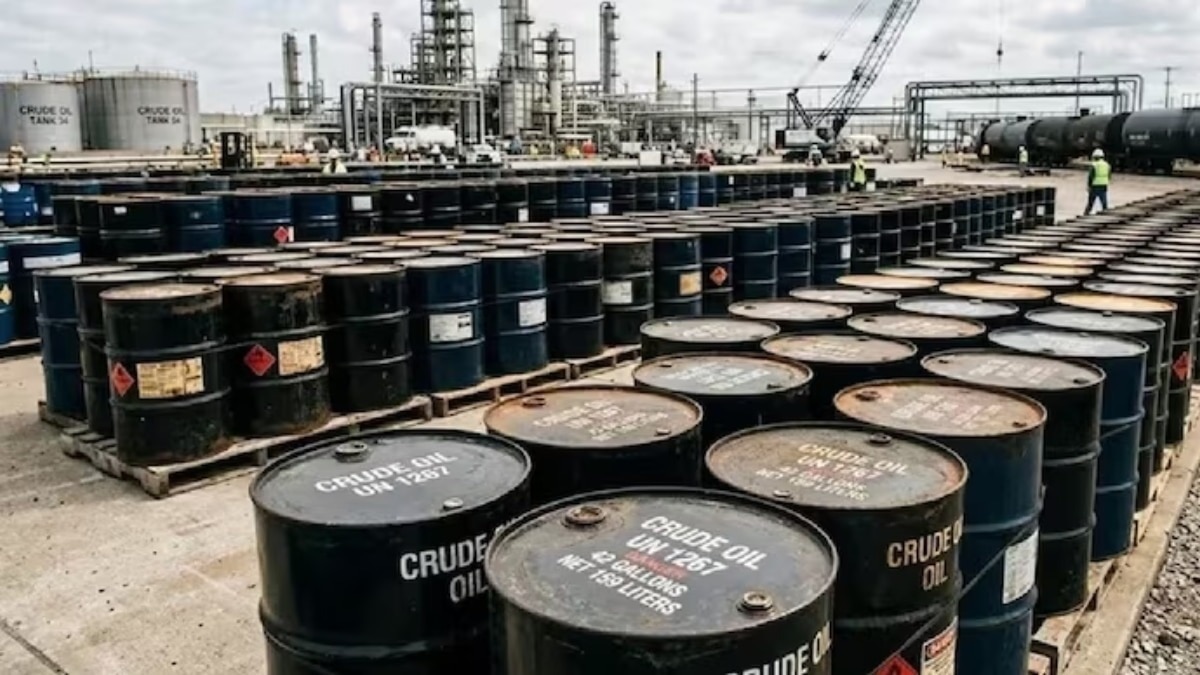
Oil prices surged nearly 7% on Wednesday, pushing Brent crude close to the $90-a-barrel mark, as renewed military strikes in the Middle East shattered hopes of an imminent end to the US-Israeli war with Iran and reignited concerns over disruptions to global oil supplies. Brent crude futures rose $5.70, or 6.8%, to $89.79 a barrel by 1335 GMT, while US West Texas Intermediate (WTI) crude gained $4.94, or 6.2%, to $84.20 a barrel.The rally followed fresh military action in the region. The United States and Saudi Arabia launched strikes on Iran-backed groups in Iraq, accusing them of carrying out drone attacks on Saudi oil facilities. The strikes came hours after the US military said it had foiled a surprise Iranian attack on American troops in the region. Iran, meanwhile, said it had fired on ships in the Strait of Hormuz and at US bases in Jordan.Oil prices extended gains after US President Donald Trump, in an interview with Fox News, vowed retaliatory strikes against Iran. The latest escalation has dashed hopes of a diplomatic breakthrough after Trump had earlier signalled a return to negotiations.Tehran also rejected Oman's proposal for joint regional management of the Strait of Hormuz, a move that further reduced expectations of a resolution to the months-long disruption in one of the world's most critical oil shipping routes, Reuters reported. "Renewed military strikes in the Middle East and Iranian officials reiterating that they want to control shipping activity through the Strait of Hormuz amid depressed oil flows through the Strait are lifting oil prices again," UBS analyst Giovanni Staunovo told Reuters.Shipping activity through the Strait of Hormuz remained subdued. According to Reuters, only a handful of commodity vessels have transited the waterway this week.At the same time, traffic through the Bab el-Mandeb Strait—an alternative route for Saudi oil shipments to Asia—showed signs of recovery, with five ships passing through on Wednesday after 39 transited on Tuesday, the highest daily count since July 19 before Yemen's Iran-backed Houthi rebels announced a maritime blockade of Saudi Arabia.Adding to concerns, Yemen's Houthi group is considering imposing fees on commercial vessels using the southern Red Sea, regional sources told Reuters. Separately, six sources said China has held direct talks with the Houthis to allow its oil tankers to pass through the region without being attacked.Analysts expect oil prices to remain highly volatile as geopolitical tensions continue to drive sentiment."We believe Brent oil prices will continue to whipsaw in the $80-$100 per barrel range in the near term as the conflict ebbs and flows in the Middle East," Suvro Sarkar, head of energy research at DBS Bank, told Reuters.He said the stop-start nature of diplomatic efforts means the Strait of Hormuz blockade is unlikely to be lifted completely anytime soon, adding that Brent crude could continue to find a floor around $80 per barrel even if tensions ease.Further supporting crude prices, industry data from the American Petroleum Institute showed US crude inventories fell by about 3.3 million barrels in the week ended July 24, signalling tighter supplies. Investors are now awaiting official inventory data from the US Energy Information Administration due later on Wednesday.In another supportive factor for prices, OPEC+ is expected to pause planned oil output increases for three months starting in October after completing the scheduled return of barrels following voluntary production cuts, according to Reuters sources.- EndsPublished On: Jul 29, 2026 19:52 IST
Oil jumps nearly 7% tp $90 a barrel as Middle East conflict escalates
Full Article
Original Source
Read the full article at Indiatoday →KhanList aggregates and links to publicly available news content. We do not host full articles from third-party sources. Always verify important information with original sources.