
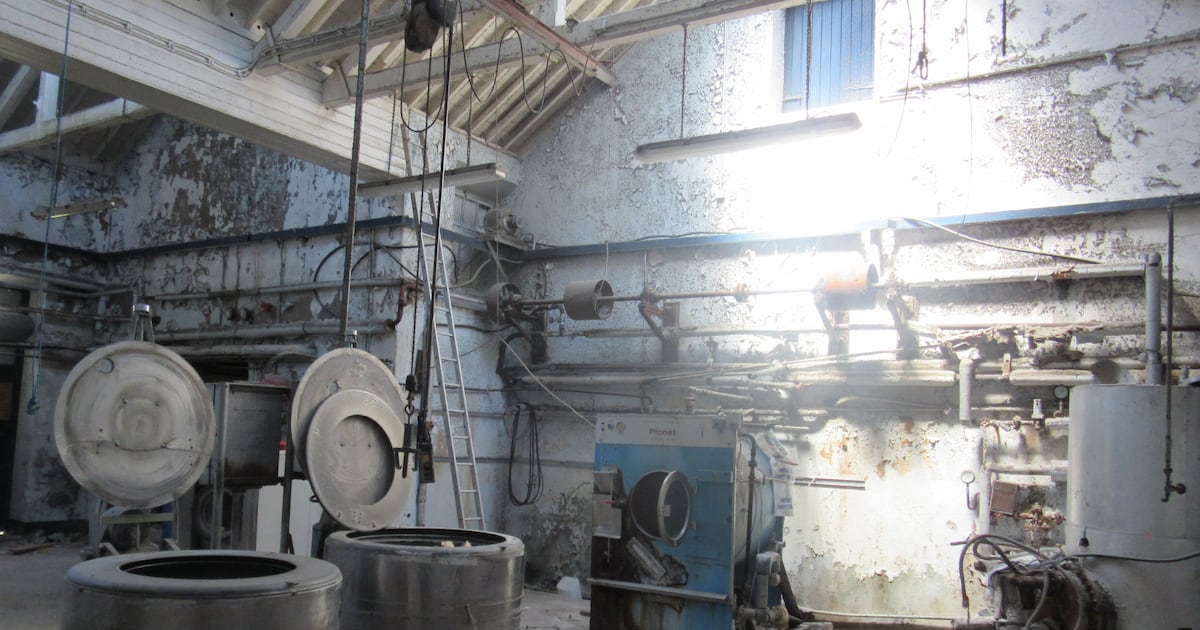
The Religious Sisters of Charity, a Catholic order of nuns that operated the Donnybrook Magdalene laundry in Dublin 4 for more than a century, has raised concerns about the “excessive scale” of a housing development proposed on the former laundry’s site.The order cited a “significant opportunity for overlooking” the convent’s residences caused by the proximity of apartment blocks up to six storeys high as a “concern” in a planning observation filed to Dublin City Council. The council granted Pembroke Partnership, the developer behind the scheme, planning permission for 34 apartments, duplexes and town houses on the site last month. A coalition of local residents has now appealed that decision to An Coimisiún Pleanála, the State’s planning authority.As of the time of publication, the Religious Sisters of Charity has not submitted or contributed to a formal appeal against the proposed housing development.READ MOREHowever, Avison Young, a commercial real estate advisory firm acting on behalf of the nuns, wrote to the council twice within the past year to raise concerns about Pembroke Partnership’s planning applications.“It should be noted that the proposed development immediately adjoins St Mary’s campus, which is the historical and spiritual home of the Religious Sisters of Charity,” the firm wrote in a letter sent on November 20th, 2025.Attempts to build on the land date back to at least 2017, when Pembroke Partnership submitted and later withdrew an application to build a 25-unit development, with at least three separate planning applications filed since then, according to the council’s records.The advisory firm’s letter stated that the height of the development presents “a significant protrusion” above existing buildings, in addition to the “excessive” scale of the proposed scheme.There is a “significant opportunity for overlooking” the convent’s courtyard and residences, while its “minimal standards of daylight, sunlight and shadow have failed to consider the wider potential impacts” on the community, the firm wrote on behalf of the nuns.It also raised issues over potential noise caused by construction, an apparent lack of car parking spaces on the site, and risk of the “private amenity of the convent” being “significantly diminished” by the scheme.The letter established that more than 25 members of the order live on the adjoining site alongside “the resting place of hundreds of sisters” including the congregation’s founder, Mother Mary Aikenhead.A second letter, dated July 7th, 2026, stated that no “material” or “significant” change to the proposed development has been achieved since the order’s correspondence eight months beforehand.The revised plans result in “more acute” overlooking, a risk that “materially increased” with architectural changes, the firm wrote. “Any loss of light for these residents is unacceptable,” it continued.According to the letter, a meeting with Pembroke Partnership was held “in good faith” in May 2026, during which the order’s observations “were set out in detail” and after which “a commitment was made to reflect on the concerns and to explore design changes”.“Unfortunately, no further information was received,” the letter continued.[ ‘Unacceptable’: Residents oppose housing on former Dublin 4 Magdalene laundry siteOpens in new window ]“As it stands, the proposed scheme will have significant detrimental impact to the continued wellbeing and residential amenity of the residents of the St Mary’s campus.”Neither letter mentioned the Religious Sisters of Charity’s historic role in the operation of the laundry – where up to 315 women and girls are believed to have died, according to the Justice for Magdalenes Research group.Its capacity varied from 100 to 120 women and girls “over much of the period of its operation” between 1833 and 1992, according to the Government’s 2013 McAleese report, an official inquiry into the State’s involvement with Magdalene laundries.The coalition of local residents, in their appeal to An Coimisiún Pleanála, described the proposed housing development as “inappropriate and unacceptable”. They called for a “more appropriate and respectful” approach, “one which is sensitive to the community of survivors who experienced abuse and neglect in this setting”.In a statement to The Irish Times, the Religious Sisters of Charity said “the Church, the State and wider society played roles in the exclusion and institutionalisation of women who were vulnerable or marginalised” during this time. “The social attitudes, structures and standards of that time were very different from those of Ireland today. In particular, the State relied heavily on religious congregations to provide a range of social services, including services for women,” the order said.“Women came into our care through a variety of circumstances, including family referrals, psychiatric services, transfers from other institutions, and many presented themselves. Others chose to join the community while working outside the home.”It continued: “We recognise that practices and standards of the past must be considered in the context of what is expected and accepted in Irish society today.“Throughout the planning permission process, our understanding was that the developers intended to commemorate the former use of the land. We were satisfied with this approach and, accordingly, did not include the matter in our submission to Dublin City Council,” the order’s statement concluded.
Nuns who ran Donnybrook Magdalene laundry criticise ‘excessive scale’ of proposed housing
Full Article
Original Source
Read the full article at Irishtimes →KhanList aggregates and links to publicly available news content. We do not host full articles from third-party sources. Always verify important information with original sources.