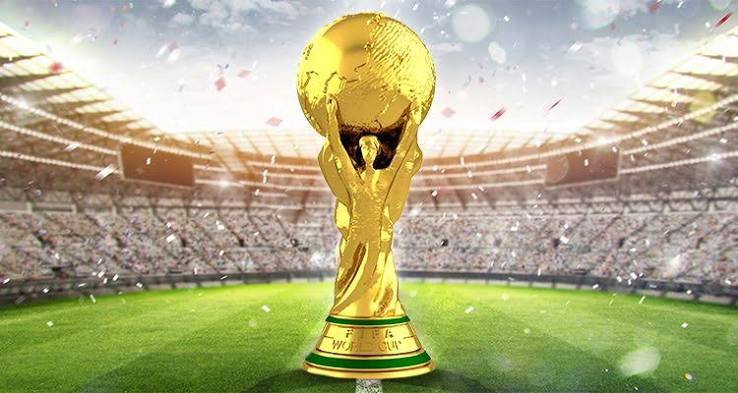
Former Catholic pontiff, Pope John Paul II, once said: “Among all unimportant subjects, football is by far the most important”. Without any doubt, football is a global crowd puller, and the game’s most amazing spectacle is the FIFA World Cup. Since Uruguay hosted the first edition of the World Cup in 1930, during the era of revered FIFA President Jules Rimet, the competition has continued to grow in leaps and bounds. From a 13- team event in 1930, it grew to become a 48-team affair. Today, the World Cup commands a global TV audience in excess of one billion. Sadly, however, many experts are of the view that the 2026 edition was not really a good advertisement for the game. They argue that, from an over-expanded format to unnecessary commercialization, logistical confusion, and creeping political influence, the 2026 World Cup might actually be the worst in history. The most obvious change to the 2026 Mundial was its expansion from 32 to 48 teams—the largest in history. Though FIFA said it was designed to develop the game, it actually harmed it. With 104 matches spread over weeks, the tournament risked fatiguing spectators as fixtures piled up. Not every match felt important—and that is a problem for a tournament built on drama. Experts reason that increasing the number of games can reduce competitive intensity and create “meaningless matches” with inconsequential outcomes. To experts, the group stage, once a high-stakes battleground, became diluted with mismatches and predictable outcomes. Lower-ranked teams were often outclassed, leading to lopsided games that lacked excitement. Many stakeholders, who also align with this school of thought, argue that the tournament only truly “started” in the knockout rounds. In effect, the early stages—once filled with spectacles and volatility—became a protracted prologue rather than a competition in its own right. To compound the situation, the expanded format was characterised by structural defects. With third-placed teams advancing, the system created scenarios where teams could progress without winning a single match, undermining meritocracy. This, analysts believe, raised risks of foul play and undue advantages in qualification pathways. Besides this, the 2026 World Cup was over-commercialized. From corporate patronage overload to the introduction of a Super Bowl-style halftime entertainment, the tournament gradually looked a lot like an entertainment event rather than a sporting tourney. Critics argue that FIFA over-concentrated on revenue at the game’s expense. The expanded prize pool—reaching a record $871 million—stressed the financial outlay of the tournament, but also reinforced the perception that profit, not football, was a driving force. Analysts caution that football is increasingly becoming a vehicle for “soft power” and corporate messaging, raising concerns that the essence of the game is being overshadowed. No doubt, hosting the tournament across three countries in North America attracted new audiences, but it also introduced controversial changes to the traditional rhythm of football. A World Cup spanning three countries and varied time zones was always going to be a logistical stress. It actually turned out to be. Travel distances between venues were vast, increasing fatigue for both players and fans. It also remarkably raised logistics costs. Ticket prices became a major point of debate as many fans were priced out of attending matches. Experts argue that this led to allegations that the tournament favored corporate clients and affluent spectators over ordinary fans. This shift had a visible impact on the atmosphere. Instead of the passionate, organic energy that defines great World Cups, some matches felt sanitized and overly curated. The presence of influencers and VIP guests further reinforced the sense that the event was drifting away from its grassroots identity. The 2026 World Cup experimented with extended halftime breaks, mid-game hydration pauses, and entertainment-driven elements that blurred the line between sport and spectacle. While some defended these changes as modern innovations, purists saw them as a distortion of football’s identity. Football’s beauty has always been its simplicity: two halves, minimal interruptions, and continuous flow. By introducing American-style sports entertainment features, FIFA risked alienating traditional fans, particularly in Europe, Africa, and South America, where the sport’s cultural roots run deepest. The 2026 World Cup was also marked by a series of off-the-pitch controversies that extended beyond the pitch. From refereeing disputes and VAR discrepancies to political interference and disciplinary controversies, the tournament often found itself in the headlines for the wrong reasons. Even on the field, incidents such as politically charged celebrations and potential sanctions against teams highlighted the increasingly blurred line between sport and politics. The result was a tournament that sometimes felt less like a celebration of football and more like a stage for global power dynamics. Perhaps the most damning criticism of the 2026 World Cup is not about format, money, or logistics—but about feeling. Great World Cups are defined by emotion: the roar of the crowd, the unpredictability of underdogs, the sense that anything can happen. They bring the world together in a shared experience that transcends borders. In 2026, that magic often felt diluted. Yes, there were memorable moments. Yes, new nations got their chance on the global stage. But the predominant story was one of excess—too many teams, too many games, too much money, too much spectacle. However, to call the 2026 FIFA World Cup the worst in history may sound harsh. But when judged against the core values that made the tournament great—competitiveness, authenticity, accessibility, and simplicity—it falls short in critical ways. It is a World Cup that tried to be everything at once: bigger, richer, more inclusive, more entertaining. In doing so, it may have become less of what it was meant to be. The real danger is not that 2026 was flawed—it is that it may set a precedent. If expansion, commercialization, and spectacle continue to take priority over football itself, the World Cup risks losing its identity entirely. From whichever way it is viewed, the World Cup and indeed, football in general, remain a major rallying point for youths across the globe. One only hopes that FIFA would look inward to address various germane issues that could undermine the credibility of the game. Meanwhile, congratulations to the Spaniards for deservedly winning the 2026 FIFA World Cup. They are, no doubt, worthy champions! The Argentines tried every ‘dirty’ thing in their infamous book to bring the game to disrepute, but the Spaniards fought gallantly to preserve the image of the beautiful game. Hala Spain! Tayo Ogunbiyi is Director, Public Enlightenment and Community Relations, Ministry of Information & Strategy, Alausa, Ikeja
NOW THAT THE WORLD CUP IS OVER
Full Article
Original Source
Read the full article at Thisdaylive →KhanList aggregates and links to publicly available news content. We do not host full articles from third-party sources. Always verify important information with original sources.