A viral post claiming more women are choosing Caesarean sections over normal delivery has reignited a heated debate online. While some leading gynaecologists argue that normal delivery should remain the preferred option, others say a planned C-section is now safer than ever and that informed maternal choice must be respected. The decision should be based on evidence, not pressure or misinformation. Join the debate here...Doctors say planned C-sections are safe, but choice is the woman'sTwo years ago, I chose to have a planned C-section. Today, both my daughter and I are healthy, and I have not experienced any major complications from the surgery. Like many women, I decided after discussing it with my doctor and weighing what I felt was best for my pregnancy.But my experience is just one among millions. Every pregnancy is different, and so is every birth. For some women, a normal vaginal delivery is the safest option. For others, a planned Caesarean may be the better choice. That is why there is no one-size-fits-all answer to one of pregnancy's biggest questions.Would you choose a planned C-section over a normal delivery if both were considered safe?That question has divided the internet after surgeon Dr Sumeet Shah shared a post on X claiming that many young, urban women today are increasingly choosing Caesarean sections by choice. He argued that advances in surgery, anaesthesia and postoperative care have made modern C sections remarkably safe and questioned why women should be judged for opting for one. @DrSumeetShah (on X) India Today.in spoke to five leading obstetricians and gynaecologists. Their message was clear, modern C sections are safer than ever before, but every mode of delivery comes with its own benefits and risks. The best choice, they say, is an informed one.WHY THIS DEBATE MATTERS MORE THAN EVERThe debate comes at a time when Caesarean deliveries are becoming increasingly common across the world. According to the World Health Organisation (WHO), nearly one in five babies globally are now born through Caesarean section, and the number is expected to continue rising over the next decade.India has witnessed a similar trend. The National Family Health Survey 5 (NFHS 2019 to 2021) found that 21.5 per cent of births in the country are delivered by Caesarean section. In private hospitals, the figure is much higher, touching 47.4 per cent.Doctors say the increase is being driven by multiple factors, including changing patient expectations, older maternal age, high-risk pregnancies, previous Caesarean deliveries and improvements in surgical safety.'MODERN C-SECTIONS ARE EXTREMELY SAFE'Dr Tanuja Uchil, Obstetrician and Gynaecologist and Founder of Oma Hospital, Mumbai, says there is no denying how much Caesarean surgery has improved. "'As safe' needs two questions attached to it, safe for whom, and measured until when. For this one delivery, in a hospital with an anaesthetist on hand and blood available, a planned Caesarean is extremely safe, and that is a real achievement."But she cautions against interpreting that to mean a C-section and a vaginal birth are identical."It is still not the same as saying the two are equivalent, which is precisely why a Caesarean on request should be offered after a full conversation, never instead of one."According to Dr Uchil, women deserve detailed counselling before deciding how they want to give birth.ARE WE COMPARING RIGHT?Dr Mohit Saraogi, OBGYN and IVF specialist at Saraogi Hospital and IVF Centre, Mumbai, believes public discussion often compares apples with oranges. "The honest answer is that the comparison itself needs correcting."He explains that doctors are not comparing a planned C-section with a successful normal delivery. Instead, the comparison is between a planned Caesarean and a planned vaginal birth, knowing that some planned vaginal births eventually become emergency Caesareans."It is a planned Caesarean versus planned vaginal birth, a portion of which ends up as emergency Caesareans, which is the worst outcome of the three."He also says current scientific evidence does not support claiming that elective C sections and vaginal births are completely equivalent for healthy, low-risk women."Anyone saying the two are equally safe for low-risk women is going further than what has actually been studied."THE DIFFERENCE IS SMALL TODAYDr Nisarg Patel, OBGYN and IVF specialist and Director of Nisha IVF Centre, Ahmedabad, says modern obstetric care has dramatically improved safety. "For a single delivery in a well-equipped unit, the difference in safety is genuinely small." However, he believes women should also consider the future."Across a woman's reproductive life it is not small, and that is the honest way to put it." Every Caesarean leaves a scar on the uterus, which may increase the risk of certain complications in future pregnancies."Different risks rather than absent risks, and the Caesareans are the ones she meets later."EVERY DELIVERY METHOD HAS SOMETHING IT PROTECTS AGAINSTDr Sneheletha M. Kuris, Senior Obstetrician and Gynaecologist at Echelon Hospital, says there is no perfect delivery method."Not identical, and I'd resist overstating it in either direction." She explains that planned Caesareans reduce the chances of birth trauma, shoulder dystocia and complications from difficult labour.At the same time, they introduce other risks. "A planned Caesarean actually protects a baby from some things. Birth trauma, shoulder dystocia, the stress of a difficult labour. It introduces others: breathing difficulty when the baby is born without labour having started, a slower start to feeding and altered early gut flora."She describes childbirth as a balance of risks and benefits. "Fewer of one kind, more of another. That is a trade-off, not an equivalence."VERY SAFE DOESN'T MEAN EITHER IS RISK FREEDr Bhoomika Jain, Obstetrician and Gynaecologist, Mumbai, believes reassuring women should never mean hiding the facts."I wouldn't say there is no significant difference." Instead, she says planned Caesareans have their own pattern of risks."I'd say a planned Caesarean today is very safe, and that it carries a different set of risks rather than fewer risks." She points out that while most risks associated with a vaginal delivery are over once the mother recovers, many Caesarean-related risks become relevant only during future pregnancies."The distinction that matters is timing. Most of the risk of a vaginal birth is behind you by the time you go home, while the biggest risks of a Caesarean arrive in the next pregnancy, years later."SO, IS ONE BETTER THAN THE OTHER?A planned C-section is no longer the high-risk surgery it once was. In today's hospitals, it is a highly refined procedure with excellent outcomes for both mother and baby.At the same time, a normal vaginal delivery remains the preferred option for many uncomplicated pregnancies because it avoids surgery and usually allows faster recovery.Rather than asking which mode of delivery is universally safer, doctors say women should ask which option is most appropriate for their pregnancy, their health and their future family plans.The viral debate has highlighted how attitudes towards childbirth are changing. But doctors say one principle should not. No woman should be judged for choosing a normal delivery. No woman should be judged for choosing a C-section either. The choice should belong to the woman, made after an honest discussion with her obstetrician, a clear understanding of the benefits and risks of both options and what is medically best for her and her baby.Because in the end, experts say, the safest birth is not about choosing one method over the other. It is about making an informed choice.- EndsPublished By: Smarica PantPublished On: Aug 5, 2026 13:26 IST
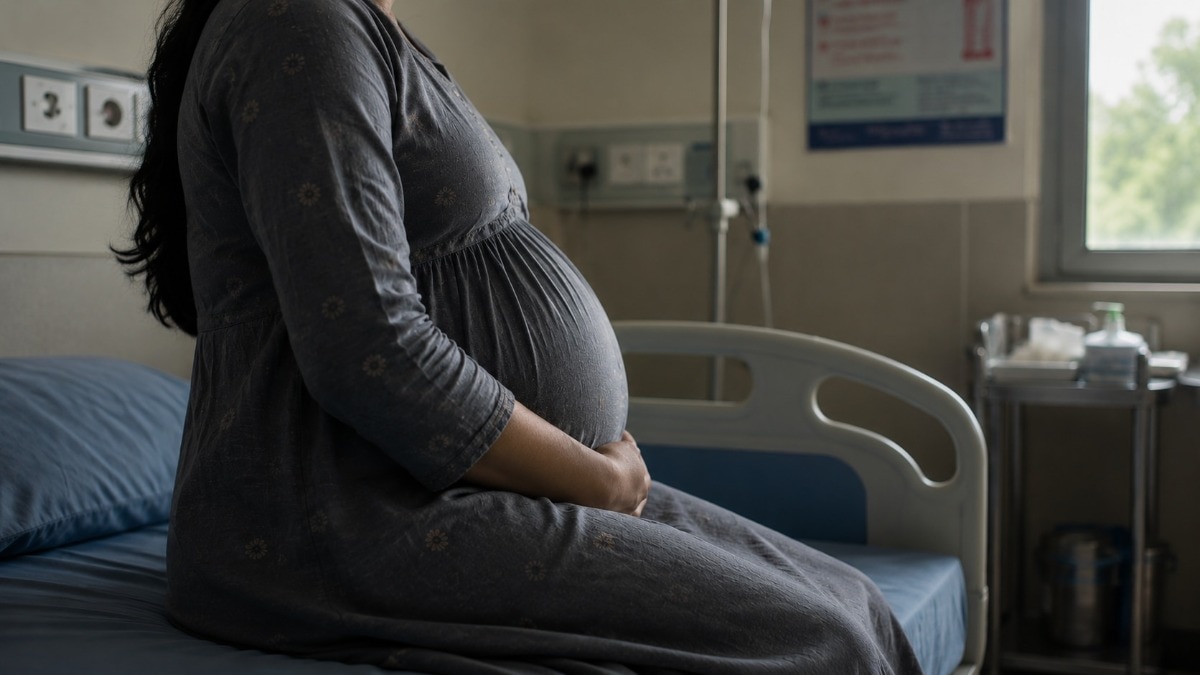
Normal delivery vs C-section: Doctors say planned births are safe, women deserve the choice
Full Article
Original Source
Read the full article at Indiatoday →KhanList aggregates and links to publicly available news content. We do not host full articles from third-party sources. Always verify important information with original sources.