
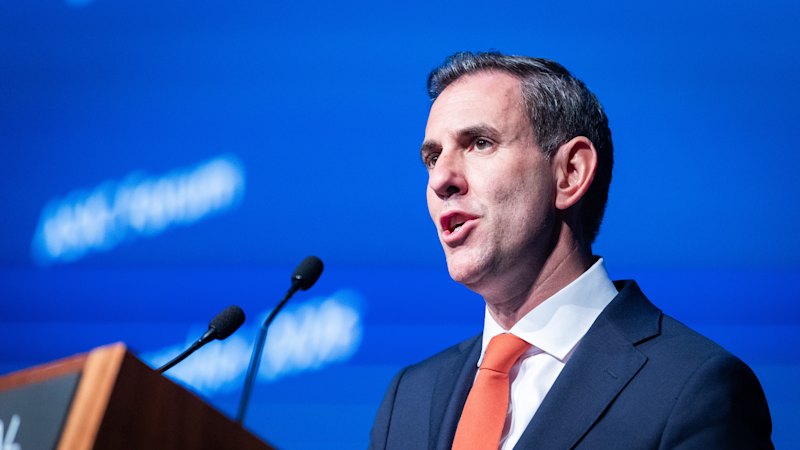
November 23, 2026 — 3:07pmTreasurer Jim Chalmers has warned the country faces an economic slowdown, unemployment beyond 5 per cent and inflation stuck above 3 per cent well into the second half of next year.In an address to parliament, Chalmers argued the country would avoid a recession as the budget bottom line deteriorates, even as the government prepares to deliver “budget-sized” spending cuts in its looming mid-year fiscal update.Jim Chalmers is preparing Australians for a tough economic year ahead.Renee NowytargerAnd he has revealed that key indicators of government spending and tax collection to gross domestic product will be pushed higher because the economy is smaller than expected.Chalmers and Prime Minister Anthony Albanese have been under fire over the state of both the economy and the budget. Unemployment last week pushed to a five-year-high, inflation is at 4.3 per cent and real wages are falling all while the budget is in deficit.The Reserve Bank has pushed official interest rates to an 18-year high of 4.85 per cent, although financial markets now believe it will have to start cutting by September to help prop up the economy.Chalmers said the country was confronting “difficult times full of serious risks”, noting the economy faced strong headwinds households were already starting to feel.“Higher oil prices mean inflation is expected in the mid-3s through the middle of next year before coming back in [the 2-3 per cent] band by the end of the calendar year. Inflation and interest rates are expected to weigh on consumption too,” he said.“This means GDP growth could slow from 2.3 per cent last year to well below two per cent for the next two years. Treasury expects unemployment to stay below pre-pandemic averages but now peak higher, above 5 per cent.“These are concerning numbers. We do not diminish or disregard them. But despite all of this, neither the RBA nor the Treasury are forecasting the economy to go backwards.”All forecasts are worse than what Chalmers announced in his May budget. At the time, he forecast economic growth would slow to 1.75 per cent this year before recovering to 2.25 per cent in 2027-28, that inflation would average 2.5 per cent, and the jobless rate would remain around 4.5 per cent.Chalmers said elevated inflation, the fallout from the war against Iran and higher interest rates were all buffeting the economy.“2026 has been a very tough year for our people, our economy, and the world. No use pretending otherwise. Interest rates are biting, unemployment is rising, prices are going up, wages aren’t keeping pace, and families are hurting,” he said.In May, Chalmers forecast the budget would show a deficit of $31.5 billion this financial year followed by shortfalls of $31 billion, $34.4 billion and $25.3 billion in the three following years.Tax as a share of the economy was forecast to reach 23.8 per cent, its highest point since the 2005-06 record of 24.2 per cent. Government spending as a share of the economy was expected to reach 26.8 per cent.Chalmers said in the short-term, the budget deficit was likely to be a little smaller this year, but deficits would likely be larger from 2027-28 onwards.The economy is already a little smaller than anticipated, which meant tax and spending as a share of GDP were likely to be “slightly” higher even with savings in the mid-year update.The treasurer said those savings would be spread across the budget, although he argued the government would not slash expenditure.“Savings won’t be concentrated in one area or one portfolio, but they will be fair and calibrated to the conditions,” he said.“At this stage, we expect to more than offset our new spending decisions, without slashing and burning the services people rely on. The pressures coming at us are immense and there are some big, unavoidable commitments to be funded.“But we understand and embrace our role in the fight against inflation. Our decisions will deliver a modest net saving despite all these pressures.”The Reserve Bank’s decision earlier this month to lift interest rates for a fifth time this year has raised concerns that it could drive the economy into a recession. The decision split the bank with 3 of its 9 members voting against the move.Chalmers said higher interest rates were adding to the pressure on the jobs market, with the fallout likely to extend into next year.“As Governor [Michele] Bullock said, it takes at least a year for rate rises to fully flow through, so we know the impact of the board’s decisions will continue well into next year, but people are feeling the pain already.”Chalmers said work was already beginning on next year’s budget, adding it would contain policies aimed at lifting the nation’s economic speed limit by cutting red tape and boosting productivity.Cut through the noise of federal politics with news, views and expert analysis. Subscribers can sign up to our weekly Inside Politics newsletter.Shane Wright is a senior economics correspondent for The Sydney Morning Herald and The Age.Connect via X or email.From our partners
‘No use pretending otherwise’: Chalmers warns of tough year ahead as jobless and inflation forecasts worsen
Full Article
Original Source
Read the full article at Smh →KhanList aggregates and links to publicly available news content. We do not host full articles from third-party sources. Always verify important information with original sources.