
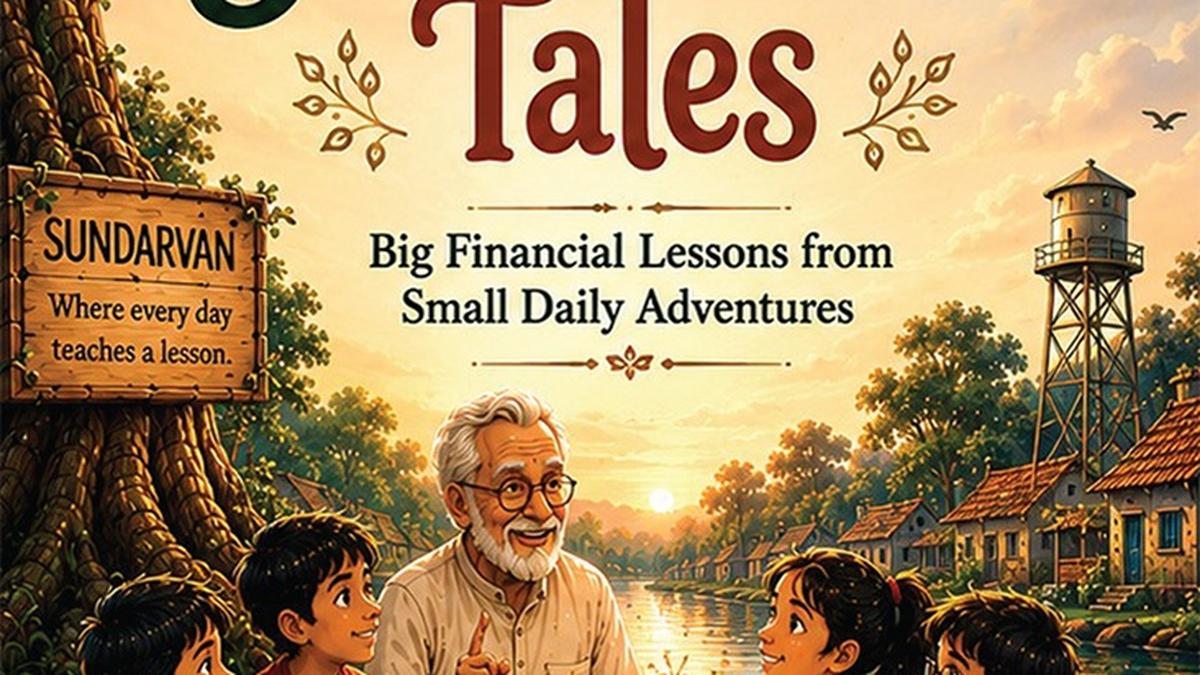
In the Harry Potter series, headmaster Dumbledore is always there to help with his wise words during times of trouble. His experience with magic helps young students cope with the many challenges that life throws their way.The same is true of SriRajan Thatha, a wise figure who is a guide for four young friends in the fictitious village of Sundarvan. In The Sundarvan Tales, author Lakshmi Kanthan T., through SriRajan Thatha, teaches us some real-life magic about how to make good decisions around money.Rather than offer information in a pedantic style, the author uses the characters of Faneesh, Iniya, Neel and Keshav, all residents of Sundarvan, to show readers how to build sound financial habits from school days.Financial lessonsLakshmi Kanthan, or LK as he is popularly known, believes that financial issues that adults struggle with don’t begin in adulthood. They begin much earlier: with habits, choices, patience and planning. He would often wonder, “What if children could learn these lessons long before they ever had to worry about money?” The Sundarvan Tales was born from that idea.But back to our four young friends. Kavya is a thoughtful planner, Faneesh is impulsive and always ready to jump into new experiences, Neel is imaginative and Keshav is a good observer. Their personalities lead them to have very different ideas when using their pocket money and savings. Each of them also has a different approach to decisions.Money is often compared to seeds in the book. Just like seeds are sown, watered, nurtured and protected to become thriving saplings, money too needs patience and time. When Keshav sows coriander and mint seeds, he is able to harvest produce that he can sell and make more money. His initial investment grows multiple times. Faneesh’s choice of buying chips, comic books and toys with his pocket money brings him joy at first but ends quickly as it does not grow further. This is why “delayed gratification”, learning to wait for something bigger, can be a useful skill to learn, the book explains.But why should one wait? Today, shops allow purchase of products through “buy now, pay later” instalment schemes. SriRajan Thatha helps the young friends understand the concept of “interest”. When we buy something or borrow money and pay later, we pay interest for using someone else’s money for a certain period. And the longer we wait to pay it back, the more interest we have to pay. When Faneesh does not have enough money to pay for a shiny new cricket ball, he borrows from Neel but has to pay later with interest.The mystery boxWhile Faneesh is a risk-taker who goes for big rewards, Kavya is someone who takes a more cautious approach. During a village fair, a vendor offers “mystery boxes” for ₹50 each. “What is a mystery box?” asks Keshav. The vendor explains that there are many gifts inside, ranging from fancy toy cars to simple pencils. Which gift gets picked is a matter of luck. Kavya thinks for a long time about the exciting possibilities inside the mystery box but, in the end, decides to buy something else. Rather than choose uncertain but exciting offers, she decides on a smaller but safer option.Having checklistsSome decisions, however well thought out, can lead to mistakes. During a carnival, the children decide to set up a lemonade stand. They buy banners, colourful ribbons, fancy cups and bright balloons but end up having very little money for lemonade and sugar.This is why checklists can help with decisions. For example, people who make big investment choices in real estate or gold look at how the market is faring before making a decision.Teachers and parents may know that the NCERT (National Council of Educational Research and Training) has recently come out with a chapter on personal finance and taxation for Class 9 students in its Social Science textbook. The Sundarvan Tales could offer some good lessons even before children reach high school. The crisp paragraphs, imaginative descriptions and structured storyline make it an easy and enjoyable read.Lessons in fictionHere are some titbits of wisdom that the book offers:Small spending choices may not seem important one by one, but together they can add up.Good investments usually grow slowly.With patience and consistency, small beginnings can grow into something much bigger than expected.Every mistake can teach us something valuable, if we are willing to learn from it. Published - November 23, 2026 10:12 am IST
Financial lessons through stories
Full Article
Original Source
Read the full article at Thehindu →KhanList aggregates and links to publicly available news content. We do not host full articles from third-party sources. Always verify important information with original sources.