
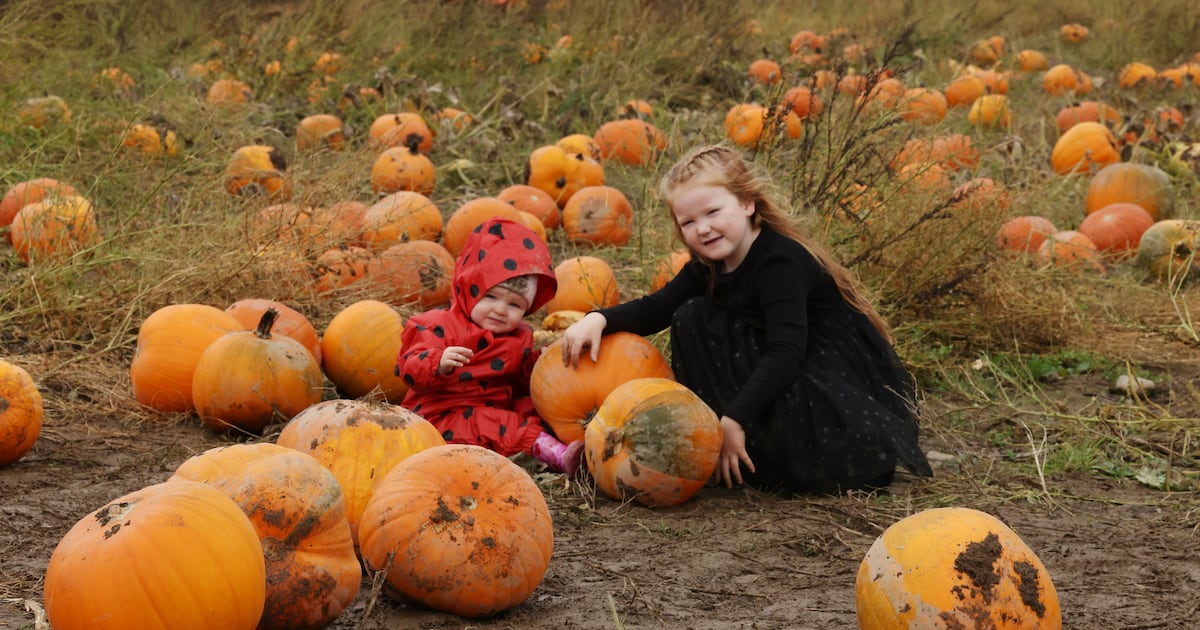
Tom Dillon took an American Halloween tradition back home with him to Co MeathAva (5) and Freya (1) Bermingham from Navan at Alright Pumpkins in Meath. Photograph: Alan Betson/The Irish Times On a farm in Co Meath, a kaleidoscope of brightly coloured wheelbarrows is lined up beside the pumpkin patch available for families to carry the gigantic orange squashes back to their cars.Tom Dillon, the 44-year-old owner of Alright Pumpkin, says this year has been “absolutely stellar” for his crop as the hot weather has helped the pumpkins firm up and develop a “nice, thick, leathery” skin.He says the weather has been “absolutely spot-on, couldn’t be better”.“We had water when we needed it. We had plenty of sunshine for pollination.”READ MORESome of the carving pumpkins grew from 25kg to 28kg. He adds that the big pumpkins “grew really big” and the small ones “grew very plentiful”.His largest ever pumpkin tipped the scale at 38kg.Alright Pumpkin in Co Meath. Photograph: Alan Betson/The Irish Times Pumpkin farming has seen a steady growth in recent years. In 2021, 81.23 hectares of pumpkins were grown in Ireland. By 2026 this number jumped to 146.3 hectares – an 80 per cent increase – according to figures provided by Teagasc, Ireland’s national body for agriculture and food development.Dillon, who has been growing pumpkins for the past 12 years, says the biggest contributing factors to a pumpkin’s size are water and genetics. “A big pumpkin will always want to grow big, whereby a small pumpkin will want to grow small.Niamh Browne tests some viral tips for carving smaller pumpkins. “That depends on how big the plant is, but they do take a good bit of water, they take a nice bit of sun.” However, he would “be more worried about sun than I would be worried about water for them” as they take a “bit of sun” to get a “nice thick, hard skin and that nice, full orange colour”.If pumpkins don’t get enough sunlight, they don’t keep well for Halloween, he says.Tom Dillon of Alright Pumpkin. Photograph: Alan Betson/The Irish Times Dillon has “always” been a farmer. After college, he moved to the US to work on farms, where he drove combine harvesters and trucks.During the Halloween season there, he noticed pumpkins “everywhere”: in patches, on the side of the road and at petrol stations.After moving home with his wife, Natasha Sherling, he decided to start growing the fruits.“I had no idea if they would grow,” he says. “No one really knew anything about pumpkins in Ireland, so we said we would buy some seed.”He saw that some farmers had success growing pumpkins in the UK. “We said, well, if they can grow over there, they can grow over here.”The first year he had about 50 or 60 customers, and it has grown since then. It is “a real family affair”, he says, as Sherling, a jeweller, helps him.He aims to have his seeds planted by April 25th each year. The seeds spend a month in the polytunnel, and, once they have two or three “proper” leaves, are transplanted to the field.He says dry weather is especially important for pollination as if it is too wet, the flowers fill with water and pollinators cannot get in.He will then water them if necessary. Usually the crop is ready by the end of September.Alright Pumpkin in Co Meath. Photograph: Alan Betson/The Irish Times He grows 48 different varieties of pumpkins, including heirloom and old varieties from around the world such as jarrahdale with its blue-grey peel as well as the Spanish and Italian heirloom pumpkins that people like to cook with. They have tried to meet this demand by growing heirloom pumpkins, known for their “great flavours”.“People’s attitudes towards pumpkins have changed ... Irish people like Halloween. It’s an Irish tradition.”IN THIS SECTION
‘No one knew anything about pumpkins in Ireland’: An Irish farmer on a growth industry
Full Article
Original Source
Read the full article at Irishtimes →KhanList aggregates and links to publicly available news content. We do not host full articles from third-party sources. Always verify important information with original sources.