
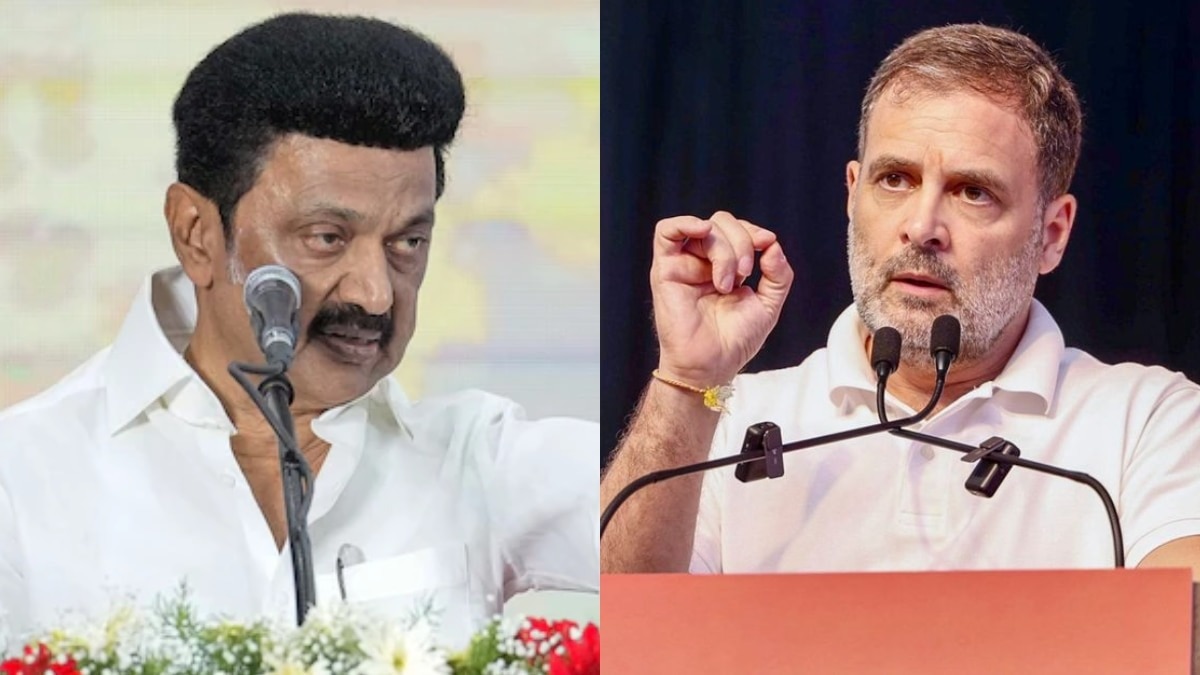
DMK chief MK Stalin on Sunday reiterated the DMK's stand to the proposed Delimitation Bill, saying the party would not compromise on the interests of Tamil Nadu and its people.Stalin's remarks came in response to Congress leader Rahul Gandhi, who, with other senior INDIA bloc leaders, are on their way to Chennai to urge the DMK chief to oppose the proposed legislation.The exchange comes amid efforts by the INDIA bloc to bring together opposition parties against the Centre's proposed changes to the Lok Sabha's composition and the delimitation exercise.In a post on X, Rahul Gandhi said he and other senior INDIA bloc leaders would meet Stalin in Chennai and request him and the DMK to oppose the proposed bill. He argued that increasing the strength of the Lok Sabha to 850 seats could undermine democracy and give the BJP and RSS an opportunity to redraw India's electoral map to their advantage.Rahul also reminded Stalin how he stood against what he described as anti-Tamil forces over the years. He said opposition parties needed to defeat the Bills together in the national interest, to protect Tamil Nadu's interests and safeguard the Constitution.Responding to Rahul, Stalin thanked the Congress leader for acknowledging the DMK's role in protecting the Constitution and the rights of states.He said the party had always taken decisions keeping Tamil Nadu and its people first."We will not compromise on this path and I'm confident that history will judge us as Kattabommans and not Ettappans," Stalin wrote. (Credits: X/MK Stalin) For those unversed, Veerapandiya Kattabomman was an 18th-century Tamil chieftain who fought against British rule and was executed in 1799. He is remembered as a symbol of resistance.Ettappan, meanwhile, is popularly associated with betraying Kattabomman and has become a symbol of betrayal in Tamil political discourse.WHY IS THE INDIA BLOC REACHING OUT TO STALIN?The Congress-led outreach follows the DMK's decision on Saturday to support the Centre's revised delimitation proposal. The decision was taken at a meeting of party MPs chaired by Stalin at the DMK headquarters in Chennai.The DMK had earlier opposed the delimitation proposal introduced in Parliament in April. The party had raised concerns that a population-based redistribution of Lok Sabha seats could reduce the relative parliamentary representation of southern states, which have made progress in population control.Stalin said the revised proposal had incorporated two key demands raised by the DMK:- Tamil Nadu's existing 7.18 per cent share of Lok Sabha seats should not be reduced- The existing proportion of parliamentary representation among states, based on the 1971 Census, should be retained for another 25 years.CRUCIAL SUNDAY AHEAD OF PARLIAMENT SESSIONThe revised proposal provides for a 50 per cent increase in Lok Sabha seats across states. The DMK has said the safeguards would protect Tamil Nadu's representation while allowing the overall strength of the House to increase.Senior party leader A Raja described the decision to support the legislation as consistent with the party's longstanding position on fair delimitation.The Congress, however, has maintained that the proposed legislation could alter the balance of political representation between states.Its leadership is attempting to secure a united Opposition position ahead of the special sitting of Parliament scheduled to begin on November 30.The delegation travelling to Chennai includes Congress president Mallikarjun Kharge, Sonia Gandhi, Rahul Gandhi, West Bengal Chief Minister Mamata Banerjee and other INDIA bloc leaders.After meeting Stalin, the leaders are expected to travel to Mumbai to meet NCP (Sharadchandra Pawar) chief Sharad Pawar, whose party has also indicated support for the revised proposal.- Ends
No compromise: MK Stalin throws cold water on INDIA bloc's delimitation outreach
Full Article
Original Source
Read the full article at Indiatoday →KhanList aggregates and links to publicly available news content. We do not host full articles from third-party sources. Always verify important information with original sources.